









Learn. Apply. Win.
The #1 Platform for Entrepreneurship Education
Train your mind like a founder with business startup simulations and online courses tailored for students, educators, and professionals
10k+
100+
Created by Experts, Trusted by Educators and Leaders
Startup Simulation Learning Tools Built for Your Goals
Get started as...
97% +
Instructor Satisfaction Rate
Startup Simulation Experience & Key Benefits
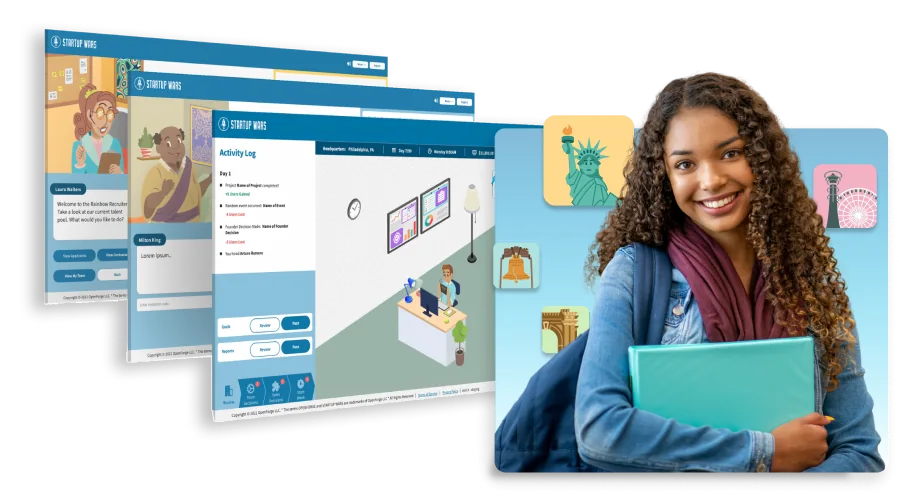
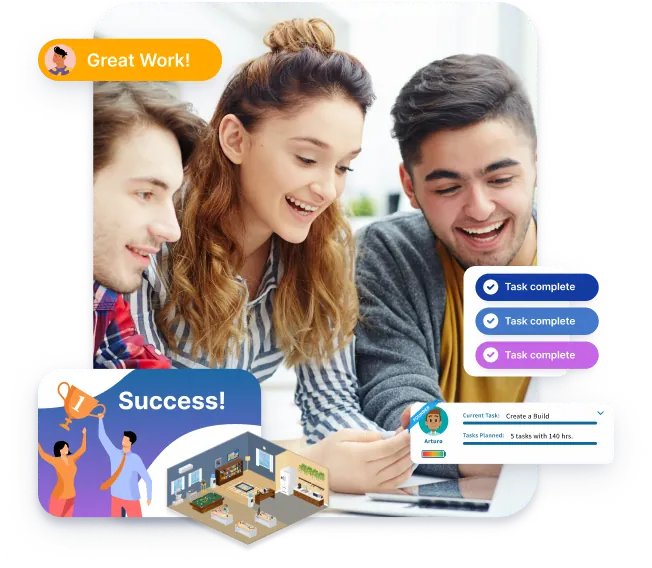
Startup Wars delivers a hands-on startup simulation experience where students think and act like real founders. Learners make strategic decisions, adapt to market shifts, and solve business challenges, just like running an actual startup.
Without The Risk
Startup Wars business simulations teach real-world skills without real-world risk:
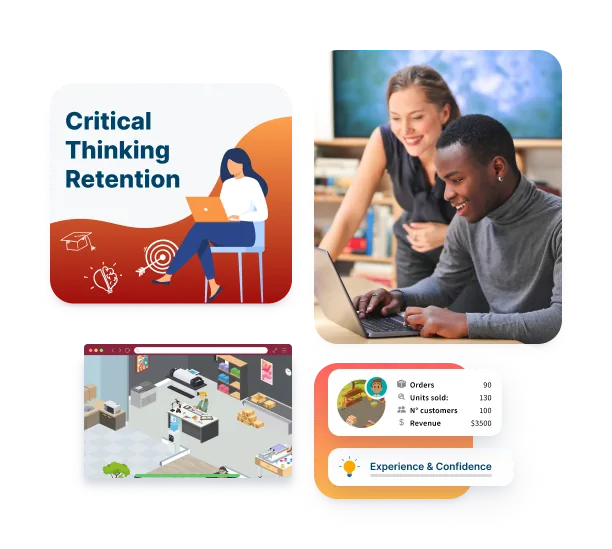
🧠 Teaches Strategy & Critical Thinking
Practice how to pivot, allocate resources, and forecast outcomes under pressure.
🎮 Gamified & Immersive Format
Story-driven startup simulations keep learners engaged while teaching valuable concepts.
💻 Browser-Based, No Installs Required
Launch from any device, no IT setup or downloads needed.
📈 Real-Time Feedback & Learning Analytics
Instructors can track student decisions, progress, and learning outcomes automatically.
Startup Wars transforms business theory into active, skill-building experiences, through immersive startup simulations built for education.
Created by Experts, Trusted by Educators and Leaders
Explore Industry-Themed Startup Simulations
With Startup Wars, students launch virtual businesses in a range of industries, from t-shirt brands to tech startups. Each startup simulation is designed to teach business strategy, decision-making, and entrepreneurial thinking in different real-life contexts.
Each startup simulation teaches:
Business planning
Budgeting and cash flow
Marketing and customer segmentation
HR and team management
Data-driven decision-making
Business Skills Gained from Business Simulations
Every business simulation in Startup Wars is designed to build the critical skills today’s students need to succeed as founders, team leaders, or business professionals.
Students learn to:
🧭 Launch and Pivot Like a Founder
Adapt to shifting markets, customer feedback, and resource constraints.
👥 Understand Customer Segments
Identify audiences, test messaging, and build product-market fit.
💸 Manage Cash Flow and Budgets
Learn how to allocate limited resources and forecast spending.
🛠 Build Minimum Viable Products (MVPs)
Focus on iteration, speed to market, and customer validation.
📊 Make Data-Driven Decisions
Analyze performance metrics, spot trends, and adjust strategies in real time.
🧠 Think Critically and Strategically
Strengthen leadership, ethical decision-making, and systems thinking.
These business skills transfer directly to careers in entrepreneurship, marketing, finance, and beyond, making business simulations a powerful tool for future-ready education.
97% +
Instructor Satisfaction Rate
Business Simulations for High School Education & CTE Programs
Startup Wars business simulations help high school educators bring business education to life through interactive startup simulations that teach students how to think like real entrepreneurs. Designed for CTE pathways, business courses, and entrepreneurship tracks, our simulations develop 21st-century skills while keeping students engaged.
Why teachers love using our Startup Wars business simulations in high school:
📘 Aligns with CTE and Entrepreneurship Curriculum
Easily fits into economics, business, marketing, and career readiness classes.
🎮 Gamified Simulations Students Love
Keeps learners focused and motivated through real-world startup challenges.
💡 Builds Problem Solving & Innovation Skills
Students practice decision-making, creativity, and resource management.
🖥️ Easy Access from Any Device
No installs or tech setup, just log in and start.
🏆 Boosts Confidence Through Hands-On Learning
Students take ownership of their learning in a risk-free, realistic environment.
Startup Wars business simulation helps prepare high school students for entrepreneurship and future careers, one simulation at a time.
97% +
Instructor Satisfaction Rate
97% +
Instructor Satisfaction Rate
Transform Business Classrooms in Colleges & Universities
Empower college students with busness simulations that mirror real-world business challenges, perfect for entrepreneurship, business, and innovation courses.
What makes Startup Wars ideal for higher education:
🧠 Teaches Strategic Thinking & Agile Decision-Making
Students learn to pivot, allocate resources, and operate in dynamic markets.
🛠️ Real-World Entrepreneurial Experience
Simulations replicate challenges founders face from ideation through growth.
💼 Career-Ready Skill Building
Strengthens business acumen, cross-functional thinking, and leadership.
📊 Instructor Tools for Assessment
Built-in analytics track progress, participation, and learning outcomes.
💻 No Software Installs Required
Runs in the browser, ready for in-person, hybrid, or fully online courses.
Startup Wars is trusted by business schools and professors to deliver scalable, hands-on entrepreneurship training through immersive business simulation software.
What Our Students
Say About Us
“ Startup Simulation Wars as a simulation is a very useful experience that challenges students and makes the learning process more interesting and varied. It gives opportunities to students to think differently, make tough decisions, to understand business processes, and also change something (to be more confident). ”
Alima Dostiyarova
Assistant Professor, KBTU University“ Startup Wars is the most aligned with what real-world entry into entrepreneurship is like. The content is robust and works for all audiences, and it's fun ”
John H. Wilson, PhD
Teaching Professor, Drexel University
Latest News & Blog
What to Know Before Using Startup Wars
Not sure if Startup Wars fits your class? Start here.
About Startup Wars
Startup Wars is an entrepreneurship education platform built around interactive business simulations. Your students run a company and make realistic business decisions around pricing, marketing, inventory, hiring, budgeting, operations, and strategy. It's a practical, engaging way for students to build real financial literacy and entrepreneurial skills in 2026. Here's a quick high-level video on what Startup Wars is!
There's an overwhelming gap between theoretical learning and practical application for students and the challenge for instructors to provide personalized learning experiences.
The Startup Wars platform revolutionizes entrepreneurship education by intertwining traditional learning with advanced technology, creating a scalable and dynamic environment.
What's the most effective way to master entrepreneurship? The answer is clear: by doing it. But how can aspiring entrepreneurs gain this hands-on experience without facing real-life financial risks?
We're tackling this challenge head-on.
Our solution is a groundbreaking platform designed to expedite real-world entrepreneurship training. It bridges the gap between theoretical knowledge and practical application, offering a risk-free environment for learners to immerse themselves in entrepreneurial activities. This platform not only facilitates experiential learning but also tailors the journey to individual interests and majors, ensuring relevance and engagement. We're transforming the way entrepreneurship is taught, making it accessible, practical, and aligned with each learner's unique entrepreneurial path.
Startup Wars fits a wide range of courses, including entrepreneurship, business, marketing, economics, career readiness, CTE, and more. High schools, colleges, universities, summer programs, and incubators all use it in different ways depending on their goals. Not sure what setup makes sense? If you’re planning for an upcoming high school or college class, cohort, or semester, contact our team today and we’ll help you find the right setup.
Startup Wars is an educational platform first, intentionally designed with game-based learning to make entrepreneurship more engaging, practical, and memorable for your students.
The interactive experience keeps students curious and involved, while the structure underneath supports instruction, measurable outcomes, and real business skill-building.
Yes, we do! Our latest addition is Milton AI, our AI entrepreneurship coach that guides students as they make decisions throughout the simulations and can support instructors.
A business simulation game is a game-based learning tool that helps students understand how businesses work. Students make decisions, see the results, and learn from the outcomes in a safe classroom setting where mistakes become part of the learning process.
Business simulations give students a safe place to experience the messiness of entrepreneurship. They can make a pricing mistake, hire too quickly, misread demand, or run out of cash without real-world consequences. Then they can reflect, adjust, and understand the lesson in a way that sticks.
Yes! Startup Wars is an online platform, so schools and programs can access it from many different locations without needing a local installation or specialized classroom setup. We’re constantly expanding and always welcome the opportunity to help connect entrepreneurship education across the globe, including in regions like North America, Latin America, Europe, and beyond.
Startup Wars has reached students and educators across multiple countries and continents, while continuing to grow across U.S. high schools, colleges, universities, entrepreneurship programs, CTE classrooms, and career-connected learning environments.
Startup Wars has reached students and educators across multiple countries and continents, while continuing to grow across U.S. high schools, colleges, universities, entrepreneurship programs, CTE classrooms, and career-connected learning environments. Because it is web-based, instructors can set it up, access it, and share it with students more easily across individual classes, multiple sections, school-wide programs, online courses, hybrid learning, and programs working across different campuses or regions.
Startup Wars is built as an online platform for entrepreneurship education, and we’re always open to discussing ways to make it useful for different classrooms, regions, and learning communities. If your school or program is interested in translation, localization, or multilingual use cases, contact our team and we can talk through what may be possible for your needs.
Yes! Startup Wars partners with education and training organizations that want to bring more hands-on business learning to their audiences. Many programs want learners to go beyond theory, but they may not have the time, tools, or custom technology to build simulation-based experiences from scratch.
That is where partnership can help. Through collaborations like our partnership with ISCEA, Startup Wars supports applied learning across business, entrepreneurship, supply chain, student competitions, incubators, university programs, and professional training environments.
Learn more about Startup Wars partnerships here.
Yes. Schools often want to bring more experiential learning into business, entrepreneurship, and CTE programs, but funding can become the first roadblock. That does not always mean the program is out of reach.
Startup Wars may align with funding opportunities connected to CTE, career readiness, well-rounded education, workforce pathways, and business education initiatives. Schools can explore options such as Perkins V, state and local CTE grants, and workforce innovation funding depending on their eligibility and goals.
Learn more about funding options here.
Yes. Startup Wars is open to conversations around sponsorships, media kits, co-marketing, education partnerships, event support, and other collaboration opportunities that align with entrepreneurship education, business learning, career readiness, student innovation, or workforce development.
Many organizations want to support the next generation of founders, business thinkers, and career-ready students, but they need the right educational partner and audience fit. If your organization is interested in sponsorship, media opportunities, or a potential collaboration, contact our team and we can talk through the best fit.
Teaching with Simulations
Not at all, and you won't have to rebuild your course to make room for it! It fits into entrepreneurship, business, marketing, CTE, and career-readiness courses as whatever you need: a short project, a multi-week unit, a semester activity, or a supplement. Most instructors start small and grow it once they see how students respond postively.
However it works for you: individual assignments, group projects, class competitions, entrepreneurship modules, CTE activities, or end-of-course projects. Students run their simulated companies, make the strategic calls, see what happened, and reflect on what worked and what didn't.
Yes, your students can each have a totally different simulation experience while you keep one consistent structure for assignments, outcomes, and evaluation across the whole class and sections. Less juggling for you!
Absolutely! Educators, schools, and organizations can request a free demo to see the platform in action, explore the simulation catalog, and ask us anything about pricing, implementation, assignments, and classroom fit. Get started now.
Yes, especially for instructors who want experiential learning but do not have time to design a full business project from scratch. Startup Wars gives them the simulation environment, business scenarios, student decision points, and optional supporting materials so they can focus more on teaching and discussion.
Business simulations work by giving students a company to run and a set of decisions to make. Instructors can use the simulation as a short project, a multi-week unit, a class competition, a capstone activity, or part of a larger entrepreneurship course.
Lectures and case studies are useful, but simulations let students actually practice decision-making. Students can test ideas, experience tradeoffs, respond to challenges, and reflect on what happened, which helps business concepts feel more practical and memorable.
Online business simulations can be effective because they turn abstract business concepts into active learning. Students get to apply what they are learning, make decisions with consequences, and build confidence through practice instead of only studying theory.
Instructors can use simulations to help students move from “learning about entrepreneurship” to actually practicing it. Students run a simulated company, make business decisions, review the outcomes, and connect those lessons back to entrepreneurship concepts discussed in class.
Startup Wars is designed to fit into existing entrepreneurship, business, marketing, CTE, and career-readiness courses without making instructors rebuild everything from scratch. It can be used as a short activity, a multi-week unit, a semester project, a capstone, or a supplement to existing lessons.
Yes. Startup Wars can be used in different ways depending on the course timeline. Some instructors may use it as a short classroom project, while others may build it into a longer unit, semester activity, capstone project, or student competition.
3. How can Startup Wars help prevent cheating in the classroom?
Instructors can grade students using assignments, reflections, simulation progress, decision-making, participation, and learning outcomes. Students may have different simulation experiences, but instructors can still keep a consistent structure for evaluation across the class.
Yes. Startup Wars works well for project-based learning because students actively build, manage, and reflect on a simulated business. The experience gives students a practical project that connects business concepts to decisions, outcomes, and strategy.
Yes. Startup Wars can support individual work, group projects, and class competition formats. Instructors can choose the structure that best fits their class goals, schedule, and student needs.
Yes. Many instructors and organizations want simulations that feel closer to their students’ world, region, industry, or learning goals. A generic business scenario can still teach useful concepts, but customization can make the experience more relevant and memorable.
Startup Wars can support custom and localized simulation experiences, including tailored business challenges, region-specific market conditions, currencies, cities, demographics, tax structures, and real-world scenarios. This can help schools, universities, districts, publishers, and training programs align simulations with their curriculum, audience, and local context.
Learn more about customizing business simulations here.
Student Experience
No prior experience is needed! Startup Wars is designed to support students at different readiness levels, so instructors can guide learners into the experience that best fits their class. Depending on the simulation and setup, difficulty options may also help adjust the level of challenge.
Students build practical, transferable skills by working toward the learning objectives in each simulation and practicing what it takes to operate a real business. That includes planning, financial literacy, pricing, raising capital, inventory management, team management, hiring, marketing, business terminology, and strategy. Because every choice has a consequence, students learn to think critically, reflect on outcomes, and adjust when things don’t go as planned, just like real founders do.
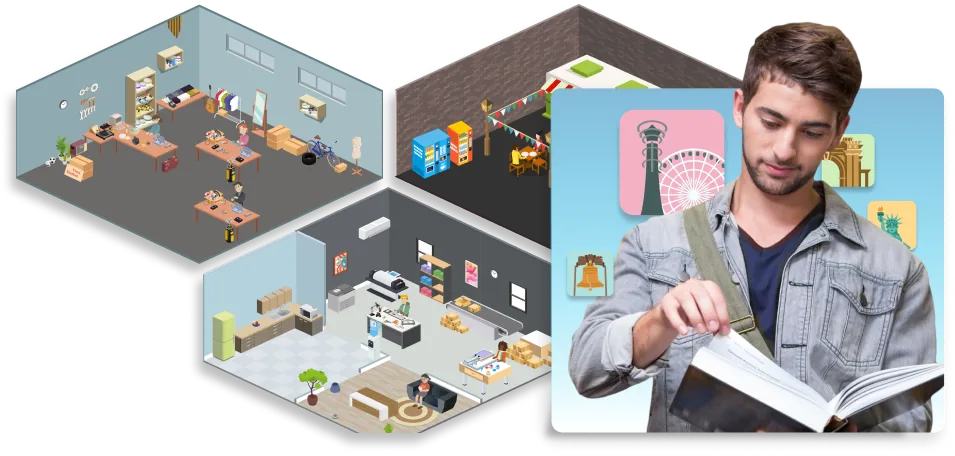
We have a growing catalog, including the T-Shirt Company Series, Food Truck Series, Vertical Farming Series, Mobile App Series, and Makers Market Series. Each one drops students into a different business venture while reinforcing the same core entrepreneurship and company-management skills.
Yes, when their instructor enables multiple simulations! A student interested in hospitality can choose the Food Truck simulation, while another goes for Mobile App Startup, T-Shirt Business, Vertical Farming, or a Makers Market Business. Talk to our team to learn how this would work for your class.
Startup Wars has documented accessibility work across the instructor portal, student portal, and simulation interface. Current documentation lists Startup Wars as partially supporting WCAG 2.1 Level A and AA, with accessibility improvements still ongoing. If your school has specific requirements, we encourage you to review our VPAT and test the exact workflows your students will use.
An entrepreneurship simulation is a learning experience where students practice what it is like to start and run a business. In Startup Wars, students make founder-style decisions around pricing, marketing, hiring, budgeting, inventory, growth, and risk.
Entrepreneurship simulations help students learn by making business decisions feel real. Students see how one choice can affect revenue, costs, customer satisfaction, operations, and long-term growth. That kind of cause-and-effect learning is hard to replicate with lectures alone.
Students practice concepts like pricing, market demand, budgeting, revenue, expenses, hiring, inventory, marketing, customer satisfaction, risk management, operations, and growth strategy. They also practice softer but important skills like critical thinking, adaptability, and confidence.
Yes. Startup Wars helps students practice entrepreneurial thinking by asking them to make decisions, respond to uncertainty, learn from failure, and adjust their strategy. The goal is not just to “win” the simulation, but to think more like a founder.
Yes. Startup Wars helps students practice financial literacy through business decisions around revenue, expenses, pricing, budgeting, cash flow, inventory, and growth. Students learn that financial choices affect what a company can do next.
Students practice decision-making by choosing how to price products, manage inventory, hire employees, spend money, respond to challenges, and grow their business. Each decision has consequences, which helps students think critically before making their next move.
Yes. Startup Wars gives students a safe place to try business decisions, make mistakes, and learn from the results. That practice can help students feel more confident discussing entrepreneurship, solving problems, and thinking through business ideas.
Is Startup Wars fun for students?
Failure becomes part of the learning process. When a decision does not work out, students can review what happened, reflect on the tradeoffs, and adjust their strategy. This helps students understand that entrepreneurship involves testing, learning, and improving over time.
Yes, though we're after real engagement, not entertainment for its own sake. The interactive mechanics keep students genuinely involved while the work stays grounded in business and decision-making. The experience is engaging, but still tied to real learning goals.
Yes. Startup Wars has worked with homeschool implementation and can help families bring entrepreneurship education directly into the home. Homeschool learners often benefit from flexible, self-paced experiences, but it can be hard to find business education tools that feel practical, engaging, and structured enough to support real learning.
Startup Wars gives homeschool students a way to practice entrepreneurship, financial literacy, decision-making, leadership, and critical thinking through interactive business simulations. It can support different teaching styles, family-led learning, independent study, co-ops, enrichment programs, and diverse learning environments where students need more than a worksheet to understand how business works.
High School, Curriculum & CTE
Startup Wars gives CTE programs a practical way to connect classroom instruction with career-connected skills. Students are not just memorizing terms; they are making choices around pricing, customers, costs, staffing, and growth. That makes it easier to connect entrepreneurship standards to real business judgment.
Yes. Startup Wars can plug into high school business courses as a hands-on layer for units on entrepreneurship, marketing, finance, operations, or management. It gives students a shared business experience to discuss, analyze, and reflect on throughout the course.
Yes. Startup Wars gives programs a common simulation structure while still allowing students to choose different business types. That balance is helpful for schools that want consistent learning outcomes without making every student complete the exact same experience.
Yes. Startup Wars can support multiple teachers, sections, or programs depending on the school’s setup. This is especially useful when a department wants students to have a consistent entrepreneurship experience, even if different instructors are teaching different sections.
Yes. Business simulations can be a strong fit for high school entrepreneurship classes because they make business concepts more hands-on. Students get to run a company, make decisions, and practice skills they can connect to future careers, college, or their own business ideas.
Yes. Startup Wars can support CTE programs focused on business, entrepreneurship, marketing, finance, career readiness, and related pathways. It gives students a practical way to apply classroom concepts through simulated business decisions.
To get started, schedule a demo. We can provide complimentary demo account access, walk you through the student experience, and help map the right setup for an individual class, multiple sections, or a school-wide implementation.
Startup Wars supports career readiness by helping students practice decision-making, problem-solving, communication, financial thinking, planning, and adaptability. These are useful skills whether students want to start a business, join a company, or explore different career paths.
Yes. Startup Wars can fit into business, marketing, economics, entrepreneurship, financial literacy, and career-readiness courses. Instructors can use the simulations to help students connect classroom concepts to practical business decisions.
Startup Wars can support preparation for student business competitions by helping students practice entrepreneurship concepts, decision-making, business strategy, marketing, financial thinking, and pitching ideas. It can be used as a practice environment before students apply those skills in competitions.
How does Startup Wars align with learning objectives and teaching methodologies?Yes. Students do not need to be business experts to use Startup Wars. The simulations are designed to help students learn by doing, and instructors can provide guidance, discussion, and reflection as students move through the experience.
Traditional entrepreneurship education can make it difficult for students to connect academic concepts with the real decisions founders make. Students may learn business theory, but still have limited opportunities to practice pricing, budgeting, hiring, marketing, risk management, and growth strategy in a realistic setting.
Startup Wars helps close that gap by giving K-12 and higher education programs a hands-on business simulation platform where students can build and run a startup without real-world financial risk. The experience supports experiential learning, decision-making, reflection, and skill development while giving educators flexible ways to align simulations with course goals, learning objectives, and classroom needs.
Startup Wars is designed to support experiential learning, project-based learning, and career-connected education. Students learn by making decisions, seeing the results, reflecting on outcomes, and adjusting their strategy. Instructors can use the simulations alongside assignments, discussion prompts, readings, quizzes, and course materials to connect the experience back to specific learning objectives.
Districts often need tools that can work across more than one classroom. A single teacher may care most about student engagement, while a CTE leader or curriculum director may also need scalability, consistency, standards alignment, reporting, and implementation support.
Startup Wars is built to support K-12 and district-wide entrepreneurship education through online business simulations that can be used across classrooms, schools, and programs. It can support CTE pathways, entrepreneurship courses, career readiness, middle school exploration, high school business programs, and district-wide curriculum initiatives.
Learn more about Startup Wars for K-12 districts here: https://www.startupwars.com/k-12-districts/
Yes. Curriculum publishers and education providers often want to add more interactive learning to their products, but building a full simulation platform from scratch can be expensive, time-consuming, and difficult to maintain.
Startup Wars can partner with publishers to license business simulations that layer into existing curriculum, courseware, entrepreneurship programs, business education products, or career readiness offerings. This can help publishers add experiential learning, increase value for institutional buyers, support multi-school deployment, and differentiate their catalog without replacing the materials they already have.
Learn more about Startup Wars for publishers here: https://www.startupwars.com/entrepreneurship-simulations/for-publishers/
College, University, and Program Use
Yes. Startup Wars can be used in college entrepreneurship courses to help students practice startup decision-making in a more active way. It can support lectures, assignments, group projects, capstones, innovation programs, and experiential learning.
Universities can use Startup Wars in entrepreneurship, business, innovation, management, marketing, or startup-focused programs. The simulations give students a practical way to test business thinking before applying those ideas to real ventures or projects.
To get started, schedule a demo. We can provide complimentary demo account access, walk you through the student experience, and help map the right setup for an individual class, multiple sections, or a school-wide implementation.
Yes. Startup Wars can support incubators, accelerators, summer programs, and startup education programs by giving participants a structured way to practice business decisions, explore founder challenges, and build entrepreneurial confidence.
Yes. Startup Wars can be used as part of a capstone or project-based learning experience because students make decisions over time, track outcomes, and reflect on their strategy. It gives instructors a structured way to connect business concepts to applied work.
Yes. Startup Wars can help students in intro business or management courses understand how different business functions connect. Students see how pricing, marketing, operations, hiring, inventory, and financial decisions can affect the overall company.
Yes. Startup Wars can work well in community college courses where students need practical exposure to business, entrepreneurship, management, or workforce skills. It gives students a low-risk way to experience business decisions before applying those concepts in internships, jobs, or real ventures.
Yes. Startup Wars helps students practice the kind of judgment employers value: weighing tradeoffs, managing resources, responding to problems, communicating decisions, and adapting when things change. Those skills matter whether students plan to start a business or enter the workforce.
Yes. Intro business courses often cover many concepts quickly, and Startup Wars helps students see how those concepts connect. Instead of learning pricing, marketing, hiring, and finance as separate topics, students see how one decision can affect the whole business.
Startup Wars gives instructors more than a final score to talk about. Students can review their decisions, explain their strategy, compare outcomes, and reflect on what they would change next time. That makes learning visible through reasoning, not just results.
Simulation Catalog
Student choice helps make entrepreneurship more relevant. When students can choose a business that connects to their interests, they are more likely to stay engaged, think creatively, and take ownership of the learning experience.
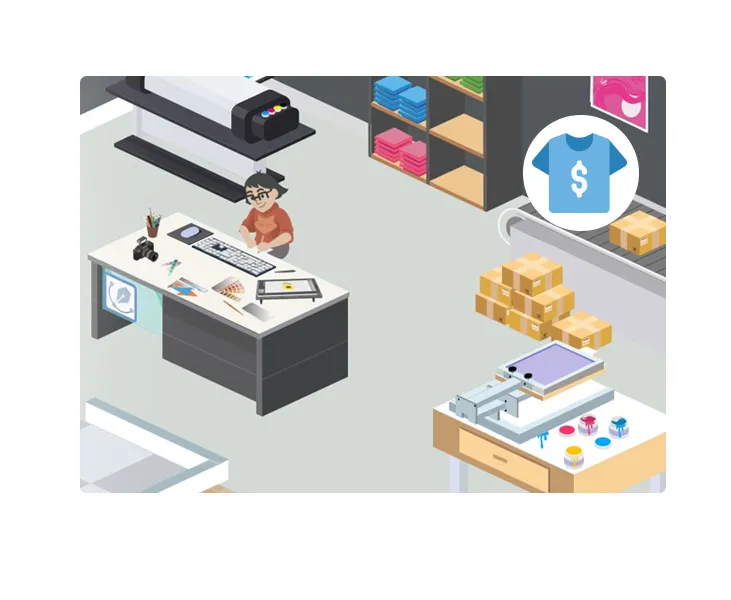
Many students understand apparel, school merch, clubs, sports teams, and custom designs, which makes a T-shirt business easy to picture. The challenge is that a simple product can still involve complex business decisions.
In the T-Shirt Company simulation, students run an apparel business and make decisions around pricing, inventory, marketing, production, customer demand, and growth. It is a strong entry point for students who are new to entrepreneurship because the business model feels familiar, but still gives them real tradeoffs to think through.
Students learn that even a straightforward product business requires planning. Ordering too much inventory, pricing too low, missing demand, or spending poorly on marketing can all affect the outcome.
Best-fit classes, courses, majors, and pathways:
- High school entrepreneurship
- Intro to business
- Business management
- Principles of Marketing
- Digital Marketing
- Sales and Customer Relations
- Retail Marketing
- Retail Management
- Fashion Marketing
- Fashion Merchandising
- Apparel and Textile Studies
- Product Development
- Brand Management
- Advertising
- Graphic Design
- Visual Communication
- Communication Studies
- Social Media Marketing
- E-commerce
- Consumer Behavior
- Sports Marketing
- School-Based Enterprise
- DECA or FBLA preparation
- CTE Business Management Pathway
- CTE Marketing Pathway
- CTE Arts, Media, and Entertainment Pathway
- CTE Fashion and Interior Design Pathway
- Career Readiness
- Financial Literacy
- College Intro to Entrepreneurship
- Community College Small Business Management
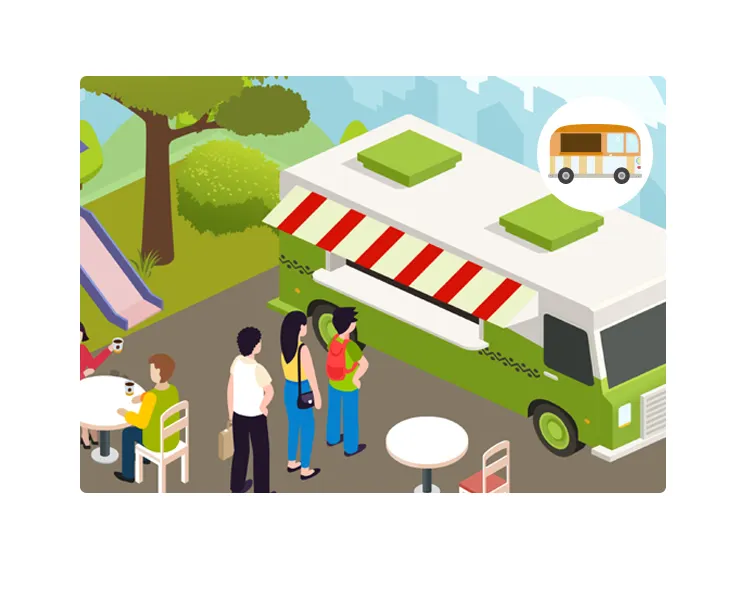
Food trucks are exciting for students to understand because they combine food, location, pricing, customer demand, staffing, and operations in a very visible way. Students can quickly imagine what could go right or wrong.
In the Food Truck simulation, students manage a food-based business and make decisions around menu strategy, pricing, demand, staffing, inventory, and customer satisfaction. It helps students see how daily operational choices can affect the success of a small business.
This simulation is especially useful when instructors want students to understand that entrepreneurship is not only about having a good idea. It is also about managing costs, timing, quality, people, and customer expectations.
Best-fit classes, courses, majors, and pathways:
- Small Business Management
- Hospitality Management
- Hospitality and Tourism
- Culinary Arts
- Culinary Entrepreneurship
- Food Service Management
- Restaurant Management
- Event Planning
- Tourism and Guest Services
- Marketing
- Local Business Marketing
- Sales and Customer Service
- Consumer Behavior
- Operations Management
- Supply Chain Basics
- Inventory Management
- Pricing Strategy
- Financial Literacy
- Business Communication
- Public Relations
- Social Media Marketing
- Community Engagement
- DECA or FBLA preparation
- CTE Hospitality and Tourism Pathway
- CTE Culinary Arts Pathway
- CTE Business Pathway
- CTE Marketing Pathway
- Career Readiness
- Community College Hospitality Programs
- College Entrepreneurship Courses
- Summer business camps or youth entrepreneurship programs
Students are increasingly interested in sustainability, food systems, climate, and technology, but those topics can feel disconnected from business. Vertical farming brings those ideas together in a practical entrepreneurship context.
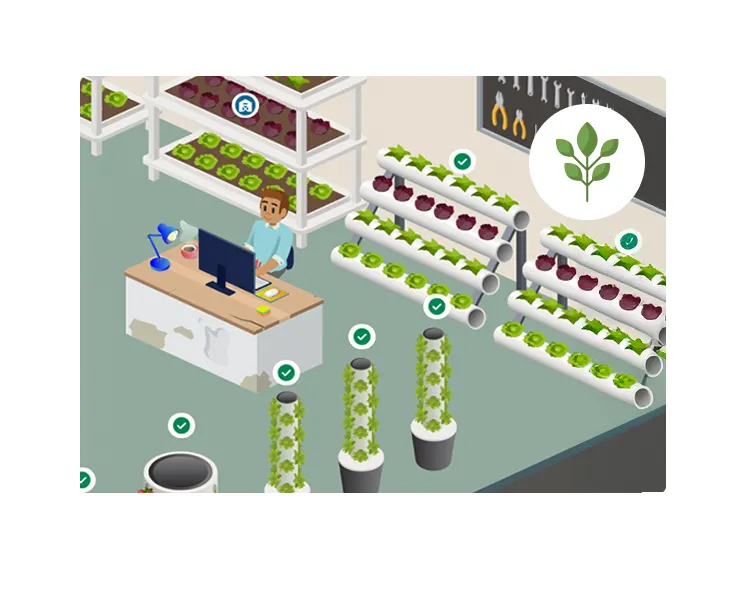
In the Vertical Farming simulation, students run an agriculture-focused business and make decisions around production, operations, costs, demand, and growth. They explore how innovation, sustainability, and business strategy can connect in a modern company.
This simulation is a strong fit for courses that want entrepreneurship to feel relevant beyond traditional business examples. It helps students think about how founders can solve real-world problems while still managing costs, customers, and growth.
Best-fit classes, courses, majors, and pathways:
- High school entrepreneurship
- Agricultural business
- Environmental science with entrepreneurship
- Sustainability courses
- Agribusiness
- Agricultural Business
- Environmental Science
- Sustainability Studies
- Sustainable Business
- Climate Innovation
- Social Entrepreneurship
- STEM Entrepreneurship
- Biology with Business Applications
- Food Systems
- Urban Agriculture
- Green Technology
- Operations Management
- Supply Chain Management
- Production Planning
- Financial Literacy
- Business Strategy
- Marketing for Sustainable Products
- Public Policy and Sustainability
- Community Development
- Sales for Mission-Driven Products
- CTE Agriculture Pathway
- CTE Agribusiness Pathway
- CTE Environmental Science Pathway
- CTE STEM Pathway
- CTE Business Pathway
- Career Readiness
- Community College Agribusiness Programs
- College Innovation or Sustainability Programs
- Community college agribusiness programs
- Sustainability-focused business programs
- Innovation or social entrepreneurship programs
Many students use apps every day, but they may not realize how much business strategy goes into building and growing a digital product. A mobile app startup gives students a familiar technology context while introducing them to product, marketing, hiring, and growth decisions.
In the Mobile App simulation, students run a software-focused startup and make decisions around product strategy, marketing, hiring, growth, and business performance. It is a strong fit for students interested in technology, startups, digital products, or app-based businesses.
This simulation helps students see that technology entrepreneurship is not only about coding. It also involves understanding customers, positioning the product, managing resources, building a team, and choosing a growth strategy.
Best-fit classes, courses, majors, and pathways:
- High school entrepreneurship
- Intro to business
- Technology entrepreneurship
- Computer science entrepreneurship
- App development courses
- Digital marketing
- Product management
- Innovation courses
- Information Technology
- Business management
- CTE information technology pathways
- CTE computer science pathways
- CTE business pathways
- CTE marketing pathways
- College entrepreneurship courses
- Business school innovation programs
- Community college technology or business programs
- Startup incubators or student venture programs
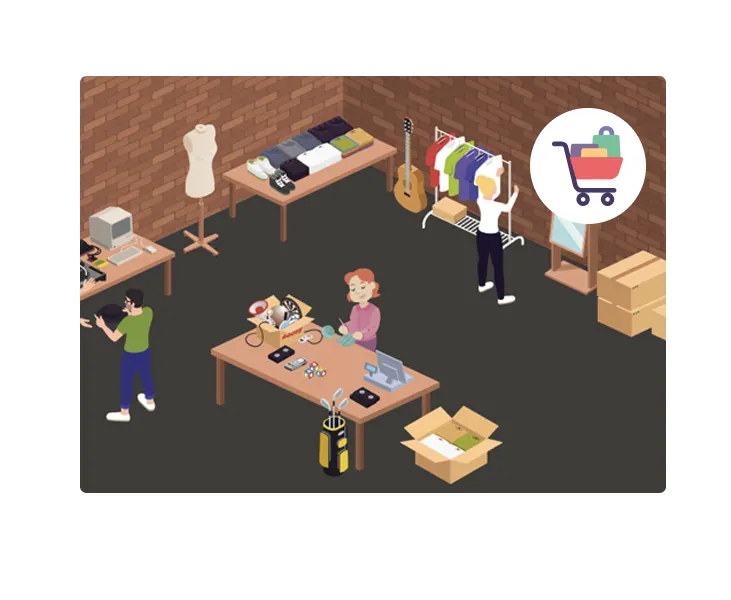
Some students connect more with creative products, handmade goods, pop-up markets, and small retail businesses than with traditional startup examples. Makers Market gives those students a business scenario that feels creative, practical, and approachable.
In the Makers Market simulation, students run a creative product-based business and make decisions around production, pricing, inventory, marketing, and customer demand. It is a strong fit for students interested in retail, handmade goods, design, art, product creation, or creative entrepreneurship.
This simulation helps students understand that creative businesses still require serious business thinking. A great product idea needs the right pricing, production planning, customer strategy, and inventory decisions to work.
Best-fit classes, courses, majors, and pathways:
- High school entrepreneurship
- Intro to business
- Creative entrepreneurship
- Small Business Management
- Marketing courses
- Retail management
- Sales and Customer Relations
- Visual arts entrepreneurship
- Fashion or design business
- Product development
- Industrial Design
- Product Design
- Art and Design
- Studio Art
- Animation
- Small business management
- Financial literacy courses
- CTE business pathways
- CTE marketing pathways
- CTE arts, media, and design pathways
- CTE Fashion and Interior Design Pathway
- Career readiness programs
- College entrepreneurship courses
- Community college small business programs
- Student maker programs or school-based enterprise programs
- College Creative Entrepreneurship Courses
LMS Technology, Accessibility, and AI
Startup Wars is preparing for cleaner classroom workflows, including LTI 1.3 support for easier LMS use. If your school uses an LMS like Canvas or Blackboard, our team can walk you through the current options and what’s coming soon.
Startup Wars is preparing for LMS-friendly workflows, including LTI 1.3 support. If your school uses Canvas, Blackboard, or another LMS, our team can discuss current options and upcoming integration plans.
Startup Wars has documented accessibility work across the instructor portal, student portal, and simulation interface. Current documentation lists Startup Wars as partially supporting WCAG 2.1 Level A and AA, with accessibility improvements still ongoing. If your school has specific requirements, review the VPAT/ACR and test the exact workflows your students will use.
To get started, schedule a demo. We can provide complimentary demo account access, walk you through the student experience, and help map the right setup for an individual class, multiple sections, or a school-wide implementation.
Startup Wars has accessibility documentation available and currently partially supports WCAG 2.1 Level A and AA. Accessibility work is ongoing, so schools with specific requirements should review the latest documentation and confirm the workflows they plan to use.
Milton is an optional AI entrepreneurship coach inside Startup Wars. It helps students think through decisions, ask questions, and better understand the business concepts they are practicing in the simulation via a live chat during the active simulation runs. For further details, please reach out to our team. Happy to assist!
Milton helps students by guiding their thinking instead of simply giving them answers. Students can use Milton to reflect on decisions, explore business tradeoffs, and better understand why certain choices may affect their company’s results.
Pricing & Getting Started
Please check our pricing page for the latest details on our pass offers: https://www.startupwars.com/pricing/
Yes. District and site licenses can be quoted upon request depending on student volume, number of instructors, implementation needs, access requirements, and support expectations.
Every Startup Wars rollout starts with understanding how your program plans to use it. A single instructor may need a simple demo account and course setup, while a larger school or institution may need planning around student volume, access, timing, and support.
To get started, schedule a demo. We can provide complimentary demo account access, walk you through the student experience, and help map the right setup for an individual class, multiple sections, or a school-wide implementation.
Yes. Schools, districts, universities, and organizations can request a custom quote if they need pricing for multiple students, instructors, classes, sections, or programs.
Startup Wars may offer different access and pricing options depending on the use case. For the most current details, check the pricing page or contact our team to discuss student volume, course needs, and implementation plans.
Ready to Turn Learning Into Action?
Start your journey with business simulations built to prepare the next generation of entrepreneurs, leaders, and innovators.