Table of Contents
As AI-driven simulations become a central part of online education, instructors and students are asking the same question: What data is the AI actually collecting, and what isn’t it?
It’s a fair concern. Educational simulation tools are becoming more sophisticated, and with that comes a need for clarity and trust.
The truth is simple: AI in simulation platforms is built to support learning, not to invade privacy. These tools help students practice entrepreneurship, test strategies, and make smarter business decisions, all without compromising personal security.
In this article, we’ll walk through exactly what data AI in simulation environments captures, what it never touches, and how transparency builds trust.
Why AI in Simulation Matters for Modern Learners
Simulation-based learning has become one of the most effective ways for students to experience real-world decision-making, and AI in simulation takes this experience even further by offering deeper insights and smarter feedback. Business simulation games allow learners to try ideas, fail fast, recover, and build better strategies, all through hands-on learning that’s impossible to replicate in a lecture.
AI enhances this process by:
- Analyzing patterns to improve feedback
- Personalizing learning experiences
- Making entrepreneurship simulations more immersive
- Helping instructors understand student performance through ethical simulation data analytics
With AI becoming a core part of online education platforms, trust becomes essential. Students deserve to know how their data is used, and educators need confidence that AI tools operate responsibly.
What Data AI-Driven Simulations Do Capture
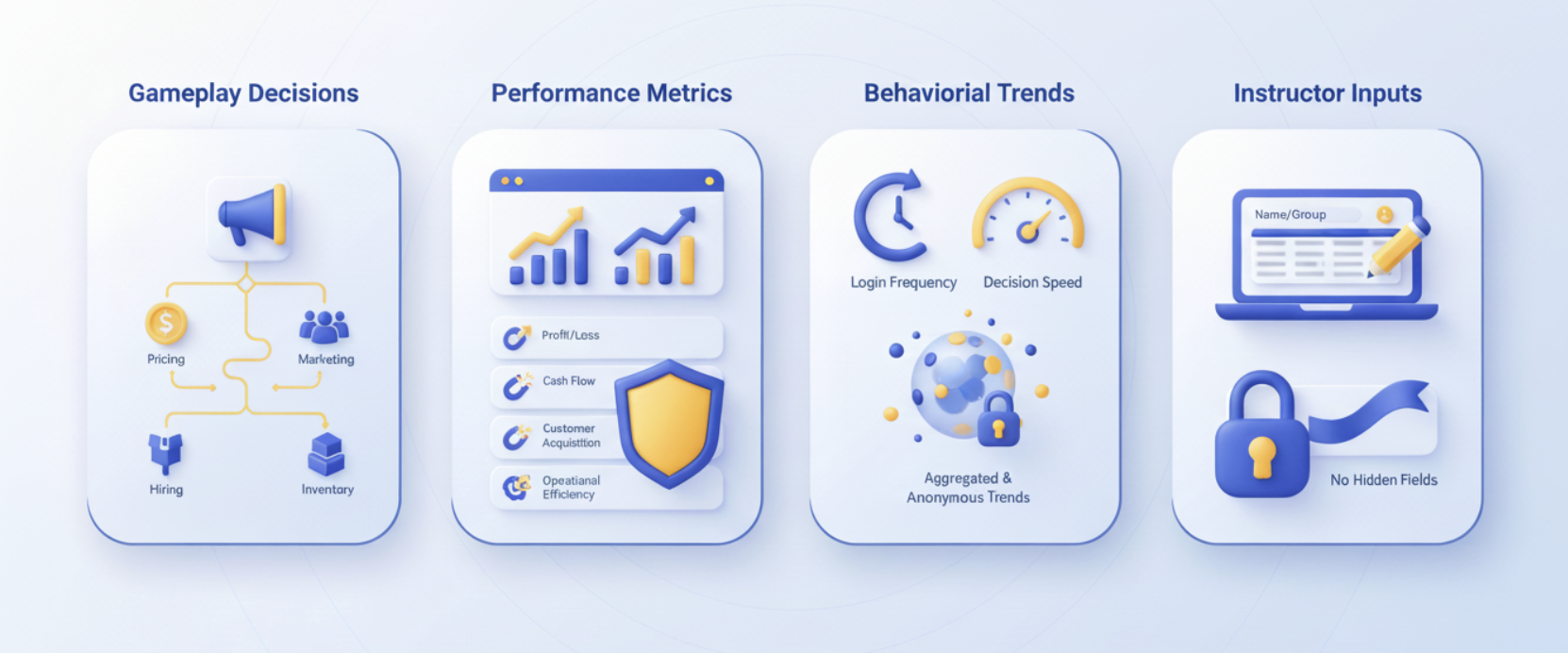
Here’s where transparency matters most. AI simulation tools collect only the data needed to support the learning experience. Nothing more!
1. Gameplay Decisions & Strategy Patterns
AI looks at how students make business decisions inside the simulator. For example:
- Pricing choices
- Marketing budgets
- Hiring decisions
- Inventory management
This data helps power realistic outcomes and generates meaningful feedback without ever touching personal information.
2. Performance Metrics (Not Personal Identity)
Simulations track outcomes such as:
- Profit/loss
- Cash flow
- Customer acquisition
- Operational efficiency
These metrics help instructors evaluate learning, not the student as a person.
3. Behavioral Trends that Improve the Simulation
AI may analyze trends like how often a student logs in or how quickly they make decisions.
This information is:
- Aggregated
- Anonymous
- Used only to improve simulation flow and difficulty balance
4. Optional Instructor Inputs
The only personal information added to the simulation is what an instructor chooses to input. This typically includes names or group labels for grading purposes. Rest assured, there are no hidden fields, no background tracking.
What We Don’t Track: Clearing Up AI Privacy Concerns
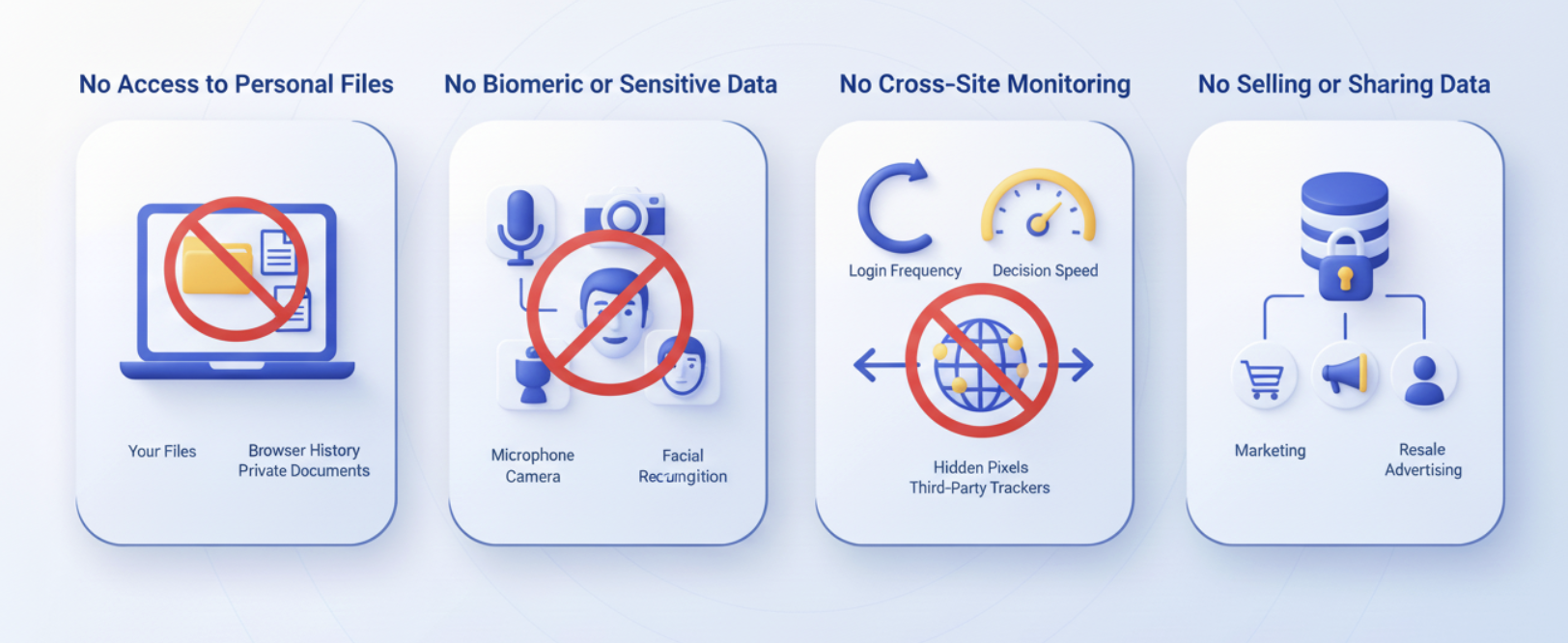
This part matters just as much.
1. No Access to Personal Files or Device Data
AI does not look at:
- Your files
- Your browser history
- Your device identifiers
- Your private documents
The system operates entirely within the simulation environment.
2. No Biometric or Sensitive Data
There is absolutely zero tracking of:
- Microphone
- Camera
- Facial recognition
- Keystroke biometrics
- Emotional or psychological profiling
3. No Cross-Site Monitoring
Platforms like Startup Wars do not follow users across the web or collect tracking data outside the simulation. There are no hidden pixels or third-party tracking tools.
4. No Selling or Sharing Student Data
Student data stays strictly within the learning context.
It is never used for:
- Marketing
- Resale
- Advertising
- Profiling of any kind
This is where AI ethics and AI accountability matter most.
Why Data Transparency Builds AI Trust in Educational Simulations
Trust isn’t built through a promise; it’s built through clarity. Students are more confident using AI-driven tools when they know exactly what’s happening behind the scenes.
Data transparency helps by:
- Reducing anxiety around AI privacy concerns
- Encouraging open conversations about AI bias and fairness
- Helping students focus more on learning
- Allowing educators to confidently integrate simulations into their teaching strategy
When students understand how AI in simulation works behind the scenes, their confidence increases and their hesitation decreases.
How AI Helps Students Reflect on Their Decisions (Without Invading Privacy)
One of the most underrated benefits of AI in simulation-based learning is its ability to strengthen reflection. Students aren’t just making decisions inside a business simulation; they’re learning why those decisions succeed or fail.

Instead of tracking identity or behavior outside the platform, AI focuses solely on the students’ in-simulation actions. This allows the system to highlight meaningful cause-and-effect patterns, such as how a pricing change influenced sales or how a shift in marketing strategy affected customer acquisition.
AI in simulation highlights these cause-and-effect patterns without collecting personal data, helping students reflect without feeling monitored.
These insights help students step back and reflect on the reasoning behind their choices, a skill essential in entrepreneurship and real-world business.
This reflective loop also benefits learners who may not naturally analyze their decisions. AI-driven simulations present the consequences clearly and objectively, encouraging students to think critically, adjust their strategies, and experiment confidently.
Practical Ways Instructors Can Communicate AI Privacy to Students
Transparency isn’t just the platform’s responsibility; it’s also a teaching opportunity.
Here’s how educators can help students feel secure:
- Add a short “simulation data statement” in the syllabus
- Explain that AI only analyzes gameplay, not personal activity
- Remind students that no webcam or audio data is collected
- Encourage questions around AI accountability and ethics
- Frame simulation data analytics as a tool for learning, not monitoring
Students engage more deeply when they trust the environment.
The Future of Trustworthy AI-Driven Simulations
As AI evolves, educational simulation software will become smarter, more adaptive, and more supportive. But the trend is clear: the future is personalized learning with minimal personal data.
Expect:
- Greater emphasis on AI transparency
- Stronger protections against AI bias
- AI models that learn from decisions, not identities
- More control for educators and institutions
The goal is simple: enrich learning while strengthening privacy.
How Startup Wars Ensures Ethical, Responsible AI Use
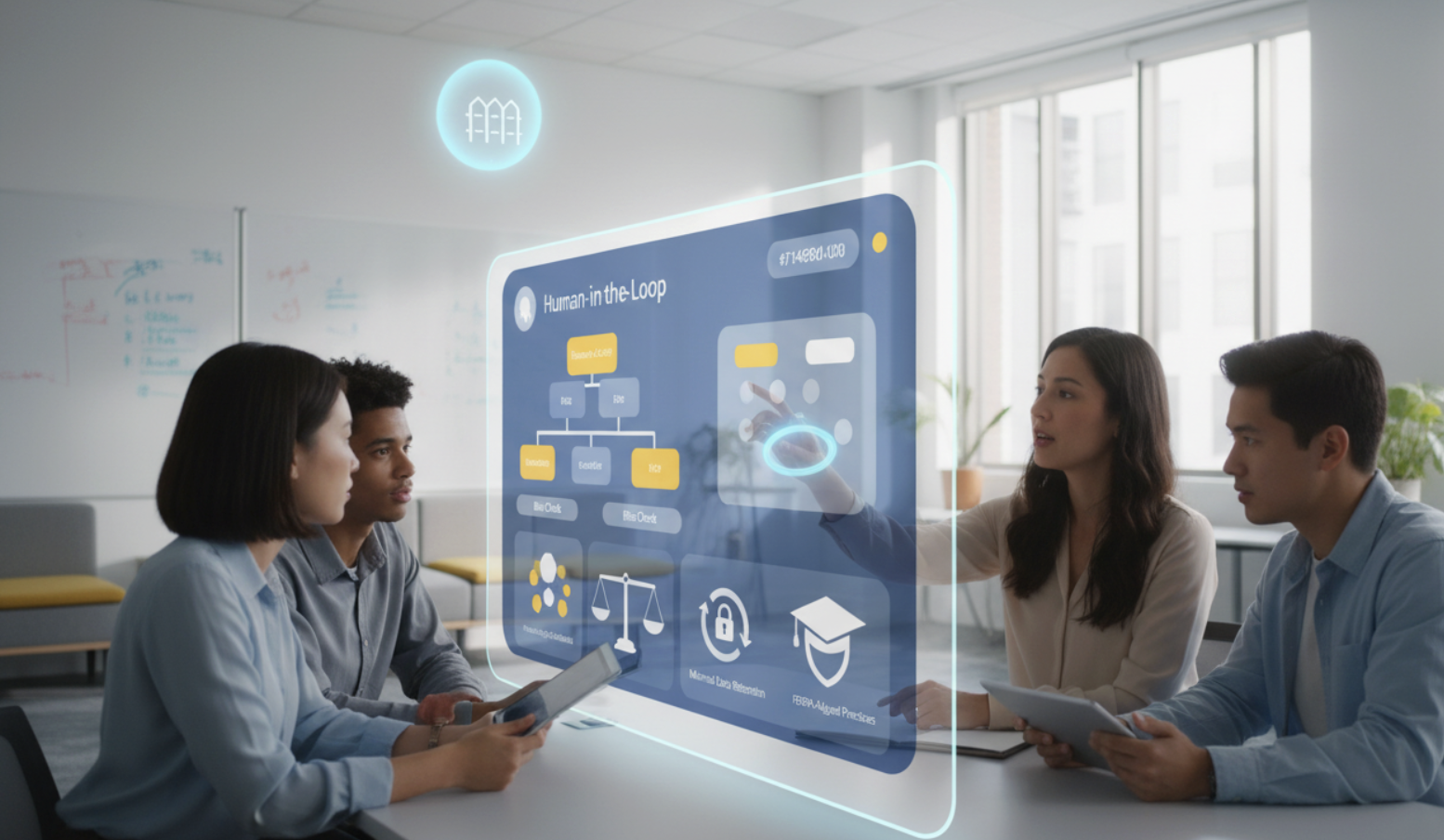
Startup Wars uses AI to enhance experiential learning, but always with guardrails that prioritize fairness and privacy.
Key principles include:
- Human-in-the-loop controls: AI-generated recommendations are reviewed and shaped by educators and instructional designers.
- Bias checks: Algorithms undergo testing to ensure decisions stay fair and free from unintended bias.
- Minimal data retention: Only essential gameplay and performance data are kept, and instructors can request deletion at any time.
- FERPA-aligned practices: While not making legal claims, the platform follows common education-friendly privacy expectations.
This approach ensures that AI simulation tools remain supportive, not intrusive.
Final Thoughts: AI Trust Starts With Transparency
AI-powered simulations open the door to richer learning, faster iteration, and deeper critical thinking. But none of that matters without trust.
By being open about what’s collected and what isn’t, Startup Wars helps students and instructors feel confident using AI-powered experiential learning tools.
Transparency isn’t just a feature. It’s the foundation of trustworthy AI in simulation. When students understand how AI works, they engage more confidently and learn more effectively.
📅 Schedule a Free Demo and see how Startup Wars can help you lead beyond the classroom today.
Frequently Asked Questions
1. Do AI simulations track my personal data?
2. Is my gameplay anonymous?
3. How is my data used inside the simulation?
4. Can instructors see everything I do?
5. How do AI tools prevent bias?
People Also Searched For:
-
The Real Reasons Startups Fail - What 2 Startups & 70+ Startup Investments Teach You About Success
-
Most Founders Build Too Fast and That’s Why Startups Fail
-
ChatGPT 5 Release: What Educators and Students Should Know
-
Case Study in Education vs Simulation: Which Is Better for Teaching Entrepreneurship?
-
How to Use Business Simulations in the Classroom