Table of Contents
Education is evolving faster than ever, driven by technology and the need for real-world skills. Traditional lectures are no longer enough to prepare students for the complex challenges of today’s workforce or entrepreneurial world.
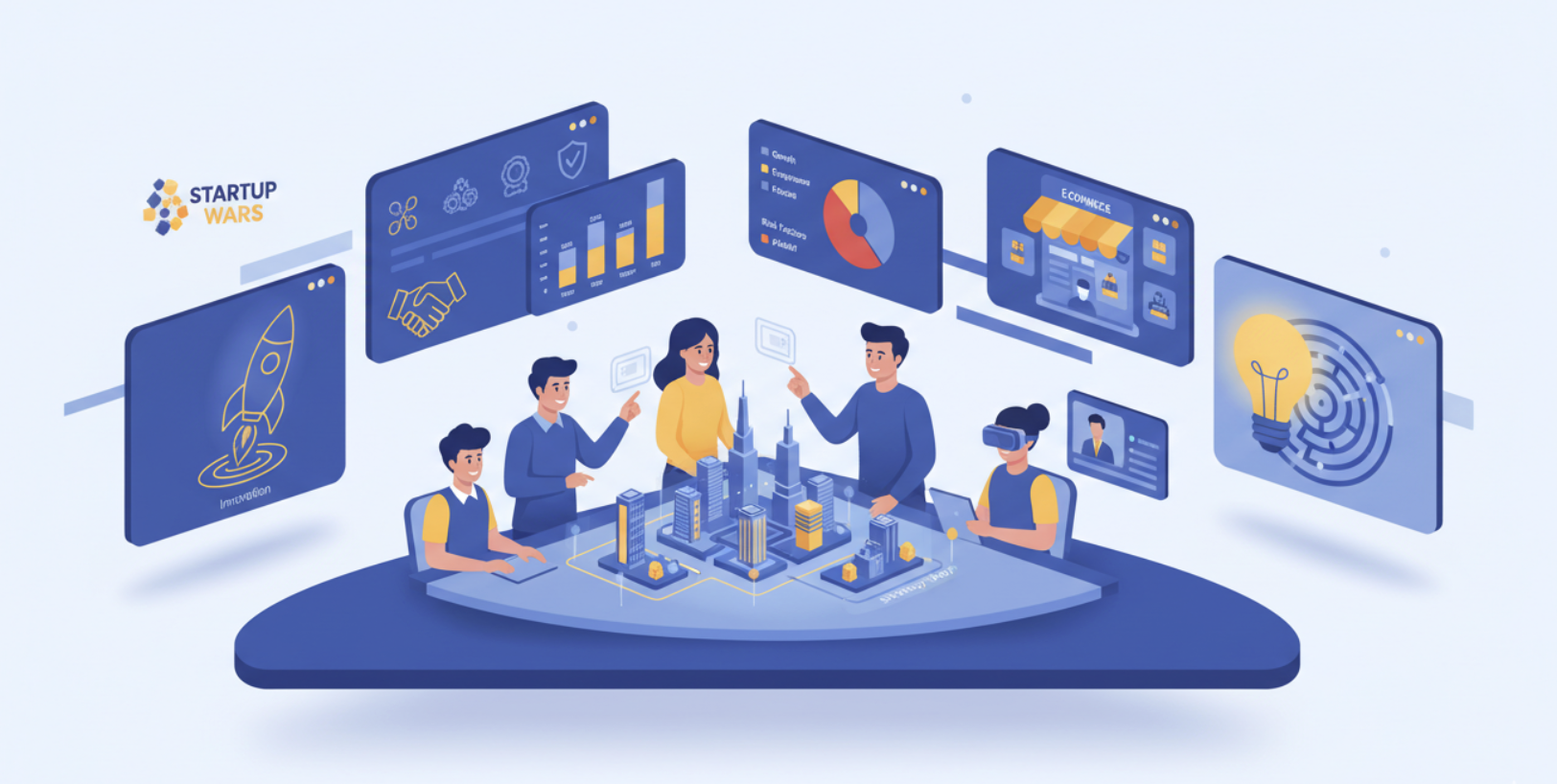
Enter simulation based learning, a method that brings theory to life by letting learners experiment, fail, and succeed in a safe environment. From educational simulations in classrooms to AI-driven simulations in business training, this immersive approach is transforming the way we learn.
In this article, we explore 7 simulation-first teaching trends that are set to shape 2026, with practical examples, tips, and insights for educators, students, and startups alike.
1. AI-Driven Simulations Transforming Learning Experiences
The rise of AI simulation tools is making learning smarter, faster, and more personalized. Unlike traditional methods, AI-driven simulations can adjust difficulty in real-time based on learner performance, creating adaptive experiences.
For example, in business education, simulation software can place students in virtual startups, monitoring their decisions in marketing, finance, and operations. Using simulation data analytics, instructors can track which strategies worked and where learners struggled, enabling targeted guidance.
2. Experiential Learning Through Business Simulation Games
Experiential learning has always been a powerful teaching approach, but when combined with business simulation games, it becomes transformative. Students and employees get hands-on experience in decision-making, risk management, and leadership.
Simulation based learning examples include running a virtual e-commerce startup where learners manage inventory, pricing, and marketing campaigns. They experience the consequences of poor decisions without financial risk, fostering critical thinking.
Small businesses can also use these simulations to train teams in business strategies before applying them in real scenarios.
Tips: Incorporate team-based simulations to encourage collaboration and real-world problem-solving.
3. Immersive Virtual and Augmented Reality Simulations
Virtual Reality (VR) and Augmented Reality (AR) are no longer futuristic concepts. They are here, creating immersive educational simulations that revolutionize hands-on learning.
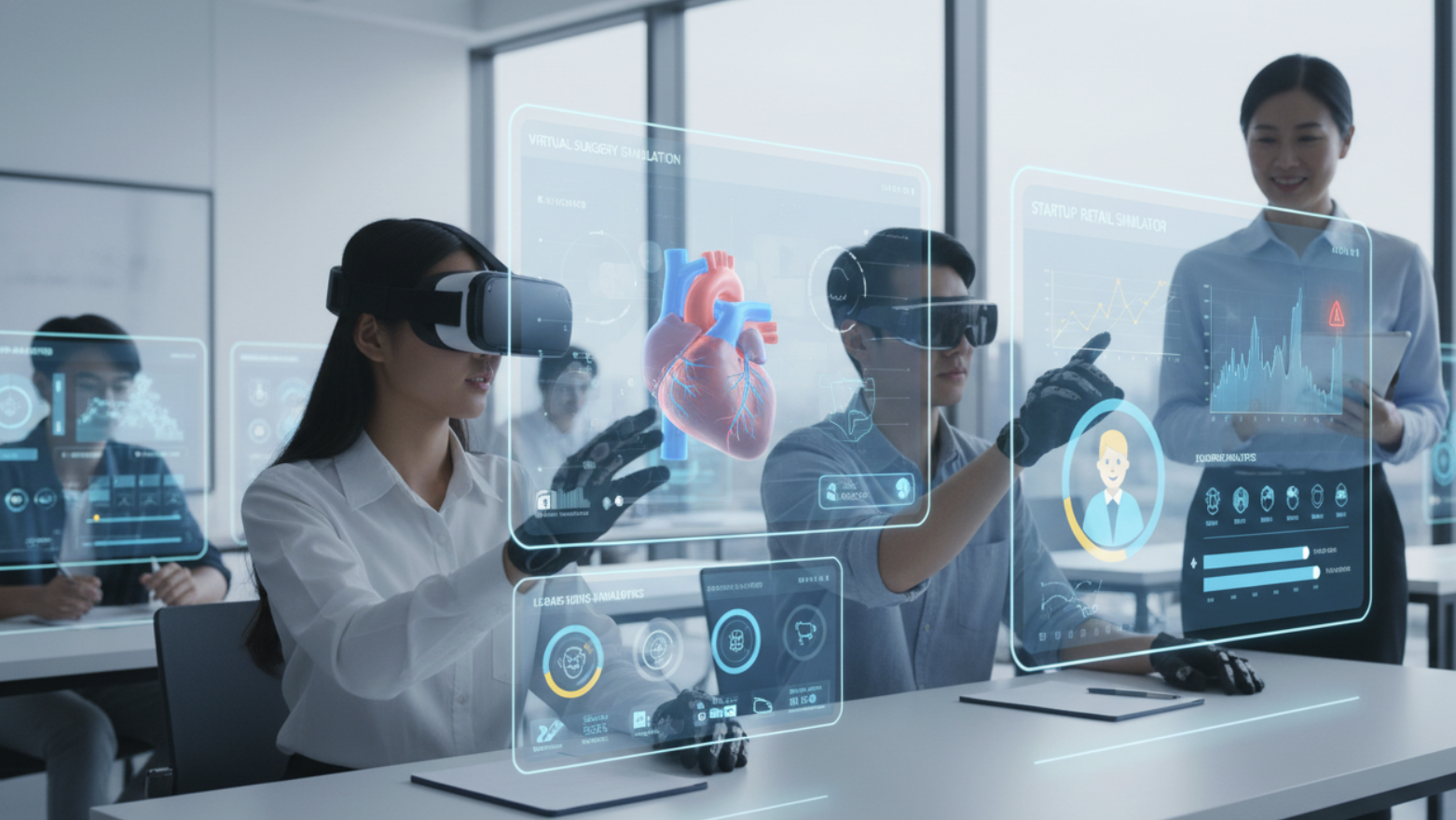
Medical students, for example, can practice surgeries in VR, while entrepreneurship students can manage virtual stores and interact with simulated customers. This trend enhances retention and engagement because learners feel fully involved in the scenario.
4. Collaborative Simulation Platforms for Remote Learning
The remote learning boom has increased the importance of collaborative simulation platforms. Today’s learners aren’t just consuming content. They’re working together to solve challenges in real time.
Imagine students from different continents collaborating on a business simulation, negotiating deals, managing virtual budgets, and competing against other teams. This approach builds communication skills, teamwork, and a global perspective.
Tip: Integrate collaboration features such as live dashboards, messaging, and team progress tracking into your simulation-based courses.
5. Micro-Simulation Modules for Focused Skill Development
Micro-learning is trending in education, and micro-simulations are the natural next step. These bite-sized simulations focus on specific skills, like negotiation, coding, or marketing strategy. This allows learners to practice targeted tasks in short bursts.
For example, a 15-minute simulation could teach students to optimize ad spend for a virtual product launch. Simulation based learning in education is becoming more modular, letting learners complete focused exercises on their own schedule while receiving immediate feedback.
6. Gamification and Simulation Games for Engagement
Gamification continues to boost engagement, and combining it with simulation games makes learning addictive. Students compete, earn rewards, and experience the thrill of decision-making in a safe environment.
Entrepreneurship courses now include virtual startup competitions where learners pitch ideas, manage budgets, and track metrics, all in a gamified simulation. The interactive and competitive nature of these exercises enhances focus, retention, and motivation.
Tip: Add leaderboards, badges, and challenges to maintain learner interest. Gamification works exceptionally well with business simulations for startups and small businesses.
7. Analytics-Driven Improvement of Educational Simulations
Finally, simulation data analytics is shaping the next frontier of education. By analyzing learner choices, common mistakes, and success rates, educators can continuously improve simulation based learning experiences.
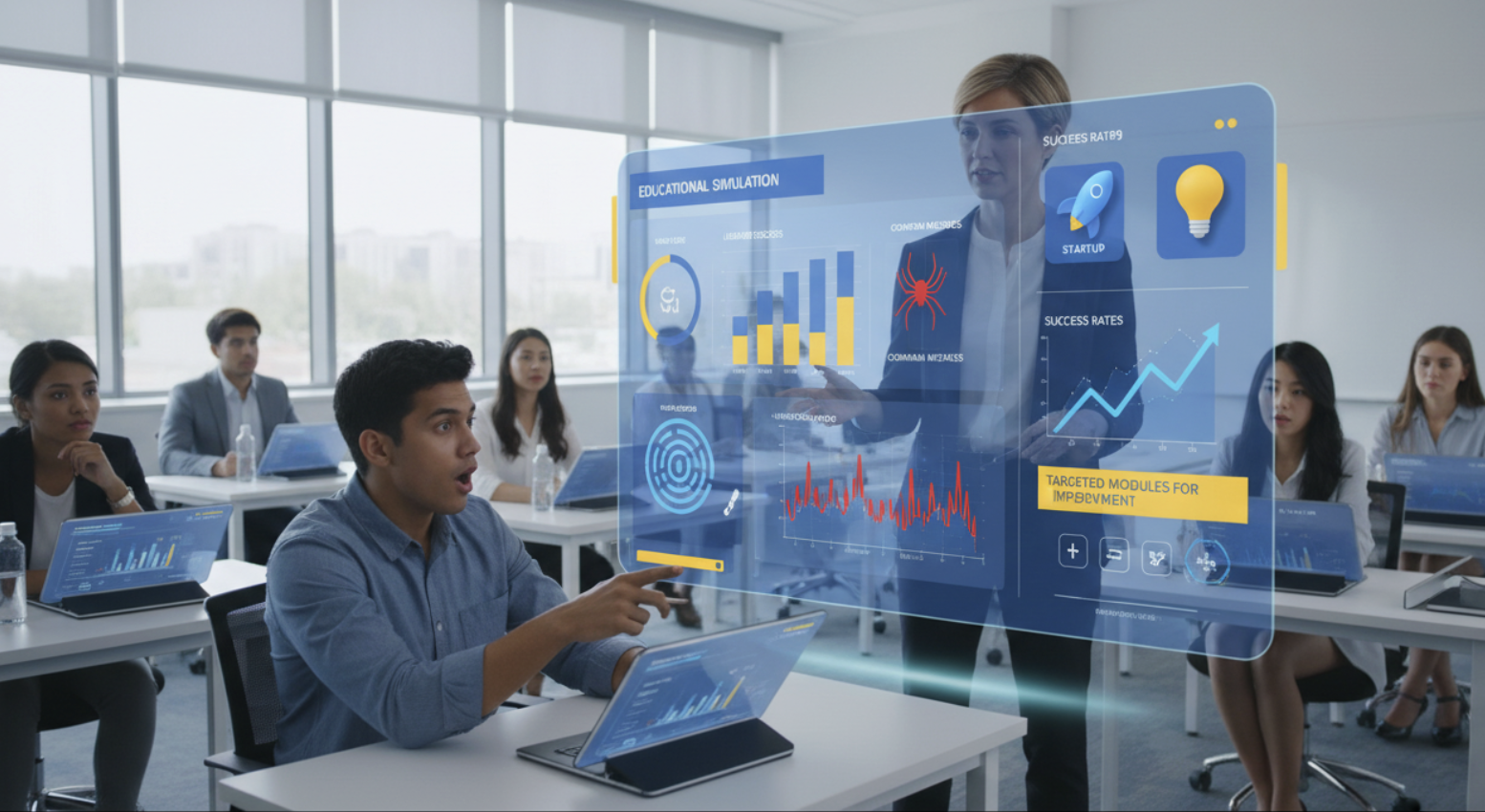
For example, analytics may reveal that learners consistently struggle with supply chain management in a business simulation. Educators can then introduce targeted modules to address gaps, ensuring better learning outcomes. This data-driven approach makes simulations not just engaging but highly effective.
Tip: Use platforms that provide detailed analytics dashboards and actionable insights. Continuous feedback loops make AI in education more impactful than ever.
Why Startup Wars Is Leading AI-Driven Simulations in 2026
Startup Wars is quickly becoming the go-to platform for simulation based learning in entrepreneurship and business education. Designed for students, educators, and small business teams, it combines immersive educational simulations with powerful AI-driven tools to make learning both interactive and practical.
Key Features & Benefits:
- Realistic Business Scenarios: Simulate startup challenges like funding, marketing, and scaling without financial risk.
- AI-Driven Feedback: Learners receive instant guidance and performance analytics, helping them understand the impact of their decisions.
- Hands-On Learning: Students and entrepreneurs actively experiment with strategies, fostering critical thinking and problem-solving skills.
- Collaboration & Competition: Teams can compete or collaborate in simulations, mirroring real-world business dynamics.
- Data Analytics: Track decision patterns, progress, and outcomes to improve both individual and team performance.
Startup Wars isn’t just a simulation game; it’s a complete learning ecosystem for modern entrepreneurship education. By using the platform, learners gain practical experience, educators can measure results with simulation data analytics, and startups can train teams efficiently, making it a central tool in simulation-based learning in education.
Transform How You Teach by Embracing Simulation Based Learning
The future of education is immersive, interactive, and data-driven. Startups, educators, and learners who embrace these trends in 2026 will gain a competitive edge, mastering skills through hands-on, practical experiences.
If you want to bring ethical, transparent, and simulation based learning into your classroom, Startup Wars makes it incredibly easy.
Our educational simulations are built with responsible AI, clear data practices, and real-world business scenarios that help students learn by doing, without ever compromising their privacy.
Explore how Startup Wars can support your program with hands-on, AI-driven simulations that both you and your students can trust.
📅 Schedule a Free Demo and see how Startup Wars can help you lead beyond the classroom today.
Frequently Asked Questions
1. What is simulation-based learning?
2. How does AI improve simulation-based learning?
3. Can startups and small businesses benefit from simulations?
4. What skills can learners develop through simulation in education?
5. Are simulations only for students?
6. Can simulations be integrated into online education platforms?
People Also Searched For:
-
How to Deal With Difficult Clients Without Losing Your Founder Values
-
From Fired to TechCrunch in 12 Months: Product Launch Plan Lessons with Logan Jones
-
Building Something From Nothing: The True Meaning of Entrepreneurship by Vivian Faustino-Pulliam
-
The Real Reasons Startups Fail - What 2 Startups & 70+ Startup Investments Teach You About Success
-
Most Founders Build Too Fast and That’s Why Startups Fail