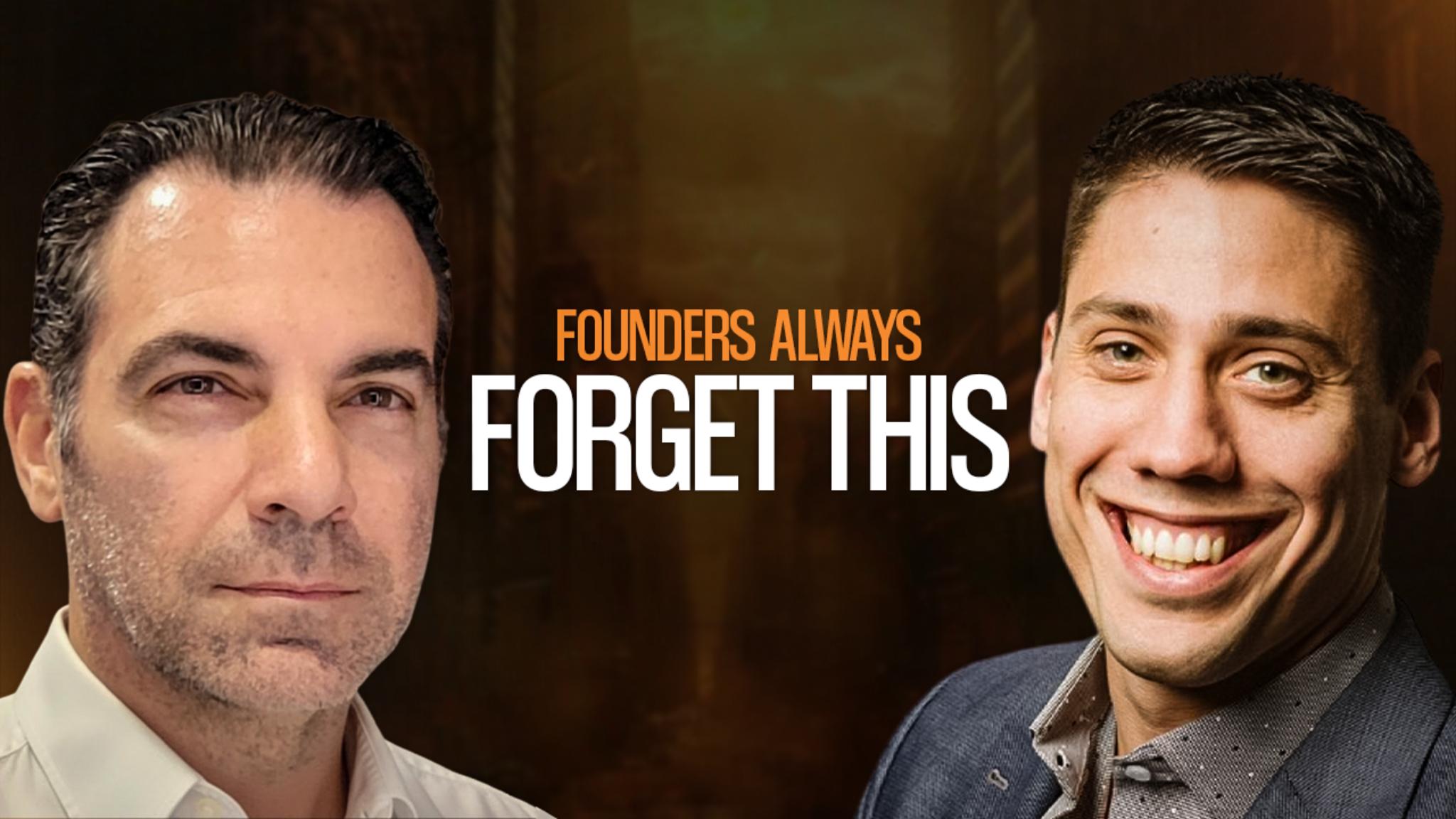
Most startups don’t fail because of bad ideas, weak products, or small markets. The most common reasons startups fail are people decisions, misaligned incentives, and capital choices that quietly compound over time.
Discover what Andrew Ackerman can teach you about success.
Most founders believe the hardest part of building a startup is getting the idea, building the product, or raising the first round.
That belief is comforting , and wrong.
The hardest part of building a startup doesn’t happen before the pitch deck or the first raise. It happens after momentum begins, when decisions become harder to reverse and relationships are put under real pressure.
That’s the part this episode of Founders Who Build focuses on.
🧭 A Founder and Investor Who Has Seen Both Sides of the Game
Andrew Ackerman is a 2x startup founder, serial entrepreneur, and venture capital investor with over 70 early-stage investments.
Andrew has built companies, shut one down, exited another, and spent years inside Dreamit Ventures, where he led industry verticals and worked with hundreds of startups. Today, he operates as a VC and SPV syndicate sponsor focused on PropTech and Construction Tech.
What makes Andrew’s perspective valuable isn’t just experience; it’s pattern recognition. He’s seen how startups fail not once, but repeatedly, often by making the same mistakes.
Why Startups Often Fail After They Start “Looking Successful”
Many startups don’t fail when things are obviously broken. They fail when things look good enough.
According to Andrew Ackerman, startups most often fail because of people’s decisions, capital mistakes, and misaligned expectations that quietly compound over time. These failures rarely feel dramatic when they happen. Instead, they emerge after early traction, funding, or validation, when companies look “successful” on the surface but are already breaking underneath.
These issues don’t announce themselves loudly. They exist and slowly erode trust, hold back decision-making, and quietly kill momentum.
This is exactly why experiential learning matters in entrepreneurship education. Platforms like Startup Wars are built to expose founders and students to these compounding decision dynamics early, helping them recognize how small people and capital choices can quietly determine long-term outcomes.
🧠 The Real Reasons Startups Fail After Early Success
🔍 Insight #1: Co-Founder Issues Kill More Startups Than Bad Products
Co-founder conflict is one of the most common and destructive causes of startup failure. Co-founder misalignment kills startups faster than bad products because trust breakdowns and decision deadlock stop execution entirely.
One of Andrew’s clearest observations is also one of the least discussed:
Most startups don’t die because the product is bad. They die because the people building it stop working well together.
Co-founder relationships carry enormous weight early on. When trust breaks, communication degrades, or incentives diverge, the company pays the price , often long before outsiders notice anything wrong.
Andrew shares why choosing a co-founder is less about complementary skills and more about aligned values, expectations, and tolerance for risk.
Co-founder misalignment is difficult to understand in theory. Startup Wars Entrepreneusrhip Simulations addresses this by placing participants in simulated founder roles where decision ownership create real tension, mirroring the people dynamics that often break startups in the real world.
🤝 Insight #2: Taking the Wrong Investment Can Make Failure Inevitable
Another recurring theme in the conversation is the danger of taking the wrong money.
According to Andrew Ackerman, taking the wrong investment can accelerate failure by introducing pressure, misaligned incentives, and constraints that force founders into decisions they never intended to make.
Andrew speaks candidly about situations where startups would have been better off staying smaller or slower , and how hard it is to undo the consequences of early fundraising decisions.
Capital decisions are rarely binary, and their consequences unfold over time. In Startup Wars, simulations begin with a fixed budget that participants must allocate across the company as decisions are made under time pressure. Founders experience how investment choices across product, marketing, operations, and finance interact, and how early capital decisions can constrain or unlock future options long before outcomes are visible.
⏳ Insight #3: Investors Are Evaluating Founders, Not Just the Business
Early-stage investors evaluate founders more than they evaluate financial metrics.
From an investor’s perspective, Ackerman explains that financial projections are expected to be wrong. So, investors are evaluating how founders think, how they reason through uncertainty, and how they make irreversible decisions under pressure. Investors look for clarity, self-awareness, and judgment, not performance or optimism.
Founders who understand this stop performing for investors and start communicating honestly. Ironically, that honesty often makes them more investable.
Because investors evaluate judgment under pressure, not just outcomes, learning environments matter. Startup Wars recreates high-pressure decision scenarios that allow founders and students to practice reasoning, prioritization, and communication, the same traits investors assess in real startups.
What 70+ Startup Investments Reveal About Repeating Failure Patterns
Across dozens of startup investments, the same failure patterns repeat: people problems, poor capital decisions, and unclear definitions of success.
According to Andrew Ackerman, the same failure modes appear again and again across industries and stages. Startups fail not because founders lack intelligence or ambition, but because they underestimate how much people dynamics, capital structure, and decision timing shape long-term outcomes.
Recognizing these patterns early gives founders a chance to avoid learning the same lessons the hard way.
These repeated failure patterns are not obvious to first-time founders. Startup Wars is built to surface these patterns early, giving participants exposure to the same structural mistakes investors see repeatedly, without requiring real companies to fail first.
❓ The Questions Founders Should Ask Before Mistakes Become Fatal
Many startup-ending mistakes are only obvious in hindsight.
Ackerman emphasizes that founders who ask hard alignment and decision-making questions early are far more likely to avoid irreversible mistakes later. The earlier founders confront alignment, incentives, and decision durability, the more resilient the company becomes.
If you’re building or fundraising, these questions are worth asking:
- Are you aligned with your co-founders’ values and definition of what “winning” actually means?
- Would your current investors still be the right partners if growth slows?
- Do you know which decisions are reversible, and which aren’t?
- Are you optimizing for speed or for durability?
Avoiding these questions doesn’t make them go away. It just delays the cost.
📘 Lessons learned in “What Actually Makes Startups Fail?”
What is the most common reason startups fail?
Most startups fail because of people’s decisions rather than product or market failure. Misaligned co-founders, poor capital choices, and unclear expectations quietly compound until execution breaks down.
Why are co-founder conflicts so dangerous for startups?
Co-founder conflicts undermine trust, communication, and decision-making. Once founders stop working well together, the company’s ability to execute collapses, even if the product and market opportunity remain strong.
How does taking the wrong investment hurt a startup?
The wrong investment introduces pressure, misaligned incentives, and strategic constraints. Capital often forces founders into decisions that accelerate failure rather than support long-term success.
What do investors actually evaluate in early-stage startups?
Early-stage investors primarily evaluate founders, not projections. Investors assess how founders think, handle uncertainty, communicate honestly, and make high-stakes decisions under pressure.
Can a startup fail even if it looks successful?
Yes. Many startups fail after raising capital or gaining traction. Companies often collapse during periods of apparent success when hidden people and decision-making issues are already eroding momentum.
🎧 Watch the full Episode
How Founders Can Avoid the Most Common Startup Failures
Conversations like this highlight why experiential founder education matters. Understanding startup failure isn’t about theory, it’s about seeing how real decisions play out over time. That’s the gap platforms like Startup Wars aim to close by exposing future founders to these dynamics before the stakes are real.
Explore Startup Wars’ entrepreneurship simulation to understand how capital, people, and decisions shape startup outcomes