
Table of Contents
Imagine a student using AI to draft an entire business plan overnight. Impressive! But is it ethical?
AI is no longer a futuristic tool; it’s here, and it’s shaping the way students learn and innovate. That’s why understanding the ethical use of AI in education is critical in entrepreneurship courses.
Teaching students to apply AI responsibly helps them develop critical thinking, ethical judgment, and business skills, all essential for future leaders.
As AI becomes more integrated into coursework, educators need practical strategies to ensure students use it ethically. Policies, rubrics, and reflective exercises can guide students in using AI responsibly while maximizing learning outcomes.
Why the Ethical Use of AI in Education Matters
AI brings incredible opportunities to entrepreneurship education, from market analysis to predictive modeling. However, without clear expectations around the ethical use of AI in education, students may unintentionally rely on AI in ways that weaken critical thinking and misrepresent their own abilities. Some challenges include:
- Over-reliance on AI for assignments: Students may bypass research or analysis, relying entirely on AI-generated content.
- Plagiarism or misrepresentation: Passing off AI-generated work as one’s own can violate academic integrity.
- Bias in decision-making: AI models can reflect existing societal biases, and students must learn to evaluate outputs critically.
Example: A student using AI to generate a marketing strategy without checking data sources may suggest unethical tactics or biased targeting. Without guidance, this could become a habit that persists in real-world business scenarios.
Tip for instructors: Introduce discussion prompts around real AI ethical dilemmas in business. Ask students: “If AI suggests a cost-cutting strategy that could harm employees, how should you respond?”
Core Principles for Ethical AI Use in Students
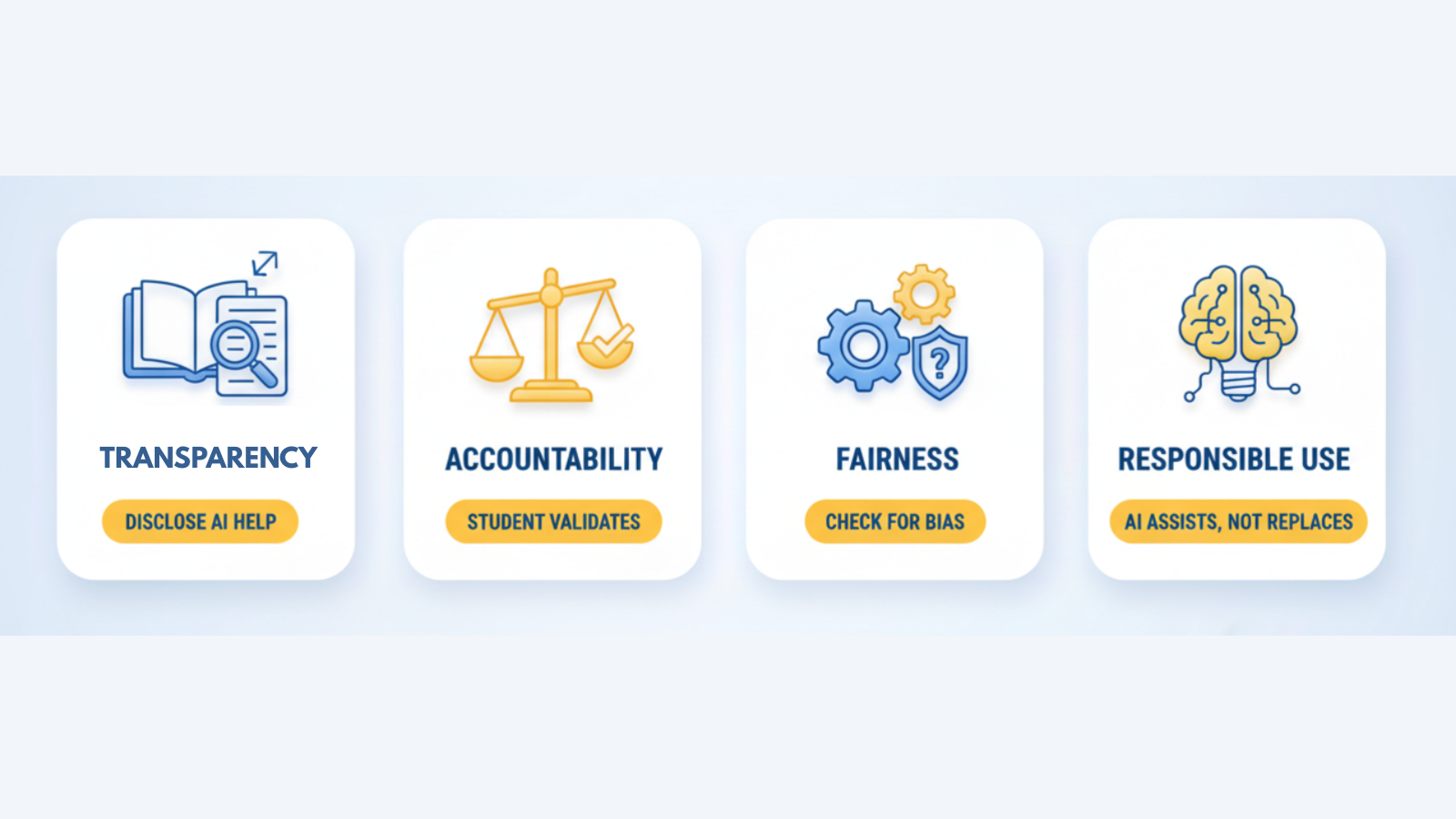
To teach the ethical use of AI in education, educators can anchor their guidelines around four essential principles:
- Transparency: Students must disclose AI assistance. For instance, if AI helped draft financial projections, this should be noted in the assignment.
- Accountability: Students remain fully responsible for the content and decisions derived from AI. Even if AI generates a plan, the student must validate it.
- Fairness: AI outputs should be examined for bias. If an AI tool suggests marketing strategies targeting only a specific demographic, students should question it.
- Responsible Use: AI should complement human judgment, not replace it. Encourage students to use AI to explore scenarios, not to finalize decisions without review.
Tip: Include mini-case studies in assignments, e.g., “AI recommends eliminating a product line. Evaluate the recommendation ethically before taking action.” This encourages ethical decision-making in real scenarios.
How to Implement Ethical Use of AI in Education in Courses
Implementing the ethical use of AI in education requires clear guidelines, transparent communication, and structured opportunities for reflection.
- Set Clear Guidelines: Define what constitutes responsible AI use, such as disclosure, validation of outputs, and ethical decision-making. Make this part of your syllabus.
- Integrate AI Ethics Discussions: Dedicate class sessions to AI ethical issues in business and to ethical use of AI in education. Debate scenarios where AI use may conflict with ethics.
- Encourage Reflection: Assign short reflections where students describe how they used AI and what ethical considerations guided them.
Example: Ask students to write a one-page reflection after using AI in a business simulation: “Which AI recommendations did you follow? Which did you reject and why? What ethical considerations guided your choices?”
Emerging Trends in Ethical AI in Education
The field of AI in education is evolving rapidly, and entrepreneurship courses are at the forefront of innovation. Staying aware of emerging trends can help educators prepare students for real-world ethical decision-making.
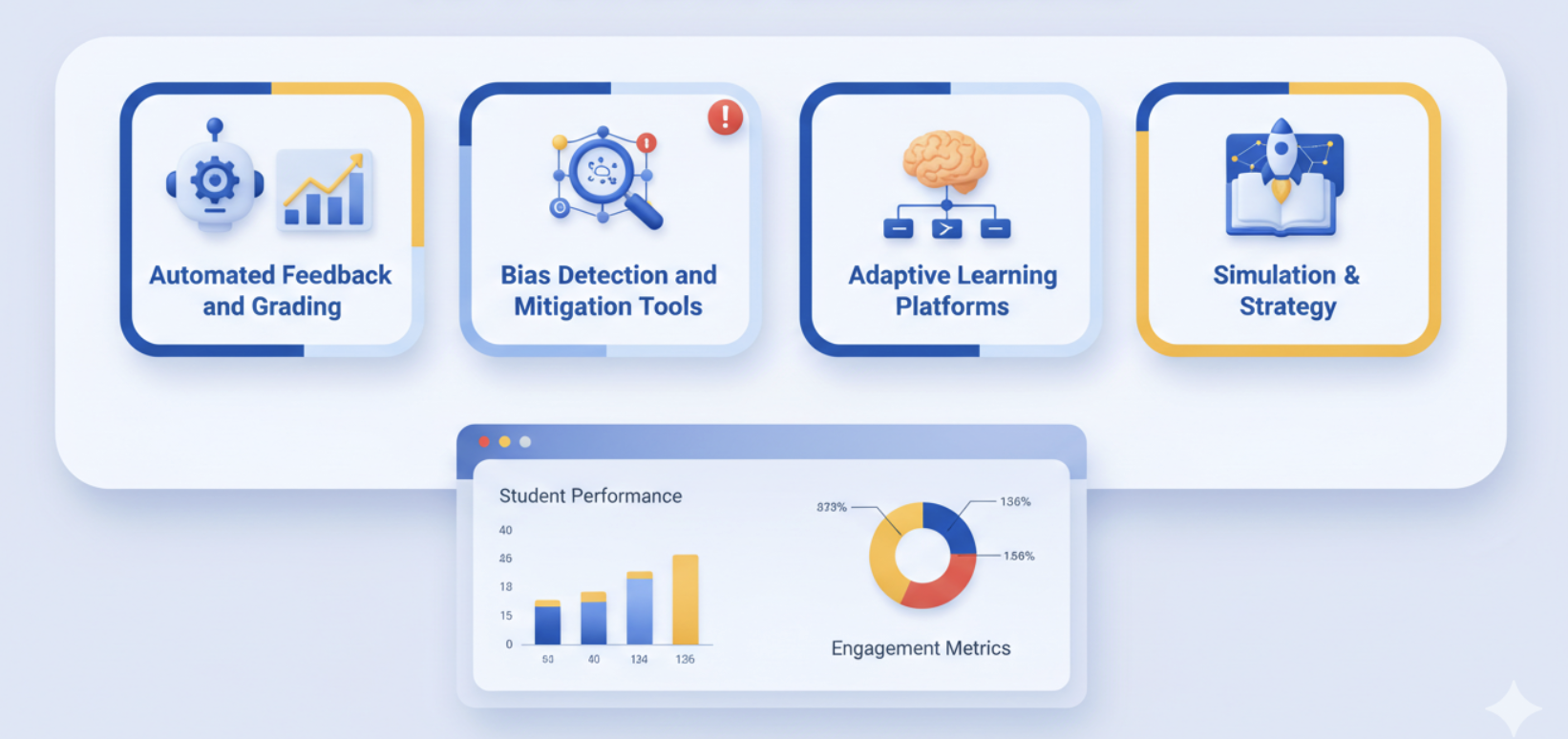
1. AI-Powered Simulations
Business simulations now integrate AI to create dynamic market scenarios. Students can test strategies and see consequences, but they must evaluate AI suggestions ethically.
Assign reflection questions after simulations, like: “Did AI recommend any shortcuts that could compromise ethics? How did you respond?”
2. Automated Feedback and Grading
AI can provide instant feedback on assignments or projects. While convenient, students must understand how to interpret and act on AI guidance responsibly.
Encourage students to validate AI suggestions against course objectives or real-world data before making final decisions.
3. Bias Detection and Mitigation Tools
AI tools now help detect bias in decision-making, marketing strategies, and financial predictions. Teaching students to critically assess these outputs promotes fairness.
You can include mini-assignments where students identify potential biases in AI-generated outputs and propose adjustments.
4. Adaptive Learning Platforms
AI can personalize learning experiences based on student progress. Ethical considerations include transparency and privacy when using student data.
Discuss scenarios where AI recommendations might favor certain groups over others, encouraging discussion on fairness and equity.
These trends show why the ethical use of AI in education must evolve alongside new tools and technologies.
Practical Rubric Pack for Assessing Ethical AI Use
Rubrics make ethical AI use tangible and measurable. A sample rubric could include:
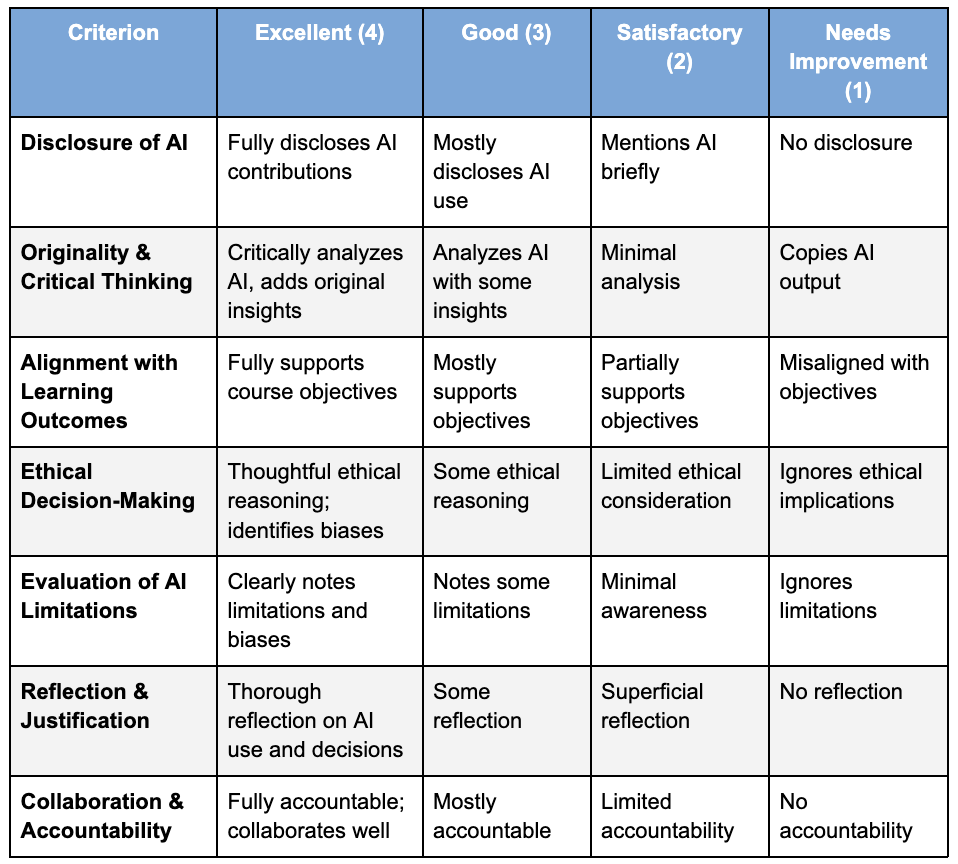
Tip: Share the rubric with students before assignments so expectations around the ethical use of AI in education are clear and consistent.
Tips for Encouraging Ethical AI Habits in Students
Teaching the ethical use of AI in classroom goes beyond rules. It’s about cultivating habits and mindset. Here are actionable strategies:
- Model Ethical Behavior: Demonstrate how you, as an instructor, use AI responsibly in class examples.
- Reward Ethical Decision-Making: Include rubric points for ethical reflection and transparency.
- Encourage Collaboration: Students learn from each other by discussing ethical challenges in group projects.
- Highlight Real-World Implications: Discuss how ethical lapses in AI can impact business, society, and careers.
- Use Gamification or Simulations: Platforms like Startup Wars allow students to experiment safely with AI while following ethical guidelines, reinforcing good habits through practice.
Promote Responsible AI Use in Entrepreneurship Education!
The ethical use of AI in education is essential for preparing students to navigate the modern business landscape responsibly. By combining clear policies, reflective exercises, rubrics, and real-world simulations, educators can guide students to apply AI ethically while fostering innovation.
Platforms like Startup Wars give students hands-on opportunities to practice ethical AI use in realistic business scenarios. Teaching students to use AI responsibly ensures they not only gain technical skills but also develop the judgment and integrity necessary for future business success.
Explore ethical AI in action. Try Startup Wars simulations today!
📅 Schedule a Free Demo and see how Startup Wars can help you lead beyond the classroom today.
Frequently Asked Questions
What is the ethical use of AI in education?
How can educators implement ethical AI in business courses?
What are the common ethical issues of AI in education?
How can a rubric help assess ethical AI use in assignments?
People Also Searched For:
-
The Real Reasons Startups Fail - What 2 Startups & 70+ Startup Investments Teach You About Success
-
Most Founders Build Too Fast and That’s Why Startups Fail
-
ChatGPT 5 Release: What Educators and Students Should Know
-
Case Study in Education vs Simulation: Which Is Better for Teaching Entrepreneurship?
-
How to Use Business Simulations in the Classroom