Why startups fail isn’t about lack of execution, it’s about building too fast without clarity. Learn why founders ship the wrong solutions and how problem-first thinking prevents failure.
Why startups fail is rarely a question of execution speed or technical ability. Most startups fail because founders build solutions before fully understanding the problem they’re trying to solve. When speed replaces clarity, teams ship products that address the wrong pain points, wasting time, capital, and momentum.
Startup culture glorifies speed: shipping fast, launching early, and iterating constantly. But speed without clarity doesn’t create momentum. It creates waste. Founders write code, they launch products, and months later, they realize no one actually cares.
This mistake shows up at every stage: first-time founders chasing apps, experienced operators copying playbooks, even well-funded teams racing toward the wrong outcome. And once you’re building, it’s hard to stop.
That problem, the tension between building fast and building the right thing, is exactly what this first episode of Founders Who Build explores.
🧭 A Founder Who Built From the Problem Up
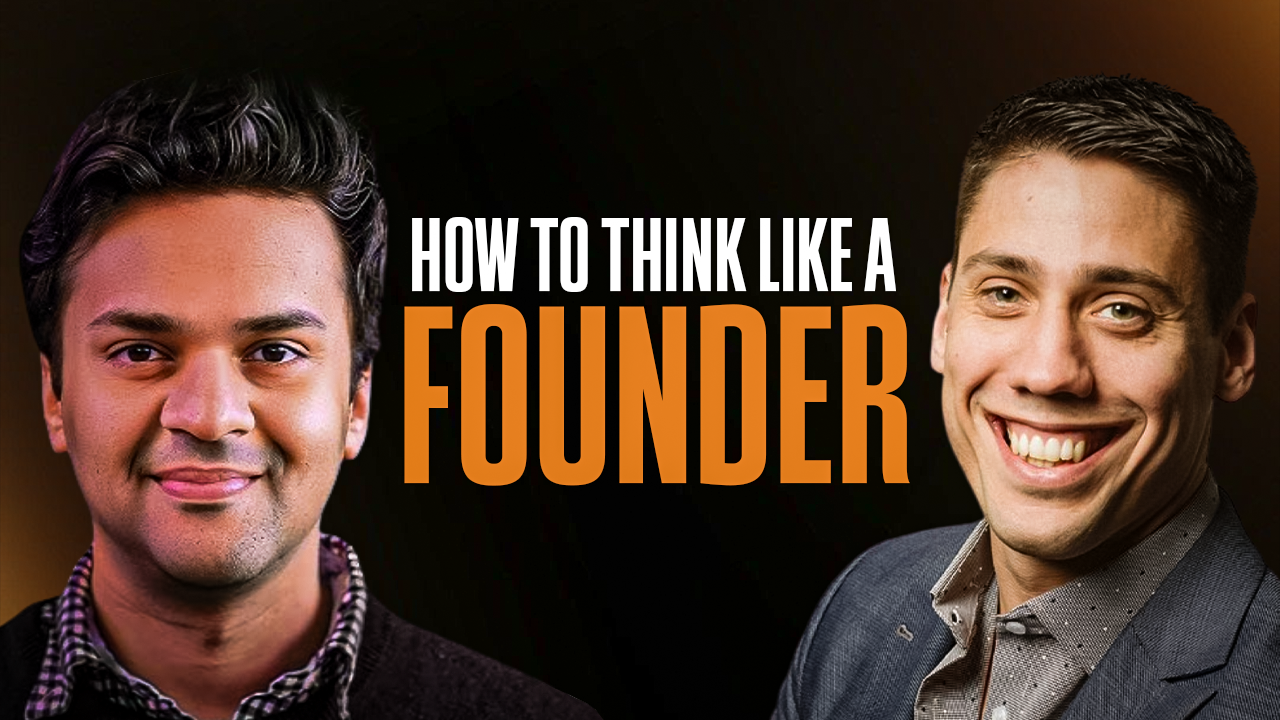
In this episode, our CEO, Jedidiah Weller sat down with Dhairya Pujara, Founder and CEO of YCenter, a global innovation agency that’s worked with Fortune 500 companies, universities, and startups across more than 30 countries and four continents.
Dhairya isn’t a founder who learned entrepreneurship from books. He learned from experience and by not knowing what he was doing. His work has taken him from public health hospitals in Mozambique to keynote stages at the United Nations and World Bank, Stanford, Wharton, and beyond.
His impact has been recognized at the highest levels, including a rare U.S. visa given only for people with “extraordinary abilities”, a designation reserved for individuals operating at the top of their field.
But what makes Dhairya’s perspective valuable isn’t just scale or status. It’s how (and why) he built.
💡 The Moment YCenter Was Born
Dhairya’s company didn’t start with an idea for a startup. It started with frustration.
After earning advanced degrees in biomedical engineering, he quit his corporate job after one day and moved to Mozambique to work in public health. There, he encountered a hard truth: despite years of “fancy education”, he couldn’t fix many of the real problems in front of him.
The issue wasn’t intelligence or effort.
It was a gap between what classrooms teach and what the world actually needs.
That gap became the problem YCenter was built to solve: helping people and organizations develop real-world problem-solving, innovation, and execution skills. Not through theory, but through practice.
This origin story matters because it explains why Dhairya is so adamant about one thing founders consistently get wrong.
🧠 The Core Reasons Why Startups Fail
🔍 Insight #1: Why Do Founders Build the Wrong Product?
One of Dhairya’s strongest points in the conversation is also one of the most ignored:
People Buy Problems, Not Solutions
Founders who start with features, apps, or products before deeply understanding the customer’s pain almost always struggle to find traction.
Dhairya is blunt about this: if you can’t stand on a stage and describe a problem so clearly that people immediately recognize themselves in it, you’re not ready to build.
Writing code won’t fix that.
Raising money won’t fix that.
The uncomfortable truth is that defining the problem feels slower and less exciting than building. But skipping it almost guarantees failure because you’re asking customers to care about something you haven’t fully understood yourself.
🤝 Insight #2: Why Mentorship Matters More Than Funding in the Early Stages
Chase Mentors Before You Chase Money
Another recurring theme in the episode is the danger of prioritizing capital too early.
Dhairya describes it simply:
Your phone book should be bigger than your checkbook.
Early-stage founders often believe funding is the unlock. In reality, relationships are what help you survive inevitable mistakes: bad hires, wrong assumptions, near-death moments. Mentors, peers, and trusted advisors don’t just give advice; they help you think when your judgment is compromised.
Ironically, capital tends to follow once that foundation exists. But without it, money can amplify misalignment rather than fix it. Something Dhairya experienced firsthand when taking the wrong investment nearly derailed his company.
⏳ Insight #3: Longevity Is the Real Founder Skill
YCenter has existed for over 13 years, and that alone puts Dhairya in a small minority of founders.
Longevity doesn’t come from hacks or virality. It comes from emotional resilience and navigating impostor syndrome, boredom, fear, and moments where quitting feels rational.
One of the most honest parts of the conversation is Dhairya describing how, even now, launching a new product brings back the same fear he felt at the beginning. That fear isn’t a sign you’re failing. Often, it’s a sign you’re still stretching.
Founders don’t “arrive.” They recalibrate over and over.
❓ Questions Every Founder Should Ask Before Building Anything
If you’re building (or thinking about starting) here are a few questions worth sitting with:
- Can you clearly articulate the problem you’re solving without mentioning your solution?
- Who would you call at midnight for advice and why? And who could call you?
- Are you building something because it’s exciting, or because it’s necessary?
- If this company still exists in 10 years, what would have made that possible?
None of these questions has easy answers. But avoiding them is far more expensive than facing them early.
📘 Lessons learned in “Why Founders Fail When They Build Too Fast”
Why do most startups fail early?
Most startups fail because founders build solutions before deeply understanding the problem they are solving. Without problem clarity, teams create products that customers don’t truly need, leading to low traction and wasted resources.
Is building fast bad for startups?
Building fast is only effective when the problem is clearly defined. Speed without clarity leads to shipping the wrong product faster, which increases failure rather than reducing it.
Why is problem definition more important than the solution?
Customers buy solutions only after they recognize and care about the problem. Without a compelling problem, even well-built products struggle to gain adoption.
Should founders focus on mentors or investors first?
Founders benefit more from mentors and trusted relationships early on. Strong networks provide guidance, emotional support, and clarity, while funding without alignment can magnify mistakes.
How can founders avoid building the wrong thing?
Founders should spend time validating the problem through conversations, observation, and real-world feedback before writing code or raising capital. If the problem isn’t clear, building should pause.