Let’s be honest.
Students today don’t expect one career.
They expect five.
According to workforce research from McKinsey and global employment reports, automation, AI, and economic volatility are accelerating career shifts across industries. Professionals aren’t asking if they’ll pivot.
They’re asking:
“When it happens, will I be ready?”
As a university professor or dean, this question should matter deeply.
Because when people search “how to make a career change”, they are not just looking for resume tips.
They are looking for:
Strategic clarity
Financial security
Decision-making confidence
Entrepreneurial readiness
And many graduates are leaving business school without ever practicing those skills in a real, consequence-driven environment.
Brace yourself… because lectures alone won’t cut it anymore.
Table of Contents
How to Make a Career Change Successfully in 2026
If you’re wondering how to make a career change in 2026, the most effective approach is to:
Audit your transferable skills.
Identify high-growth industries.
Build future-proof competencies (AI literacy, financial fluency, strategic thinking).
Gain hands-on, real-world decision-making experience.
Validate your transition through experiential learning before committing fully.
But here’s the real insight:
Career change success is no longer about credentials alone.
It’s about adaptability under pressure.
And that’s exactly where modern business education must evolve.
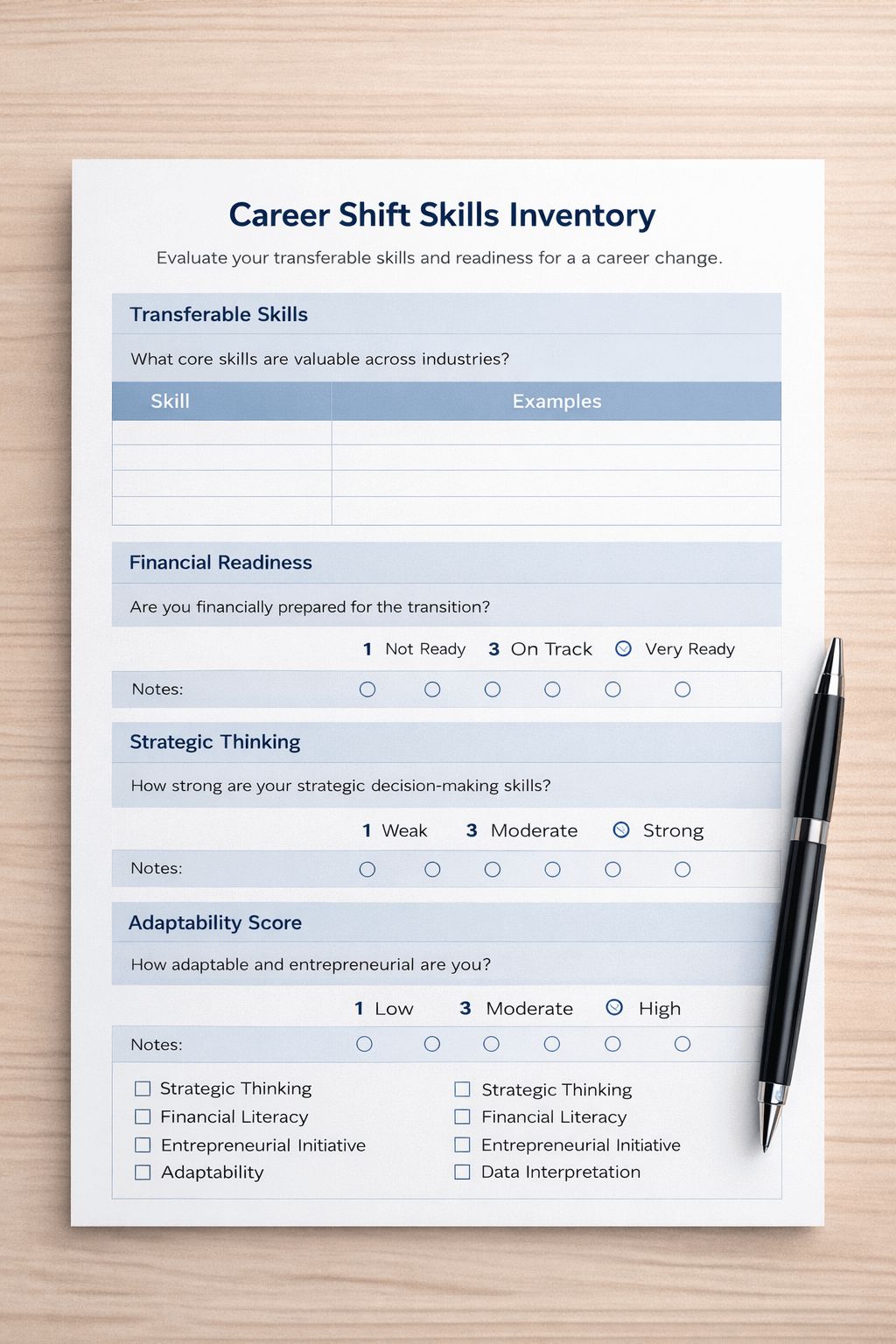
Most career changers underestimate what they already have.
Skills that transfer across industries include:
Budget management
Data interpretation
Negotiation
Strategic planning
Team leadership
Market analysis
The problem?
Most people have studied these concepts, but never executed them under pressure.
Understanding SWOT analysis is different from running a company with limited capital and real competitors.
One of the top reasons career changes fail is financial miscalculation.
Before pivoting, professionals must:
Calculate runway (3–6 months minimum)
Estimate opportunity cost
Forecast income volatility
Understand capital allocation strategy
This requires applied financial literacy, not theoretical understanding.
And yet many business students graduate without ever having managed simulated capital in dynamic conditions.
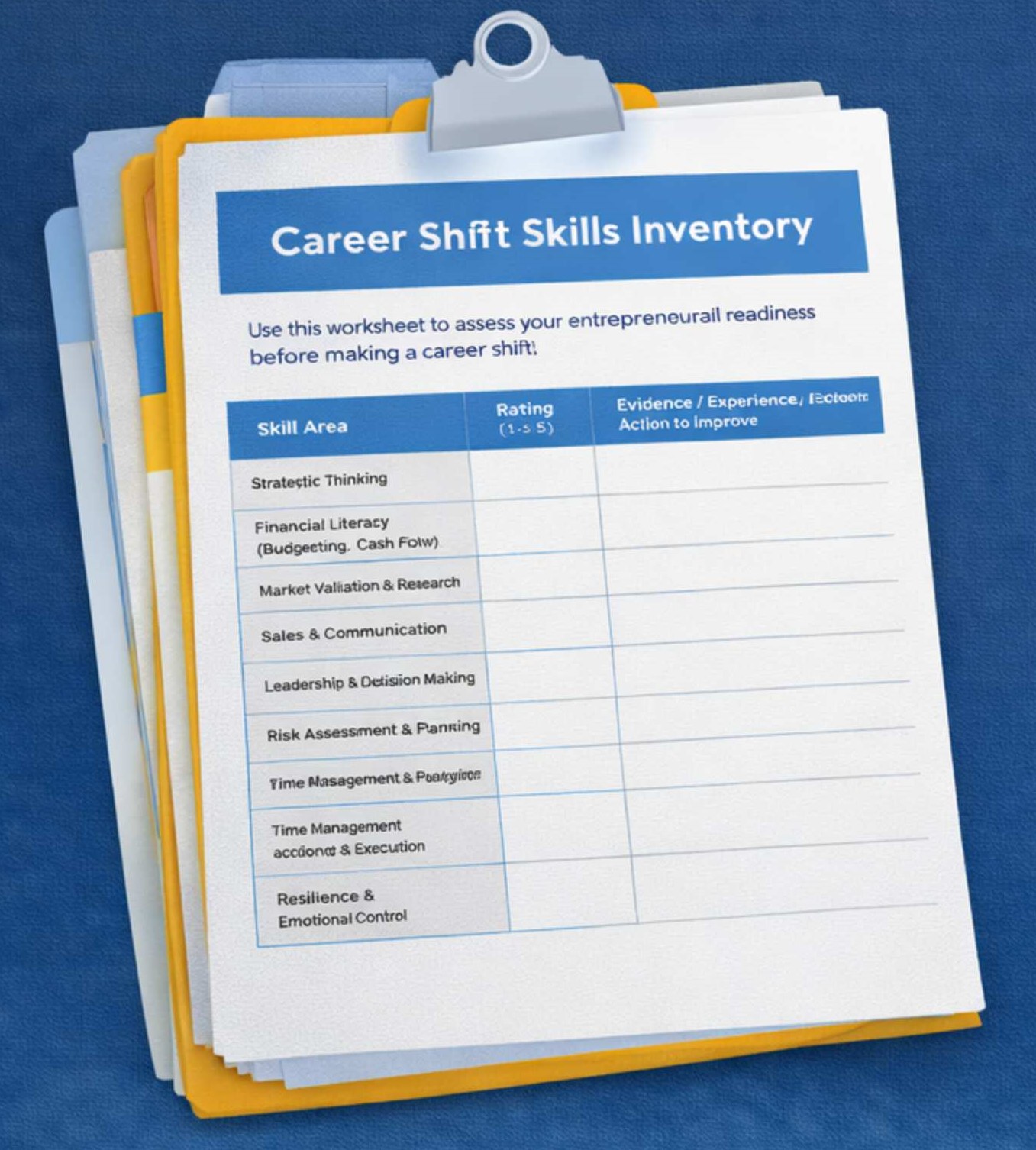
🧠 Not Sure If You’re Ready?
Plan your career shift strategically.
Assess your strengths, identify risk gaps, and map your improvement plan.
When researching how to make a career change, you’ll repeatedly see these skill categories:
🔹 Analytical Thinking
🔹 AI & Digital Fluency
🔹 Entrepreneurial Mindset
🔹 Cross-Functional Collaboration
🔹 Strategic Adaptability
Notice something?
These are not passive skills.
They require:
Decision-making
Scenario analysis
Resource management
Real-time feedback loops
Which brings us to a hard truth for higher education.
The Hidden Gap in Business Education
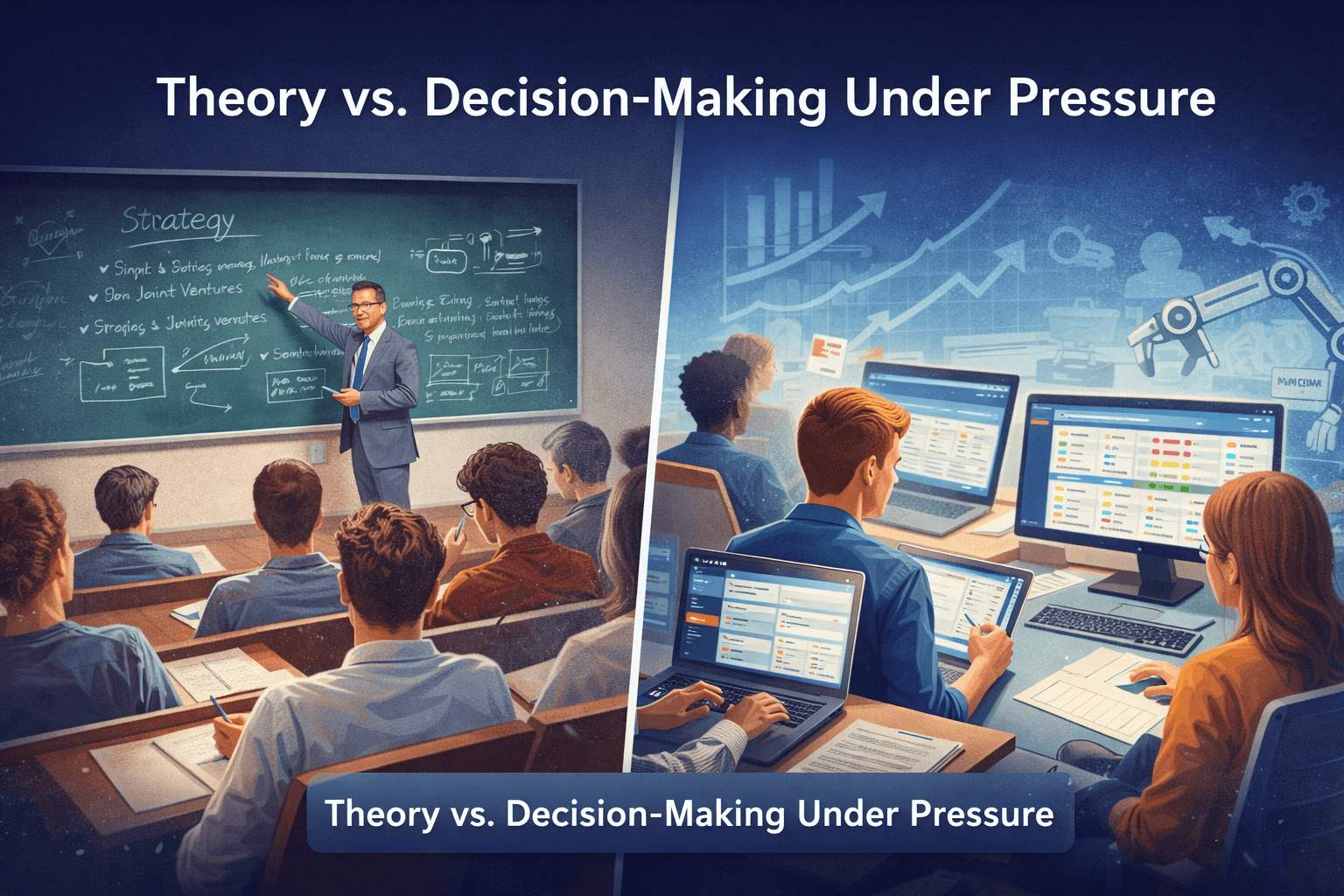
Traditional curriculum often relies on:
Static case studies
Business plan presentations
Group discussions
Hypothetical financial projections
Students learn frameworks.
But they rarely experience:
Time-constrained capital allocation
Competitive pressure
Departmental accountability
Strategic pivots based on performance data
And yet…
These are precisely the skills needed to successfully change careers.
Because career transitions are not academic exercises.
They are strategic decisions under uncertainty.
Career Change Readiness Requires Consequence-Based Learning
Professionals who transition successfully often share one trait:
They have practiced making decisions in uncertain environments.
That’s what builds confidence.
And that’s why experiential entrepreneurship education is becoming essential.
Research from education and workforce studies shows that applied simulations:
Increase strategic thinking
Improve financial judgment
Strengthen risk tolerance
Enhance real-world adaptability
If students simulate running a business before graduation…
They become dramatically more prepared for career pivots later.
How Startup Wars Supports Career Change Readiness
Startup Wars is an entrepreneurship simulation designed specifically for universities to build real-world decision-making skills.
Students begin with:
Assigned startup capital
Department-level roles (Marketing, Finance, HR, Operations)
Competitive market conditions
Time-based pressure
They must:
Allocate limited budgets strategically
Analyze performance dashboards
Pivot strategy based on results
Manage cross-functional tradeoffs
React to simulated market shifts
In short:
They experience the mechanics of career transition logic before needing it in real life.
That’s not theory.
That’s applied adaptability training.
The 2026 Career Change Framework Universities Should Teach
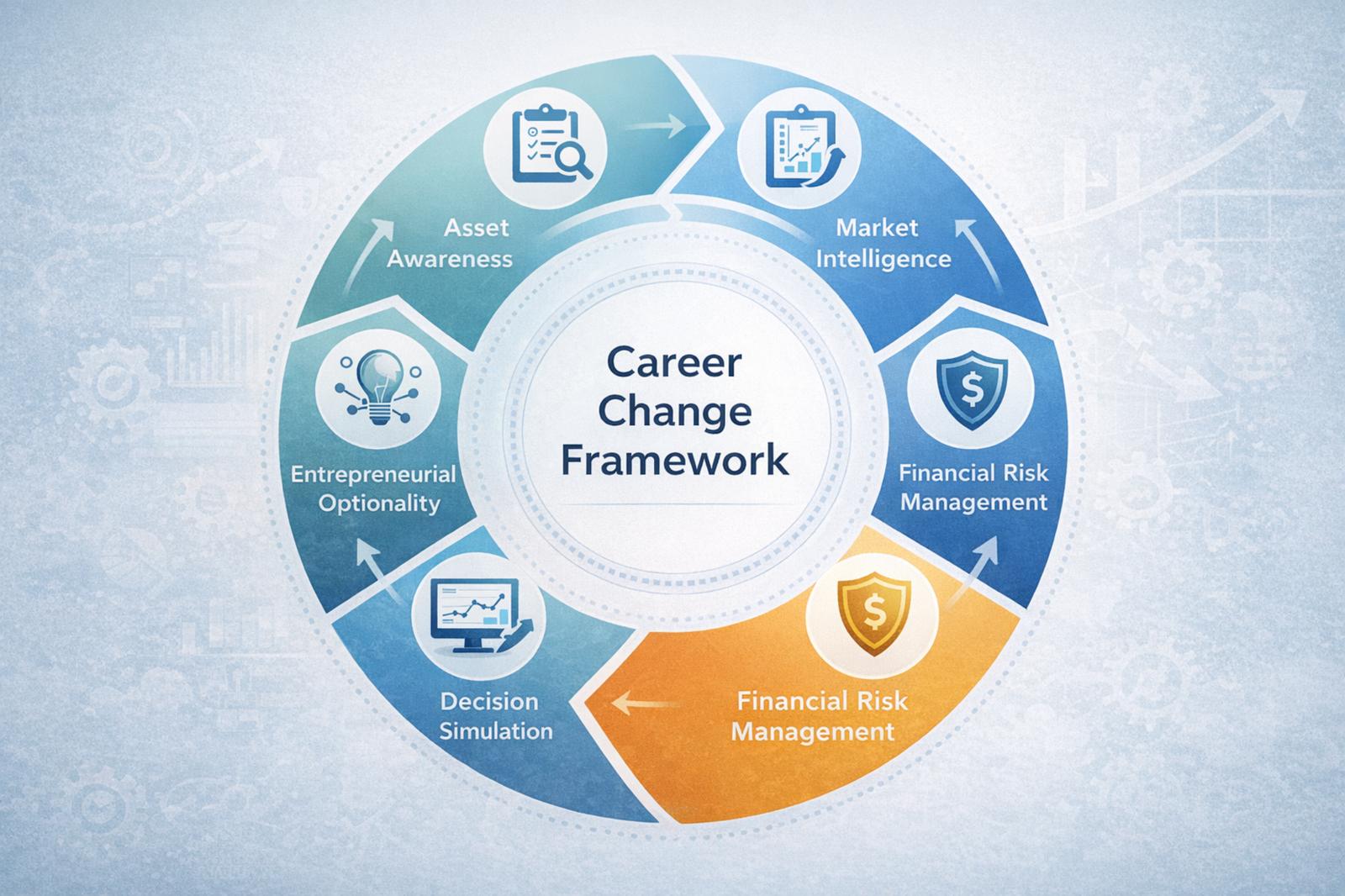
If we truly want to answer the question how to make a career change, our curriculum must reflect reality.
Here’s the model:
1. Asset Awareness
Identify existing skills and capital.
2. Market Intelligence
Understand industry demand and competitive positioning.
3. Financial Risk Management
Model runway and scenario outcomes.
4. Decision Simulation
Practice making strategic choices with consequences.
5. Entrepreneurial Optionality
Even if students don’t start businesses, they must think like someone who could.
Entrepreneurial literacy is career insurance.
And students know it.
Why This Matters to Deans and Curriculum Directors
Higher education is increasingly judged by:
Graduate employability
Career mobility
Entrepreneurial outcomes
Workforce relevance
If your graduates struggle to pivot industries…
Your program risks appearing outdated.
But if your graduates:
Launch startups
Navigate industry shifts
Demonstrate capital fluency
Adapt under uncertainty
You become a future-focused institution.
That’s strategic positioning.
The Future Belongs to Adaptive Graduates
Searching for how to make a career change is no longer a niche query.
It reflects a global shift.
Careers are fluid.
Industries are evolving.
Automation is accelerating.
Universities must respond.
Not with more theory.
But with practice under pressure.
See how Startup Wars transforms entrepreneurship education into career resilience training.
Because preparing students for stability isn’t enough anymore.
You must prepare them for change.
Frequently Asked Questions
1. How do you successfully make a career change?
2. What skills are most important for career change in 2026?
3. Why are more people changing careers now?
4. How can universities prepare students for career changes?
5. Does entrepreneurship education help with career change?
Let's Empower The Next Generation Of Founders
Schedule a call with our team to explore how Startup Wars can fit into your classroom.