
Table of Contents
AI is already in your classroom. Whether invited or not, it shows up in student work. At the same time, many educators feel stuck. On one side, generative tools help students think faster. However, on the other side, traditional assessments no longer measure real learning. As a result, grading feels uncertain. Meanwhile, trust feels fragile. Time also feels wasted.
Because of this tension, an AI reality gap has formed. Most responses focus on control. For example, detection tools promise clarity. Policies also promise order. However, in practice, both approaches often fail. False positives appear. Consequently, appeals increase. Faculty workload grows instead of shrinking.
Importantly, the deeper issue is not cheating. Instead, it is AI assessment design. When assignments reward predictable output, AI thrives. In contrast, when they reward judgment and context, AI fades into the background. Therefore, the real solution sits inside assessment choices, not software.
Meanwhile, recent faculty surveys from teaching and learning centers show a clear shift. Instructors who redesigned assessments reported fewer AI-related concerns. At the same time, they reported faster grading cycles. Moreover, student participation increased. These outcomes came from design, not enforcement.
Because of this shift, this guide focuses on practical change. You will find six assignments you can use immediately. They require no detectors. They fit within existing courses. Most importantly, they allow you to grade student thinking, not just text.
Why Traditional Assessments Break in the AI Era
Traditional assessments fail for one simple reason. They reward output over process.
Detection Is a Weak Foundation
Detection tools react after submission. By then, frustration already exists. Instructors spend time investigating instead of teaching. Students feel accused instead of guided.
Moreover, detection accuracy remains inconsistent. Studies comparing AI detectors across institutions show wide variance in results. Some tools flag original work. Others miss AI-generated text entirely. This uncertainty erodes confidence on both sides. As a result, AI assessment becomes adversarial. That dynamic does not support learning.
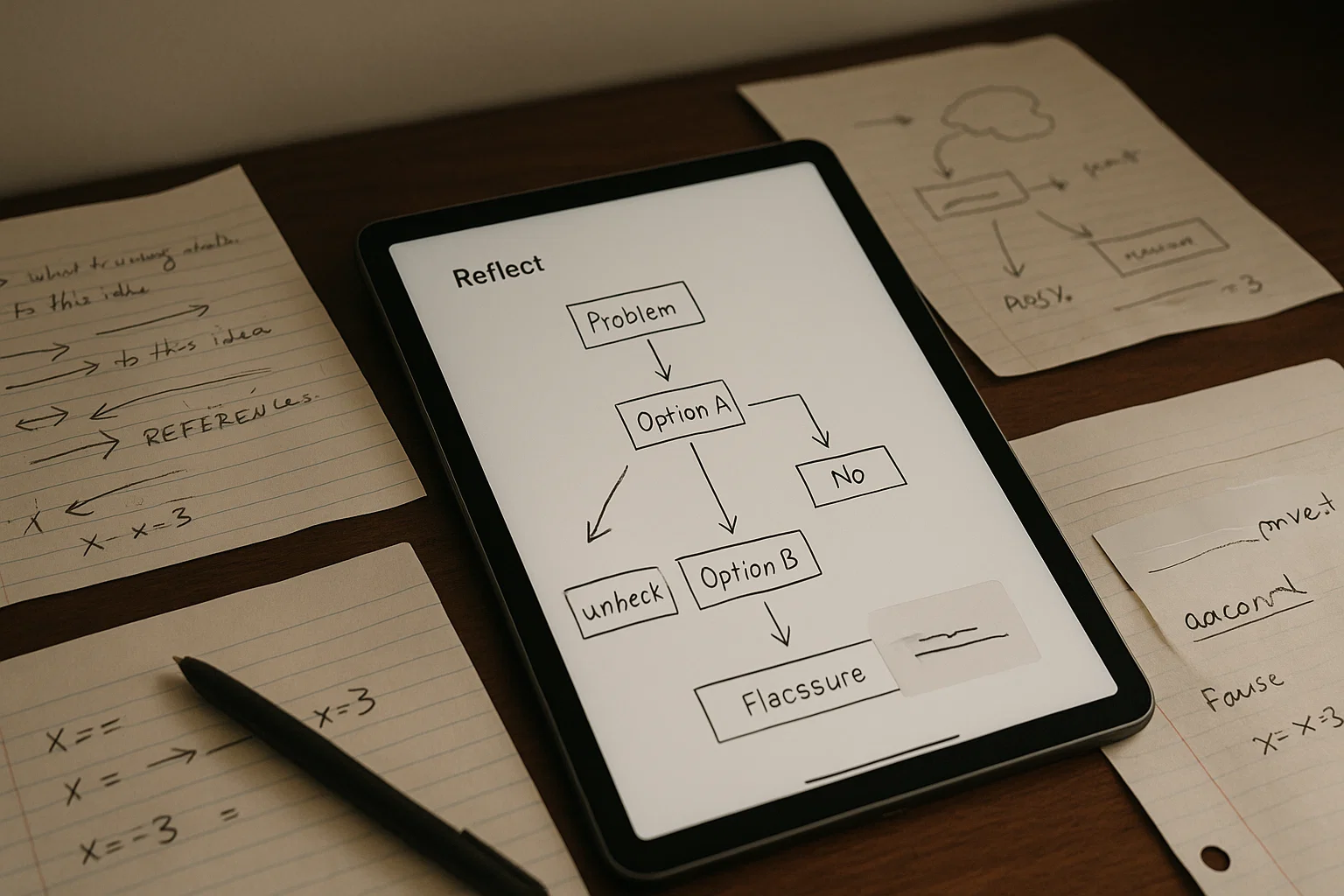
AI Exploits Predictable Assessment Design
AI performs best with familiar prompts. Essays with generic questions invite generic responses. Take-home exams without context invite automation. These formats made sense before generative tools. Now, they expose a weakness in student assessment practices.
When tasks ask for summaries, definitions, or surface analysis, AI completes them easily. Students who want shortcuts will find them. Students who want to learn feel discouraged. The problem is not student intent. The problem is predictability.
What AI Assessment Should Measure Instead
Effective AI assessment measures thinking. It captures decision-making. It reveals reasoning paths. Assignments should show how students arrive at conclusions. They should require trade-offs. They should connect theory to lived or simulated context. This approach aligns with authentic assessment principles. It also supports clearer grading. Instructors evaluate reasoning quality, not writing polish.
When assessment focuses on judgment, AI becomes a tool, not a threat. Students may still use it for support. However, they cannot outsource thinking. That shift restores balance. In the next section, we will define what makes an assignment AI-resilient. We will also explain why these designs reduce workload instead of adding to it.
What Makes an AI-Resilient Assignment
AI-resilient assignments share one trait. They reveal thinking, not just answers. When educators redesign AI assessment, the goal is not to block tools. Instead, the goal is to design tasks where shortcuts fail. This shift changes everything.

They Require Context AI Does Not Have
AI works best with general knowledge. It struggles with personal, local, or situational context. Therefore, strong assignments anchor learning in specific conditions. For example, asking students to analyse a concept is easy for AI. Asking them to apply it to their own experience, team decision, or class scenario is not.
This approach aligns with findings from the Stanford Graduate School of Education, which shows that contextualised tasks improve transfer of learning and reduce misuse of automation tools. Context turns generic prompts into personal work.
They Make the Process Visible
Traditional assignments hide thinking. Students submit a final product. Instructors guess how it was produced. AI-resilient design does the opposite. Students explain why they chose an approach. They justify decisions. They reflect on trade-offs.
As a result, reasoning becomes visible and gradeable. This is why authentic assessment outperforms detection-based models. When process matters, AI cannot replace judgment. Research from OECD education frameworks supports this shift. Their assessment guidance emphasises evaluating reasoning paths, not just outcomes, in AI-rich learning environments.
They Involve Decisions With Consequences
AI produces text. It does not experience consequences. Assignments that include decision-making force students to commit. Choices affect outcomes. Reflection follows results. This structure discourages automation naturally.
Decision-based tasks mirror real learning environments, especially in business and professional education. Platforms like Startup Wars already use this logic by design, combining simulation, reflection, and feedback inside realistic scenarios. You can see how this approach works at Startup Wars. When consequences exist, engagement rises and shortcuts lose value.
They Are Easier to Grade, Not Harder
A common fear stops adoption. Educators worry redesign adds workload.In reality, AI-resilient assignments simplify grading. Rubrics focus on reasoning quality, not writing style. Instructors assess clarity of thought, not originality of phrasing.
This clarity speeds up evaluation. It also reduces disputes. Assignments built around action and reflection also resonate more with learners. Students understand expectations better when tasks feel relevant. Experiences designed for students support this clarity by making learning goals explicit.
AI assessment becomes calmer. Grading becomes faster. Trust begins to return. In the next section, we’ll put this into practice. You’ll see six assignments you can deploy immediately, without rewriting your course or relying on detectors.

The 6 Assignments You Can Grade This Week
These assignments share one thing in common, they make thinking visible. Instead of grading words, you grade reasoning.
Each task below can be used immediately. You do not need new technology. You do not need AI detectors. They work because they tap into context, decision-making, and reflection areas where AI cannot replace authentic insight.
Assignment 1: Context-Anchored Reflection
What to do:
Ask students to reflect on a prompt tied to their lived context.
Example:
“Describe how a recent event in your community changed your view of a business concept we studied.”
Why it works:
AI lacks access to a student’s context or personal experience.
How to grade:
Look for specific connections to the course material and unique details.
Assignment 2: Decision Matrix with Justification
What to do:
Provide a scenario with choices. Require students to fill out a decision matrix and justify their selections.
Example:
“In a market entry simulation, choose one strategy. Complete this matrix: options, criteria, projected outcomes, justification.”
Why it works:
AI can list options but struggles with tailored reasoning.
How to grade:
Focus on clarity of criteria and logical alignment between choice and justification.
Assignment 3: Process Map with Reflection Notes
What to do:
Have students map their process step by step and comment on each decision.
Example:
“Show how you approached the project or case in six steps. Add a sentence explaining why you chose each step.”
Why it works:
This reveals how they think, not just what they think.
How to grade:
Assess coherence, logic, and insight into choices.
Assignment 4: Peer Feedback Exchange
What to do:
Pair students. Each reviews a peer’s work and provides structured feedback using a rubric.
Example:
“Give three strengths and two areas of improvement based on learning outcomes.”
Why it works:
AI cannot mimic genuine peer understanding.
How to grade:
Evaluate the quality and specificity of feedback.
Assignment 5: Real-World Mini Case
What to do:
Assign a short real-world problem and ask students to propose a solution with evidence.
Example:
“A local business faced X challenge. Propose a solution and justify it with at least two data points.”
Why it works:
Authentic context + evidence = high thinking demand.
How to grade:
Check for relevance, evidence quality, and logical reasoning.
Assignment 6: Reflective Comparison Report
What to do:
Students compare two approaches or theories they learned and reflect on strengths and limits.
Example:
“Compare two frameworks from this module. Explain when each is more useful and why.”
Why it works:
Comparative reasoning is harder for generative tools to fake.
How to grade:
Assess depth of insight and clarity of comparison.
Why These Work Better Than Detection
These assignments do not trust surface text. They trust reasoning, choices, and evidence. This aligns with newer approaches in AI in higher education. Educators should focus on tasks where students must show how they think, not what they say.
This also supports better learner engagement. When learners feel their work reflects real judgement, motivation increases. This matches goals of authentic assessment and meaningful learning activities.
Finally, these assignments help students grow into thinkers, not processors of text. That shift is central to modern pedagogy because it focuses on skills, not outputs.
Conclusion: Designing Assessment for the AI Reality
AI is now part of everyday academic life. However, assessment practices have not fully caught up. For years, assignments focused on output. As a result, students learned how to deliver answers rather than explain thinking. Today, generative tools expose that weakness very clearly. Because of this shift, AI assessment must evolve.
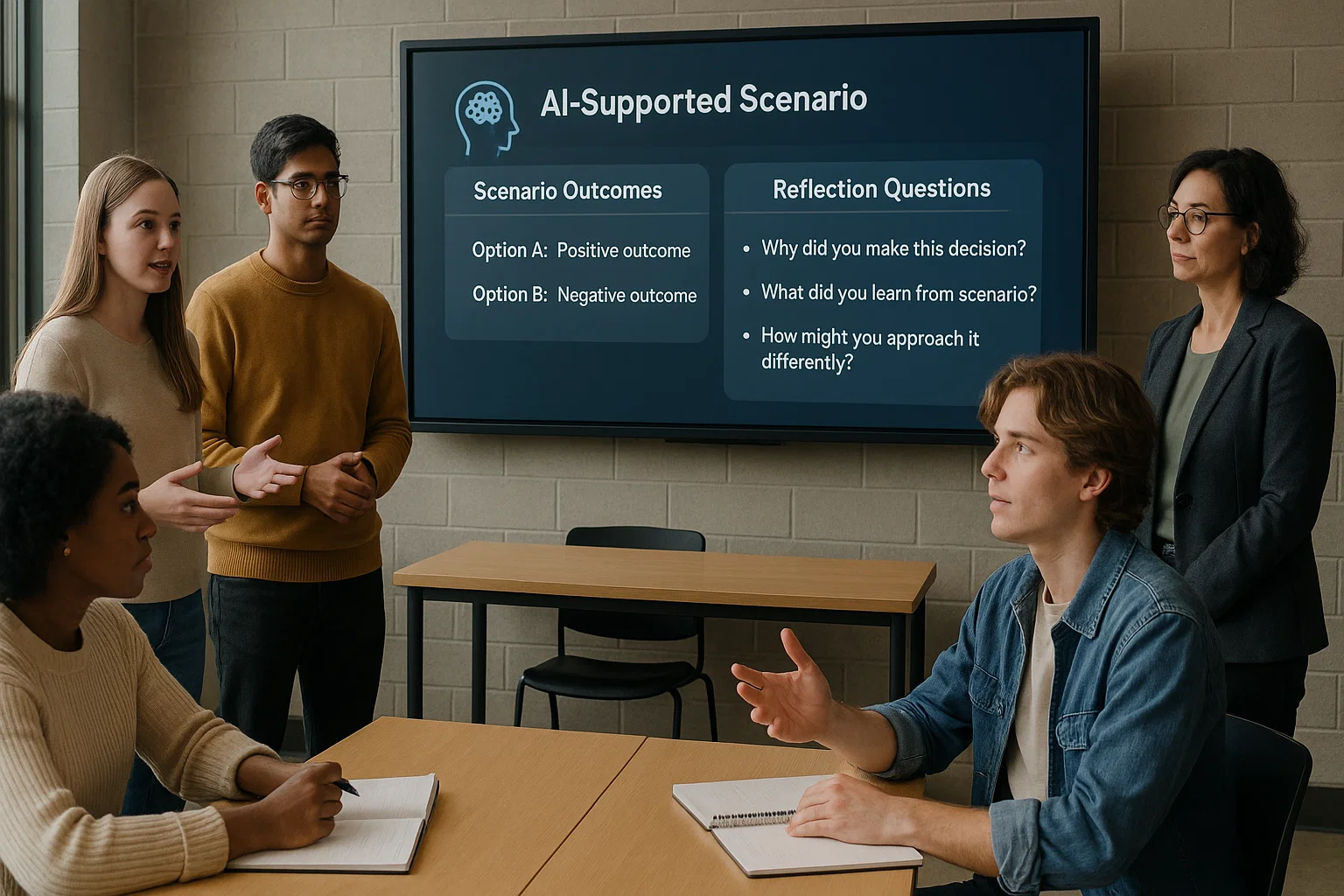
Instead of reacting after submission, educators can design assignments that surface reasoning from the start. Therefore, judgment becomes visible. At the same time, grading becomes clearer and calmer. Importantly, this approach does not increase workload. In fact, it often reduces it. When rubrics focus on decisions and reflection, instructors spend less time investigating originality and more time evaluating learning.
Moreover, students respond differently. They feel trusted. They also feel challenged in meaningful ways. As a result, engagement improves without confrontation. Ultimately, AI is not the enemy. Poor assessment design is.
Startup Wars supports this shift by centering learning around decisions, consequences, and reflection. Consequently, educators can assess real thinking without relying on detectors or surveillance. If you want assessment that works in the world students already live in, now is the moment to redesign with purpose. Schedule a Free Demo to see how Startup Wars supports AI-resilient assessment through authentic, decision-based learning.
📅 Schedule a Free Demo and see how Startup Wars can help you lead beyond the classroom today.
Frequently Asked Questions
What is AI assessment in higher education?
Why do AI detectors cause problems for educators?
What is authentic assessment and why is it important now?
How can educators design assignments AI cannot shortcut?
Can AI-resilient assignments still be graded quickly?
People Also Searched For:
-
The Real Reasons Startups Fail - What 2 Startups & 70+ Startup Investments Teach You About Success
-
Most Founders Build Too Fast and That’s Why Startups Fail
-
ChatGPT 5 Release: What Educators and Students Should Know
-
Case Study in Education vs Simulation: Which Is Better for Teaching Entrepreneurship?
-
How to Use Business Simulations in the Classroom