Table of Contents
Grades and resumes only tell part of the story. Employers increasingly look for students who can apply knowledge in real-world contexts, make decisions under pressure, and demonstrate teamwork and leadership. Traditional classroom assessments rarely reveal these abilities.
This is where business simulation for students comes in. Simulations allow students to practice decision-making, collaboration, and problem-solving, all while generating measurable career signals that employers trust.
For example, a student may excel in exams but struggle to allocate a budget effectively during a simulated product launch. Simulations provide that missing insight, showing not just what students know, but how they perform under realistic conditions.
In this blog, we’ll explore how a business simulation for students bridges the gap between theory and job offers, helping them gain proof of their skills.
Why Classroom Performance Alone Isn’t a Career Signal
Traditional assessments are designed to measure knowledge, not applied skills. A student might score top marks in finance or marketing, but can they:
- Make quick, strategic decisions under pressure?
- Communicate and coordinate effectively with a team?
- Adapt to unexpected challenges?
These behaviors are critical in early career roles but are rarely visible on transcripts. Experiential learning in business fills this gap by creating scenarios where these abilities become measurable.
Tip: Educators can complement coursework with simulations to observe real skill application. Treating business simulation for students like actual projects ensures maximum benefit.
What a Business Simulation for Students Actually Measures
Business simulations are controlled environments that replicate real-world business challenges. Students are tasked with making strategic decisions in marketing, finance, operations, and HR, providing observable data for assessment.
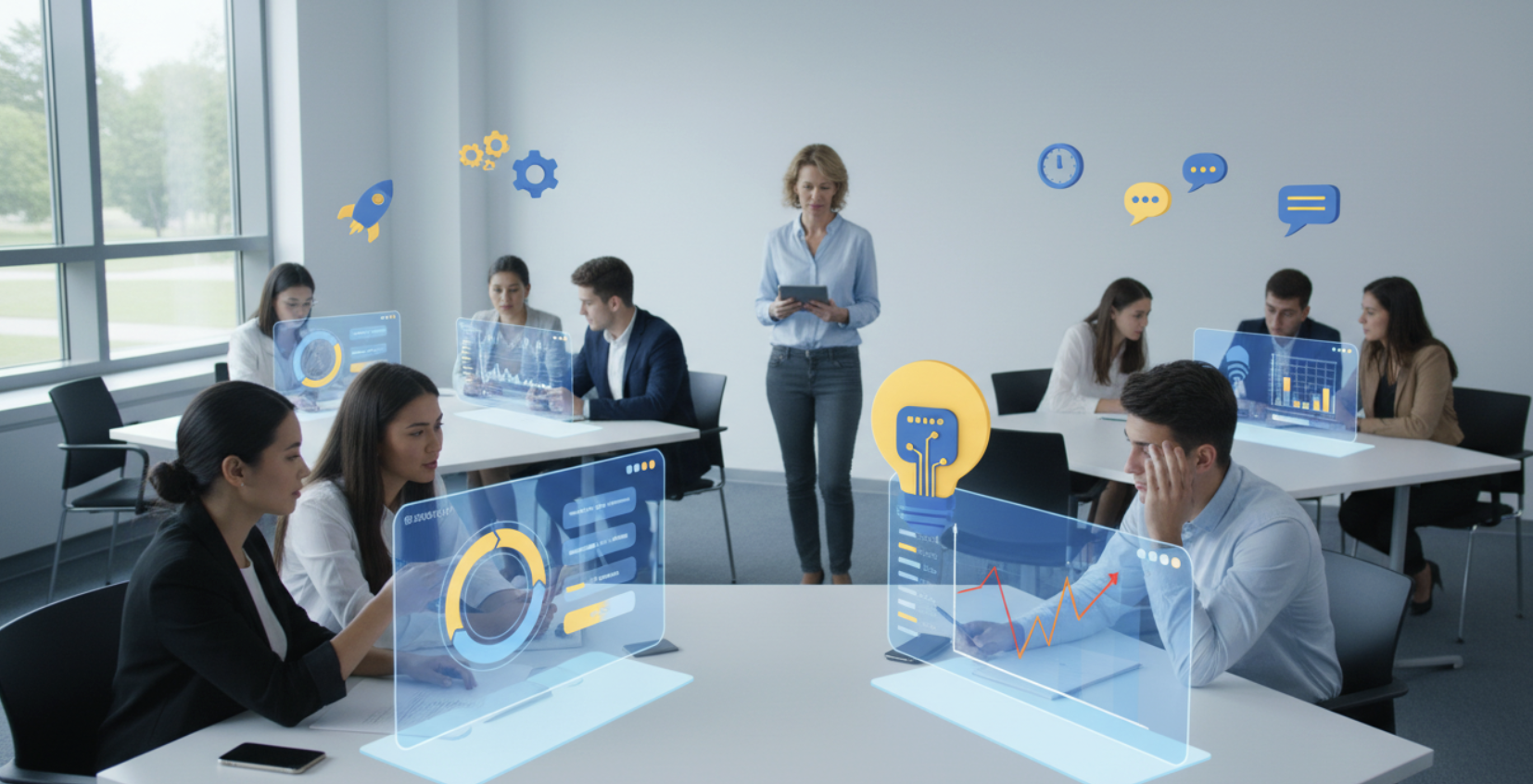
Key behaviors measured in a business simulation for students include:
- Decision-making under constraints: Choosing how to allocate resources effectively
- Prioritization and trade-offs: Determining which actions drive the most value
- Response to failure: Adapting strategies after setbacks
- Collaboration and leadership: Working effectively in teams, delegating, and motivating peers
- Time management: Balancing multiple tasks with competing deadlines
- Innovation and creativity: Proposing novel solutions to simulated problems
- Analytical thinking: Using data and metrics to guide decisions
- Conflict resolution: Managing disagreements and negotiating compromises
Turning Simulation Behavior Into Career Readiness Signals
Here’s a table that links behaviors in a business simulation for students to career signals and explains why employers care.
Behavior | Career Signal | Why Employers Care | Example in Simulation |
Strategic decision-making | Role readiness | Shows ability to plan and prioritize | Allocating a limited marketing budget across multiple channels |
Effective communication | Team effectiveness | Predicts collaboration in the workplace | Coordinating with team members to launch a product |
Accountability | Ownership mindset | Indicates responsibility and reliability | Taking responsibility for a failed product launch and proposing solutions |
Adaptability | Growth potential | Shows resilience and problem-solving | Pivoting strategy after unexpected market feedback |
Leadership | Initiative and influence | Demonstrates ability to guide teams | Leading a cross-functional team in a startup scenario |
Problem-solving | Analytical thinking | Employers value logical and data-driven decisions | Analyzing customer feedback to optimize pricing strategy |
Collaboration | Team cohesion | Shows ability to work in diverse groups | Resolving team conflicts to meet a project deadline |
Time management | Productivity | Prioritizing tasks effectively under pressure | Completing multiple simulation tasks within deadlines |
Innovation | Creativity | Suggests potential for new solutions | Designing a unique product feature that attracts customers |
Resilience | Stress tolerance | Handles challenges without giving up | Recovering quickly after a simulated financial loss |
Tip: Students should track their performance across multiple rounds. Highlighting improvements or consistent strengths helps demonstrate career readiness.
How Simulation-Based Learning Mirrors Real Hiring Scenarios
Business simulation for students are intentionally designed to replicate real workplace conditions:
- Ambiguity: Students face unclear or evolving situations, just like in a startup
- Time constraints: Decisions must be made within deadlines
- Limited resources: Budget, team members, or time are constrained, requiring smart prioritization
- Team dynamics: Collaboration, delegation, and conflict resolution are observed in real time
For example, a simulated product launch may require a student team to allocate resources, respond to market changes, and pivot strategy based on feedback. These conditions mirror actual business challenges, helping students develop observable, transferable skills.
From Participation to Proof: Measuring Job-Ready Skills
Participation is only the first step. What matters is consistent performance and improvement:
- Does the student take initiative repeatedly?
- Can they communicate effectively under stress?
- Do they learn from mistakes and improve strategies over time?
By analyzing simulation data, educators and students can quantify behaviors that translate directly into employability. For instance, repeated high performance in decision-making simulations signals that a student is ready for leadership or analytical roles.
Tip: Students can use simulation metrics to create portfolio entries, showcasing measurable outcomes rather than just participation.
Why Employers Trust Signals From Simulations
Unlike self-reported skills on resumes, simulation behaviors are observable and quantifiable.
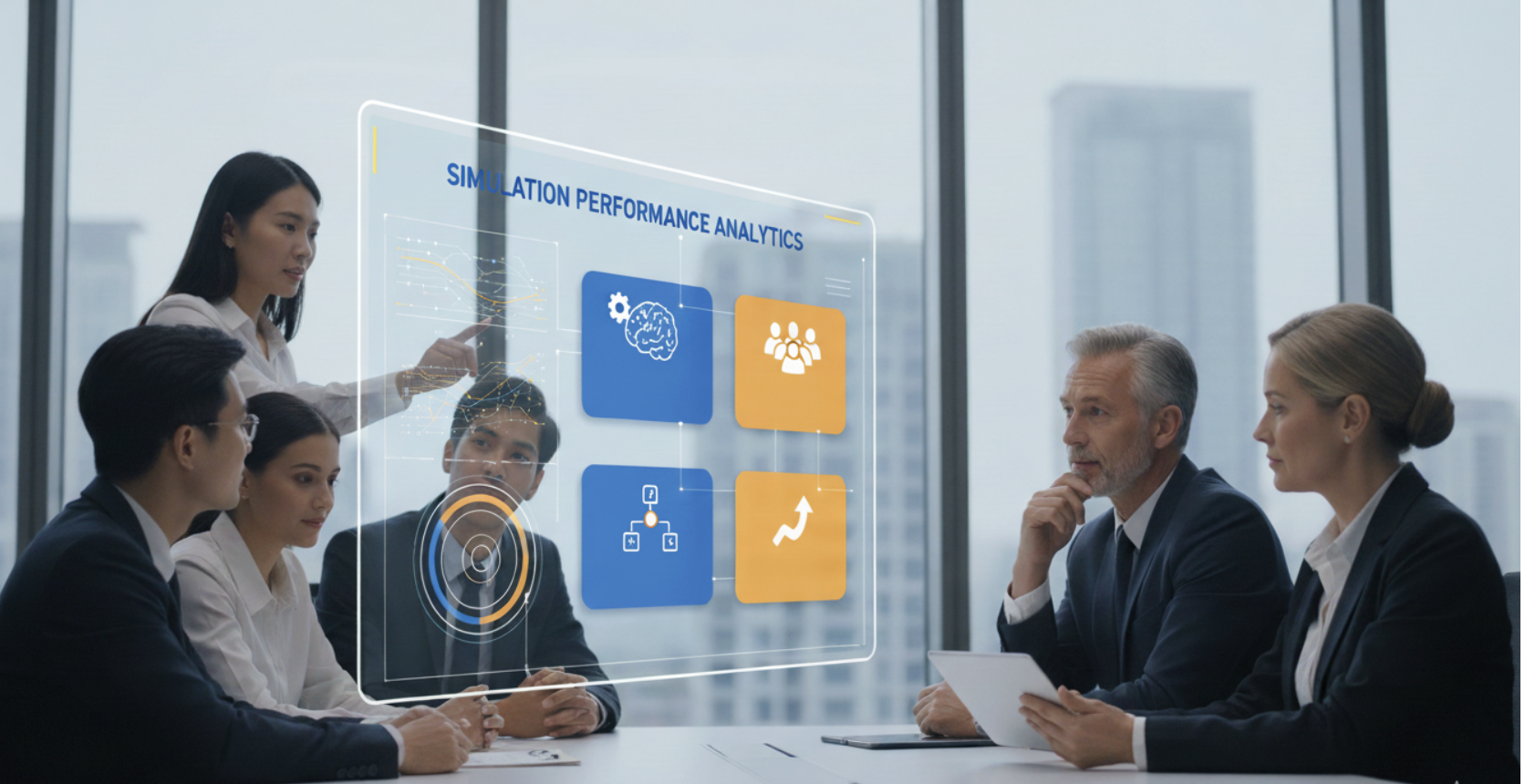
Employers can assess:
- Problem-solving abilities
- Collaboration and leadership potential
- Decision-making under uncertainty
- Adaptability and resilience
Simulations reduce hiring risk, particularly for early-career candidates with limited work experience. When students can articulate specific decisions, strategies, and outcomes during interviews, it demonstrates both skill and self-awareness. These are traits that employers value highly.
Where Startup Wars Fits Into This Model
Startup Wars is a modern, browser‑based business simulation platform designed for students and educators that brings experiential learning to life. It offers interactive simulations where learners make strategic decisions in areas such as resource management, marketing, financial planning, and operations, all within a safe, risk‑free environment.
Business simulation for students allows them to practice real business behaviors that mirror challenges faced by entrepreneurs and early‑career professionals. For example, learners may launch and pivot business ideas, respond to changes in demand, allocate limited budgets, and manage workflow.
The platform also includes built‑in reporting and feedback tools that let instructors and students track performance and growth over time. Rather than simply completing tasks, learners can see how their decisions influence outcomes, helping them reflect on strengths and areas for improvement.
By engaging with Startup Wars, students gain hands‑on experience with realistic business scenarios, reinforcing applied knowledge and building confidence in their skills. These experiences generate observable learning outcomes, such as effective decision‑making, adaptability, and collaboration, which align with the kinds of career readiness signals that appeal to employers.
Tip: When discussing simulation results in a resume or interview, students can highlight specific decisions and outcomes from platforms like Startup Wars to demonstrate not just what they know, but how they apply that knowledge under real‑world‑like conditions.
Bridge Theory to Job Offers with Business Simulation for Students
Theory alone is no longer enough to demonstrate career readiness. Business simulation for students reveal measurable behaviors that signal employability and job readiness.
By practicing decision-making, collaboration, and problem-solving in realistic scenarios, students can convert classroom learning into verifiable career signals that employers trust.
Students who participate in structured simulations can showcase tangible outcomes, track their growth, and confidently present their skills to prospective employers.
Programs like Startup Wars provide such simulations, helping students translate theory into actionable evidence of their abilities.
Take the next step. Engage in simulations that turn experience into proof, and let your skills speak for themselves.
📅 Schedule a Free Demo and see how Startup Wars can help you lead beyond the classroom today.
Frequently Asked Questions
1. How does business simulation for students help with job readiness?
2. What skills can employers see in a simulation?
3. Are simulations better than internships for early career signals?
4. How can students showcase simulation performance to employers?
5. What makes Startup Wars simulations unique?
People Also Searched For:
-
The Real Reasons Startups Fail - What 2 Startups & 70+ Startup Investments Teach You About Success
-
Most Founders Build Too Fast and That’s Why Startups Fail
-
ChatGPT 5 Release: What Educators and Students Should Know
-
Case Study in Education vs Simulation: Which Is Better for Teaching Entrepreneurship?
-
How to Use Business Simulations in the Classroom