
Table of Contents
For many students, an Intro to Business course is their first exposure to the world of business. They’re supposed to understand how companies operate, how decisions are made, and what it means to run an organization.
Yet despite its importance, this is often where the skill gap in business education quietly begins. Students memorize definitions, frameworks, and theories but struggle to apply them in real-world situations.
This is where experiential learning in business, through tools like startup sprints and business simulations, changes the game, letting students learn by doing rather than just reading about concepts.
Where the Skill Gap in Business Education Really Begins
Intro-level business classes are content-heavy: marketing basics, finance terminology, management theories, and strategic frameworks. While foundational, this knowledge is often presented passively, especially in online courses.
Students may memorize the steps of market segmentation but never decide which target segment to prioritize or justify that choice in a simulated scenario. Without practical application, learning remains abstract.
Tip for educators: Include mini-projects or simulations even in online modules. A simple case-study game can allow students to make real decisions and see consequences, which builds confidence quickly.
Why Traditional Intro to Business Courses Fall Short
Traditional courses emphasize memorization over action. Students learn formulas but rarely run a business, even virtually.
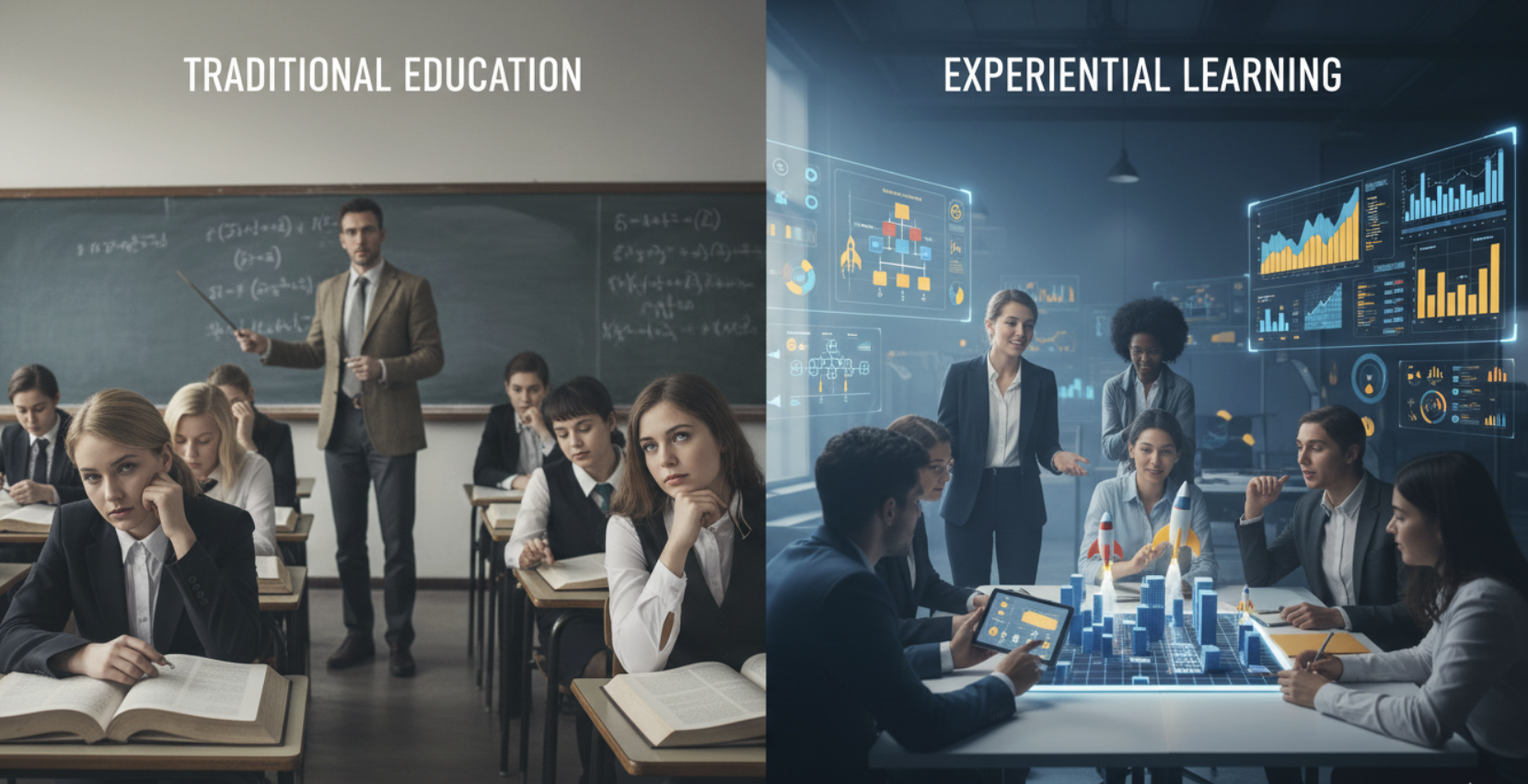
They may calculate profit margins perfectly on paper but hesitate when asked to set product prices, manage budgets, or respond to market changes.
Experiential learning in business addresses this gap by allowing students to act, fail safely, and iterate. Business simulation platforms, like Startup Wars, let students practice decision-making in low-risk environments, linking theory with real-world application.
What Today’s Students Need Beyond Textbooks
Today’s students need experiences that let them apply concepts in real-world scenarios. Theory alone cannot teach them how to respond to uncertainty, handle resource constraints, or evaluate risk effectively.
Decision-Making Skills
Understanding business strategies theoretically isn’t enough. Students must practice selecting strategies, prioritizing resources, and making trade-offs.
A 2-week startup sprint can simulate a product launch where students choose marketing budgets and distribution channels. The results, simulated customer acquisition, revenue, and market share, teach cause and effect in a way that lectures cannot.
Collaboration and Problem-Solving
Real businesses are team efforts. Students need to develop communication, negotiation, and conflict resolution skills. Group-based simulations expose students to the dynamics of decision-making under pressure.
Tip for educators: Encourage rotating team roles during simulations to develop leadership, finance, and marketing experience.
Exposure to Small Business Dynamics
Understanding small businesses is crucial. Startups operate with limited resources, unpredictable markets, and immediate feedback. Experiencing this in a simulator prepares students for entrepreneurship or working in lean organizations.
Experiential Learning vs Traditional Business Education
Research shows students retain knowledge far better through experiential learning in business. When they make decisions and see results, concepts stick.
A simulation where students must manage inventory teaches forecasting in a practical, memorable way compared to reading about it in a textbook.
Online education learning often suffers from low engagement. Simulations turn students from passive observers into active participants, increasing focus and motivation.
Tip: Even simple gamified exercises, like tracking simulated profits, can increase engagement in online modules.
How Business Simulation Changes the Learning Experience
A business simulation mimics real markets. Students adjust prices, allocate budgets, and respond to competitors, all in a safe, controlled environment.
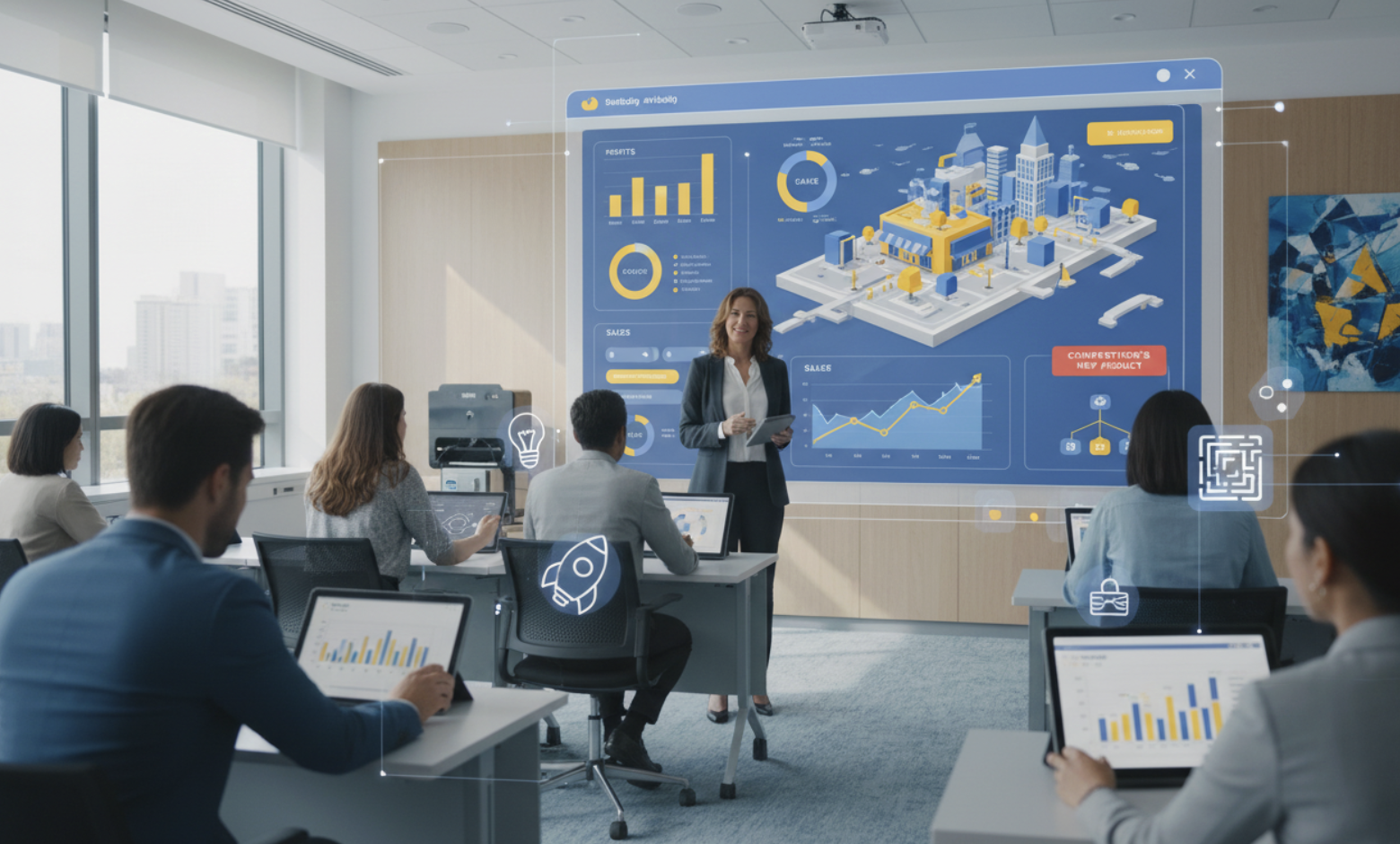
Example: Students can use platforms like Startup Wars to manage a virtual café. If they overprice coffee, sales drop; underprice, profits suffer. This teaches real-life consequences of strategic decisions.
Simulation games allow for trial-and-error learning. Students make decisions, see outcomes, analyze results, and adjust strategies. This iterative cycle builds critical thinking.
Inside a 2-Week Startup Sprint
A startup sprint is intense: students work in teams using a simulator to manage all aspects of a virtual business, marketing, operations, finance, and strategy, over two weeks.
Decisions have immediate consequences. Students quickly see what works and what fails, accelerating the learning process.
Example: A team may invest heavily in online marketing. Within the simulation, they see how it impacts sales and cash flow immediately, allowing them to adjust strategies mid-week.
Tip for educators: Shorten cycles for faster feedback, creating an immersive “fail fast, learn faster” environment.
Learning Business by Running One
Simulation software lets students run businesses in real-time, linking classroom theory to practice. This hands-on approach reinforces entrepreneurship concepts.
Students develop critical skills, decision-making, financial literacy, and strategy, without the risk of losing actual money. Mistakes in a simulator are learning moments, not career setbacks.
What Students Gain in Just Two Weeks
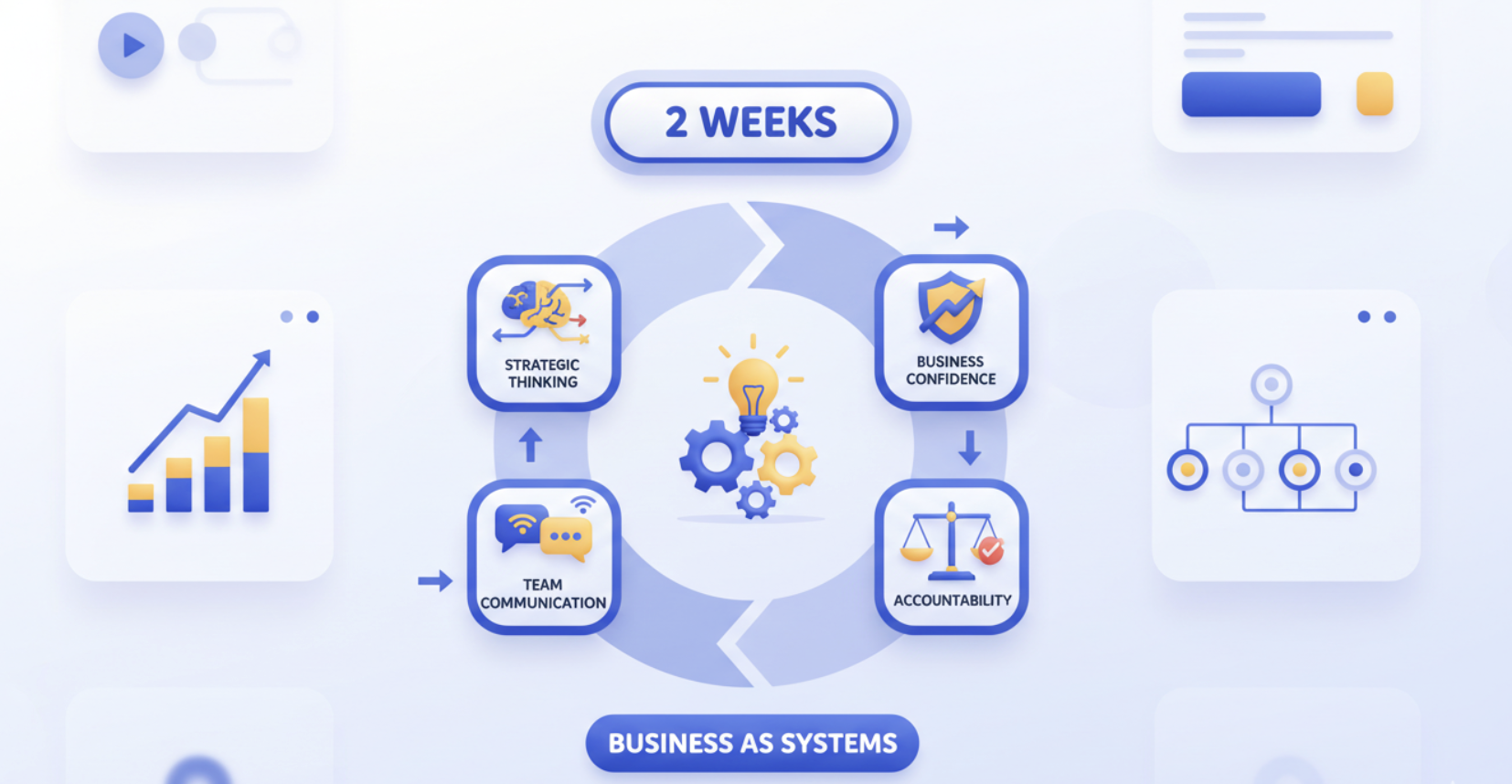
Even a short startup sprint develops meaningful skills, such as:
- Strategic thinking
- Team communication
- Accountability for decisions
- Confidence in applying business concepts
Students begin understanding businesses as systems — a lesson lectures alone rarely achieve.
Why This Works Especially Well for Online Education Platforms
Simulations increase interaction, keeping students active rather than passive. They provide a practical alternative to traditional lectures.
Experiential learning in business ensures concepts aren’t just memorized — students understand them deeply, improving retention and confidence.
Rethinking Intro to Business for the Next Generation
Intro courses should focus on applied business learning, preparing students for real-world decision-making rather than just exams.
Platforms like Startup Wars demonstrate that short, practical experiences, such as a 2-week startup sprint, give students hands-on exposure to running a business, making strategic choices, and responding to challenges in real time.
By integrating simulations and immersive exercises, educators can help students build confidence, develop critical thinking, and understand business as a dynamic system, ensuring they are better prepared for the fast-paced world of modern business.
Transform Business Education: Implement Startup Sprints Today
The skill gap in business education begins early, grows silently, and leaves students underprepared. But with immersive tools like business simulation games, experiential learning, and startup sprints, this gap can be closed.
Short, hands-on, high-intensity experiences help students learn faster, retain knowledge better, and develop real-world business skills.
Platforms like Startup Wars show that even a 2-week sprint can give students the confidence and practical experience they need to thrive in any business environment.
Intro to Business shouldn’t just introduce concepts; it should build skills that stick.
📅 Schedule a Free Demo and see how Startup Wars can help you lead beyond the classroom today.
Frequently Asked Questions
1. What is experiential learning in business?
2. What is the skill gap in business education?
3. How does a startup sprint help students?
4. Can business simulations work in online education?
5. Why are decision-making skills important for business students?
People Also Searched For:
-
The Real Reasons Startups Fail - What 2 Startups & 70+ Startup Investments Teach You About Success
-
Most Founders Build Too Fast and That’s Why Startups Fail
-
ChatGPT 5 Release: What Educators and Students Should Know
-
Case Study in Education vs Simulation: Which Is Better for Teaching Entrepreneurship?
-
How to Use Business Simulations in the Classroom