
Something unusual is happening in the workforce.
Professionals who once expected to stay in the same career for 20 or 30 years are now asking a very different question:
“Should I change careers entirely?”
And the answer is increasingly yes.
According to research from McKinsey, millions of workers across industries are shifting roles or industries as technology, automation, and AI reshape the global workforce.
But here’s the mistake many people make when thinking about a career change:
They assume they must start over from zero.
In reality, the smartest career changes today look more like strategic pivots than complete resets.
This guide explains how professionals in their 30s, 40s, or 50s can make a career change in 2026 without losing years of experience or income.
Table of Contents
The Truth About Career Changes in 2026
Before discussing tactics, it’s important to understand what has changed about careers.
Career shifts are becoming normal
For most of the 20th century, career paths were predictable:
Education → Entry job → Promotions → Retirement.
That model is fading quickly.
A modern professional may experience:
- 3–7 career shifts
- multiple industries
- hybrid skill sets
- continuous learning cycles
Career reinvention is becoming a normal professional skill, not a risky decision.
Skills now matter more than job titles
In today’s labor market, employers increasingly hire based on skills rather than degrees or job titles.
This means your past experience is far more valuable than you might think.
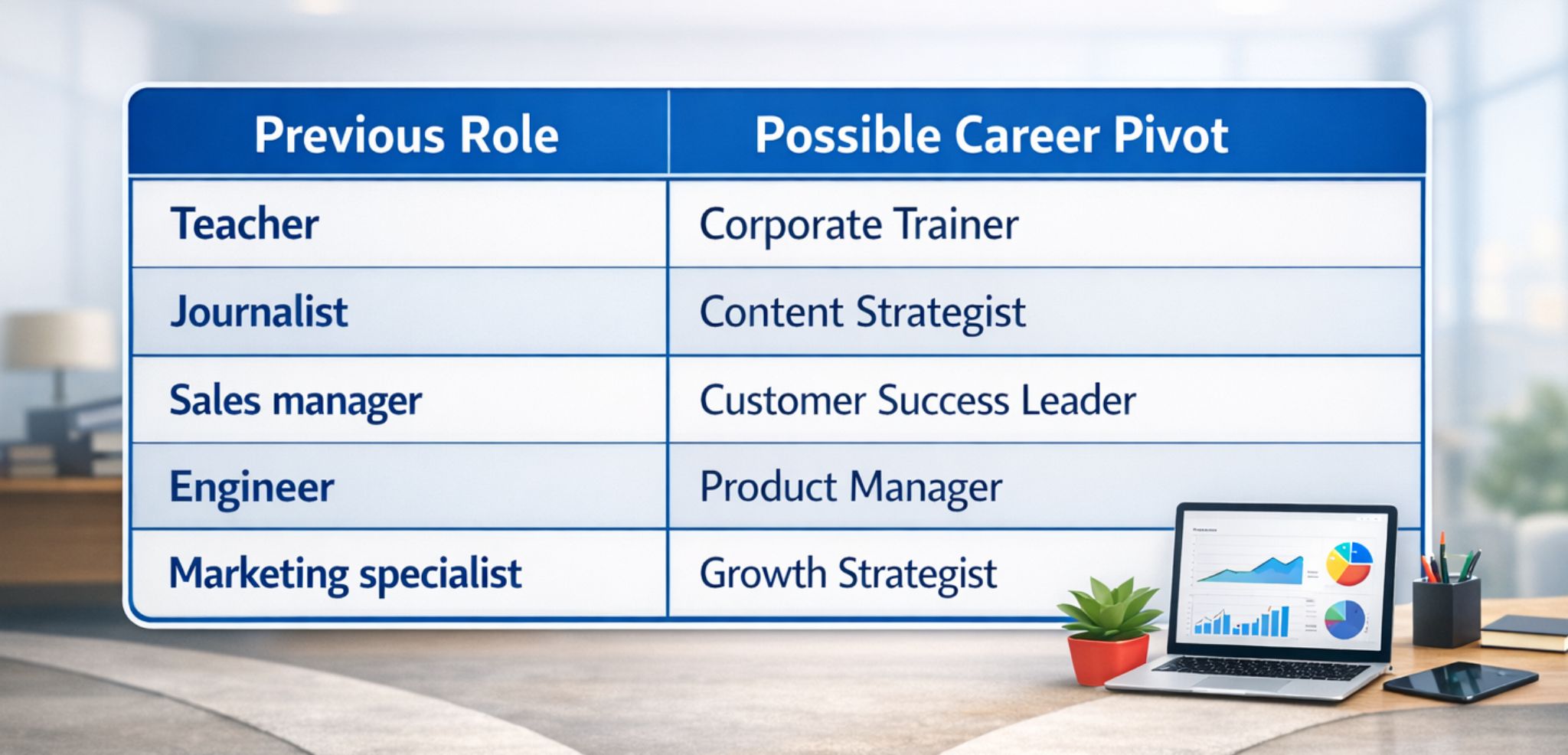
The key is learning how to translate your skills into a new industry context.
This shift toward skill-based careers is exactly why experiential learning tools are becoming more important in modern education.
Platforms like Startup Wars, for example, allow students and professionals to practice real-world decision-making inside startup simulations, helping them develop transferable skills like strategy, leadership, and problem-solving that translate across industries.
If you’re still exploring the bigger picture of transitioning careers, this detailed guide on how to make a career change explains the full process step by step.
Step-by-Step Guide to Making a Career Change
Here’s a practical framework used by many professionals successfully switching careers.
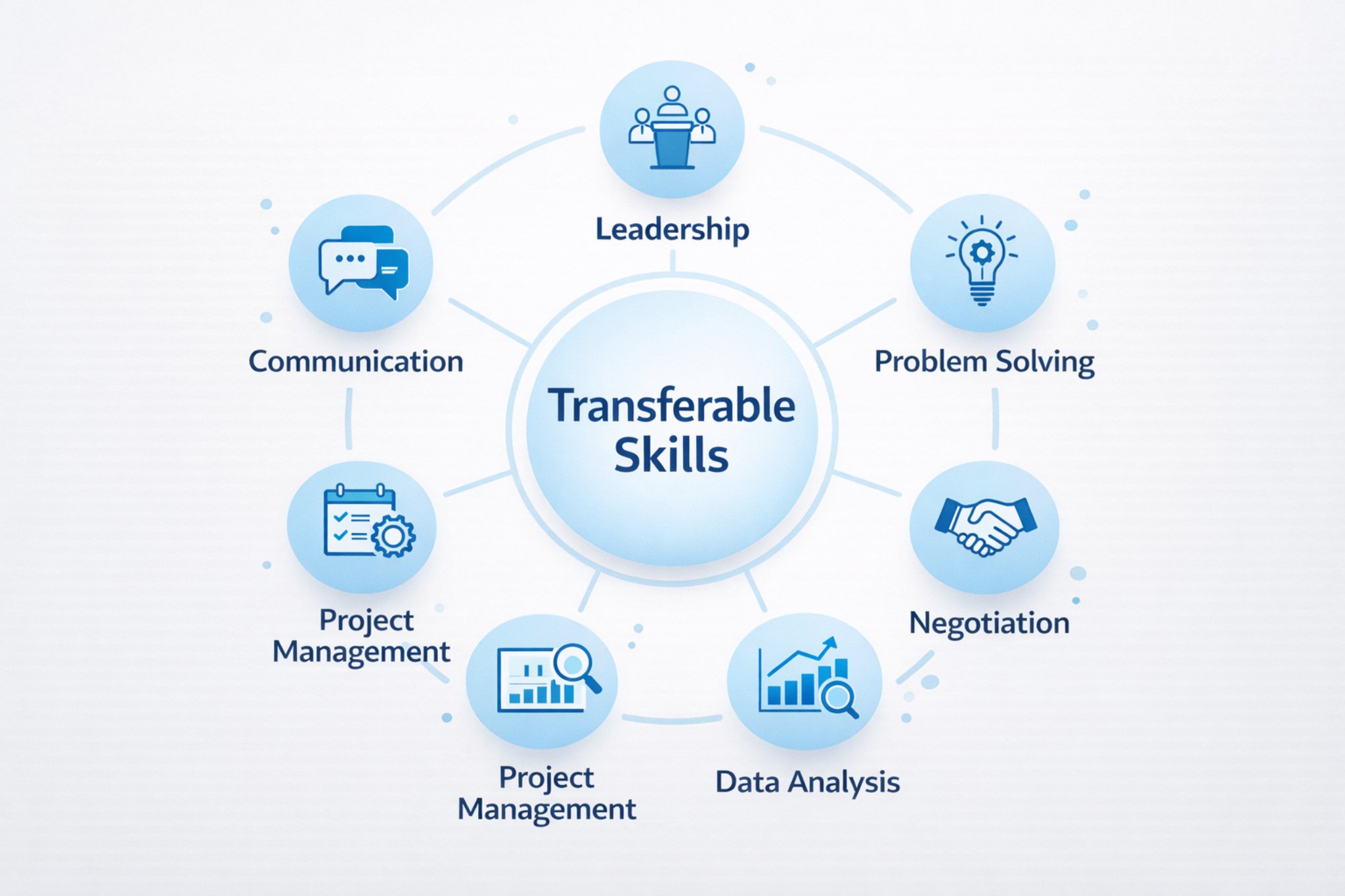
Transferable skills are abilities that apply across industries.
Examples include:
- communication
- leadership
- project management
- data analysis
- strategic thinking
- negotiation
- problem solving
Write down:
- Skills you use daily
- Skills colleagues ask you for help with
- Skills you enjoy using
These become the foundation of your career pivot.
Many professionals discover that the smartest move isn’t starting over completely but making a strategic career pivot, specially at 40, that builds on the skills they already have.
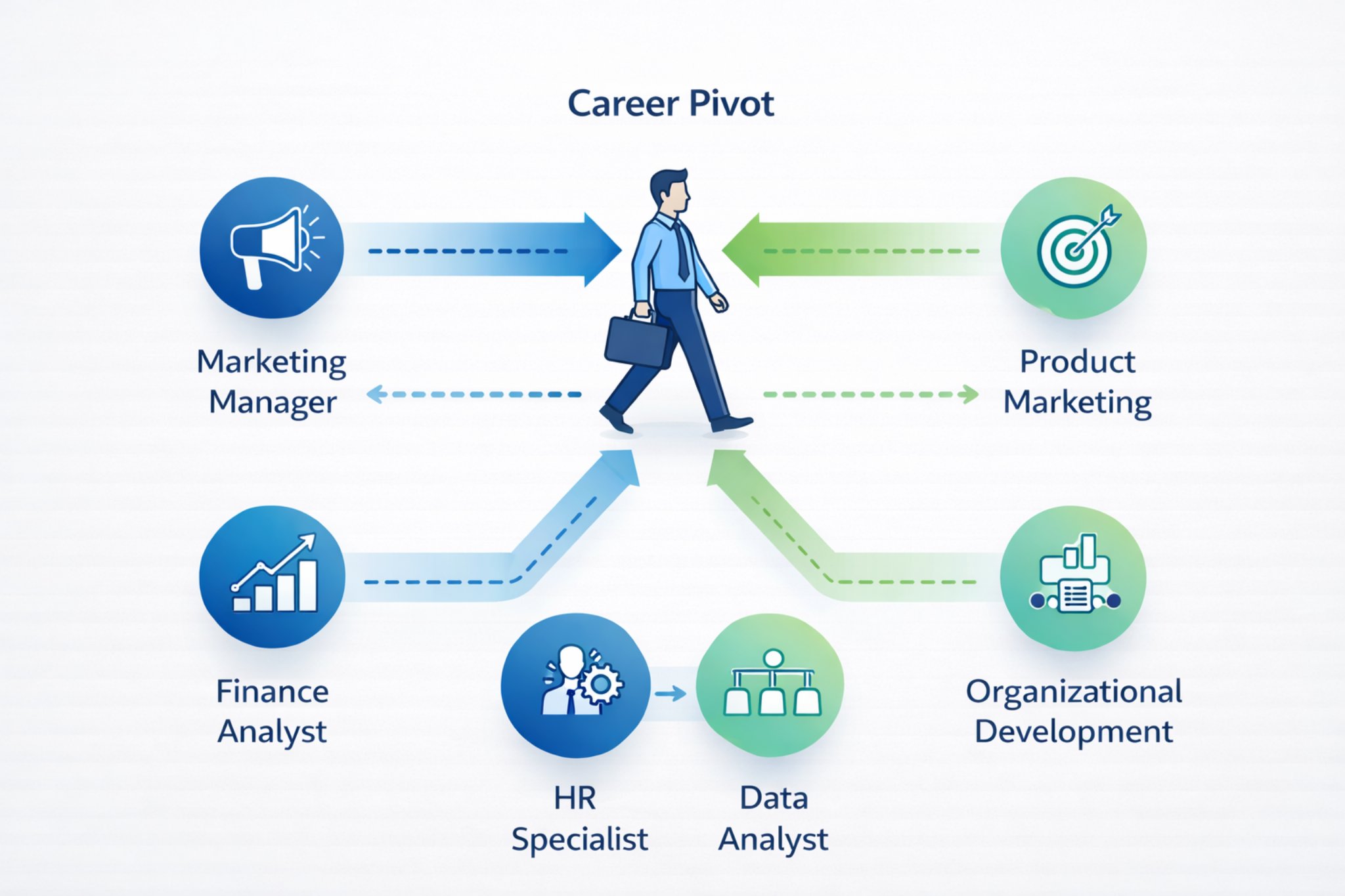
Instead of jumping into something completely unrelated, aim for a nearby career move.
This approach dramatically increases your chances of success.
Think of it as moving one step sideways, not ten steps away.
Example pivot paths:
Marketing Manager → Product Marketing
Finance Analyst → Data Analytics
HR Specialist → Organizational Development
A good career pivot typically requires 30–40% new skills, not 100%.
One of the biggest mistakes career changers make is quitting their job too early.
Instead, test the new field first.
You can do this by:
- freelance projects
- side consulting
- online courses
- volunteering
- informational interviews
This approach reduces risk while helping you build real experience in your new field.
Upskilling is essential, but many people do it inefficiently.
Instead of collecting random certifications, focus on skills that unlock real opportunities.
Examples of high-leverage skills today include:
- AI and data literacy
- digital marketing strategy
- product management
- UX design
- project management
- entrepreneurship
Short, targeted learning programs are often more effective than long degrees.
The final step in a career change is demonstrating capability.
You can do this through:
- a portfolio of work
- case studies
- industry content
- certifications
- speaking engagements
- networking in your new field
Credibility reduces the biggest hiring risk: “Can this person actually do the job?”
One challenge many professionals face during a career pivot is gaining practical experience quickly.
This is where experiential learning environments become valuable. Tools like Startup Wars’ entrepreneurship simulations allow learners to practice strategic decision-making in realistic startup scenarios, building the type of transferable skills that make career transitions easier and more credible to employers.
Career Change Strategies by Age Group
Many professionals worry that it may be “too late” to change careers.
In reality, each life stage offers unique advantages.
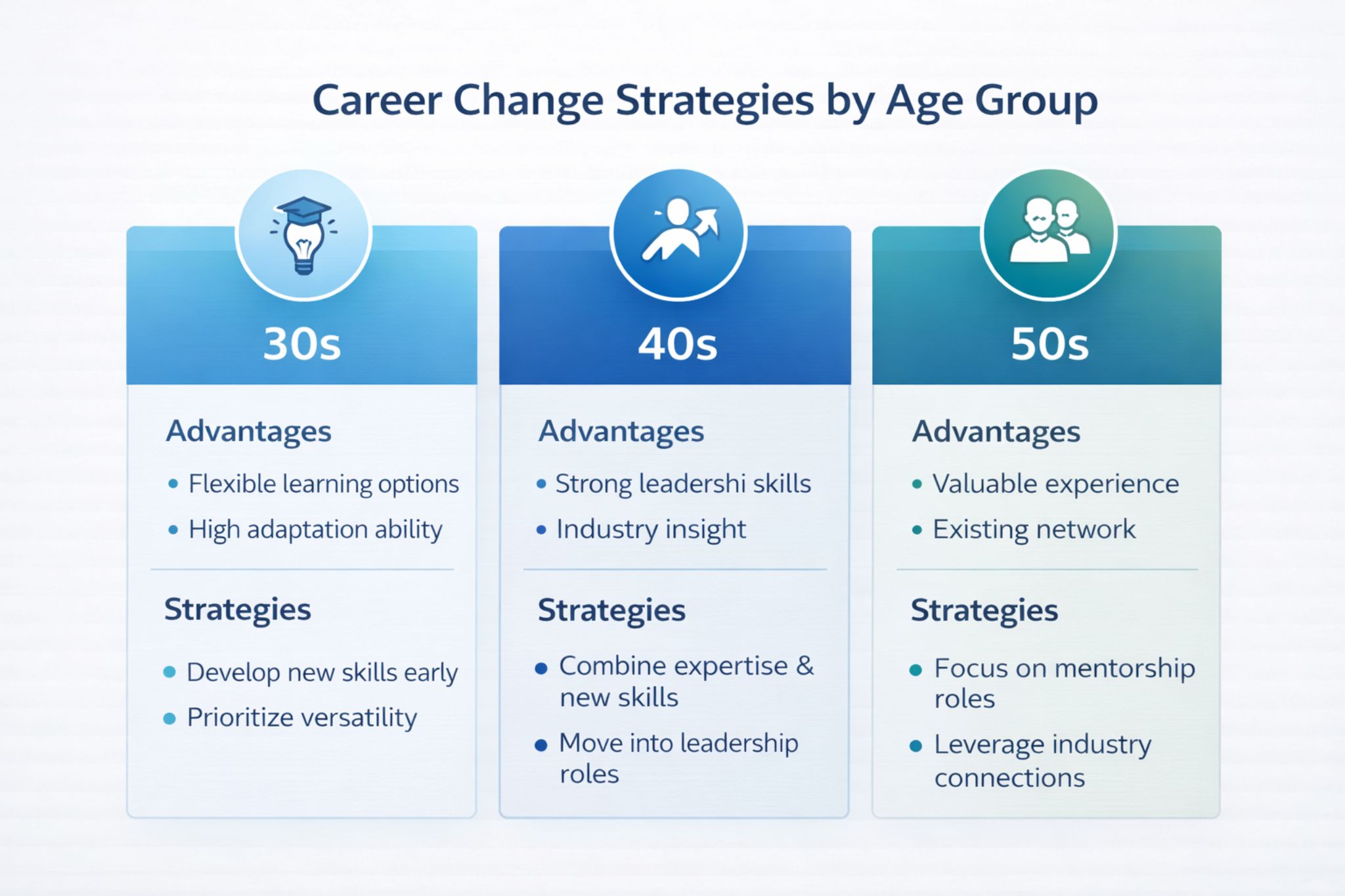
This is often the easiest stage to pivot careers.
Advantages include:
- flexibility
- willingness to learn
- fewer financial obligations
- longer time horizon
Strategy:
Focus on high-growth industries like technology, AI, digital marketing, or product development.
Professionals in their 40s typically have significant experience.
That experience becomes a competitive advantage.
Best pivot strategies:
- leadership roles
- consulting
- strategic advisory
- entrepreneurship
- education or coaching
Your goal is leveraging expertise, not replacing it.
Career reinvention in your 50s often focuses on knowledge-driven roles.
Examples include:
- mentorship
- consulting
- advisory roles
- teaching
- board positions
At this stage, experience becomes your greatest asset.
Regardless of age, the most successful career pivots share one common element: applied learning.
Instead of learning only through theory, professionals increasingly develop new capabilities through simulations, projects, and interactive experiences. Platforms like Startup Wars replicate the complexity of real business environments, helping learners build leadership and entrepreneurial thinking that apply across many careers.
For some professionals, a career transition becomes an opportunity to pursue entrepreneurship, which is why many explore how to transition into entrepreneurship after gaining industry experience.
The Career Pivot Framework (Template)
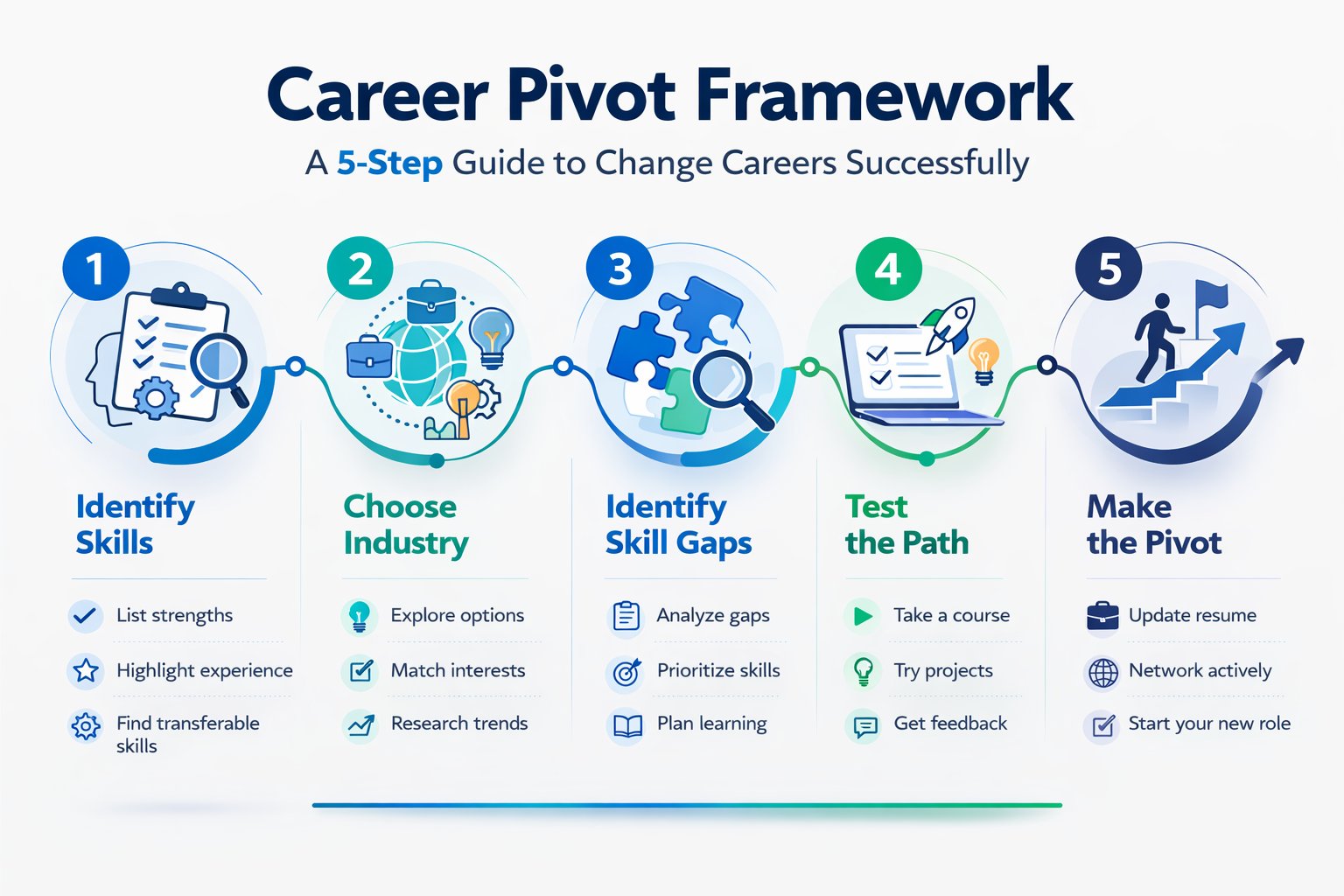
Here is a simple template you can use to design your career transition.
Step 1: Current Skills
List your top five skills.
Example:
- leadership
- strategic planning
- communication
- operations management
- problem solving
Step 2: Target Industry
Identify industries growing rapidly.
Examples:
- AI and technology
- digital services
- sustainability
- healthcare innovation
Step 3: Skill Gap
Identify the new skills required.
Example:
- data analysis
- digital tools
- industry knowledge
Step 4: Test the Path
Before committing:
- build a side project
- take a course
- consult part-time
Step 5: Make the Pivot
Once validated, transition fully.
This framework is not just useful for individual professionals, it is also being adopted by universities and business programs that want to prepare students for dynamic career paths.
Many educators are integrating startup simulation platforms like Startup Wars into their curriculum so students can practice these decision-making frameworks in real business scenarios rather than only studying them theoretically.
What Most Career Change Advice Gets Wrong
Most advice online suggests something unrealistic:
“Follow your passion.”
While passion matters, successful career pivots usually combine three elements:
- Skills you already have
- Industries with demand
- Opportunities to learn quickly
A smarter strategy is:
Passion + Skills + Market Demand
Where those three overlap is where career transitions succeed.
The Future of Work: Why Career Reinvention Is the New Normal
The workplace is evolving faster than ever.
Technology, automation, and AI are transforming entire industries.
According to labor market studies, many of the jobs that will exist in 2035 do not exist today.
This means career reinvention is no longer optional.
It is becoming a core professional skill.
The professionals who thrive in the next decade will be those who can:
- learn quickly
- adapt to new industries
- combine skills across disciplines
- reinvent themselves multiple times
Career changes will become less of a disruption and more of a normal part of professional life.
As career paths become more dynamic, education must evolve as well.
Universities and training programs are increasingly adopting experiential learning platforms such as Startup Wars to help students practice entrepreneurship, leadership, and strategy, the very skills required to navigate multiple career transitions throughout their lives.
Making a career change in 2026 does not mean starting over.
The most successful professionals approach career transitions as strategic pivots, building on existing experience while developing new skills.
If you remember one thing from this guide, let it be this:
Your past experience is not a limitation, it’s the foundation of your next career.
With the right strategy, learning plan, and experimentation, you can transition into a new field while preserving the value you’ve already built.
The future of work will belong to professionals who are willing to adapt, learn, and reinvent themselves.
And that future might begin with your next career move.
Frequently Asked Questions
1. How do I make a career change in my 30s, 40s, or 50s?
2. Is it too late to change careers at 40 or 50?
3. What is the easiest career to transition into?
4. Do I need a new degree to change careers?
5. What is the biggest mistake people make when changing careers?
Let's Empower The Next Generation Of Founders
Schedule a call with our team to explore how Startup Wars can fit into your classroom.