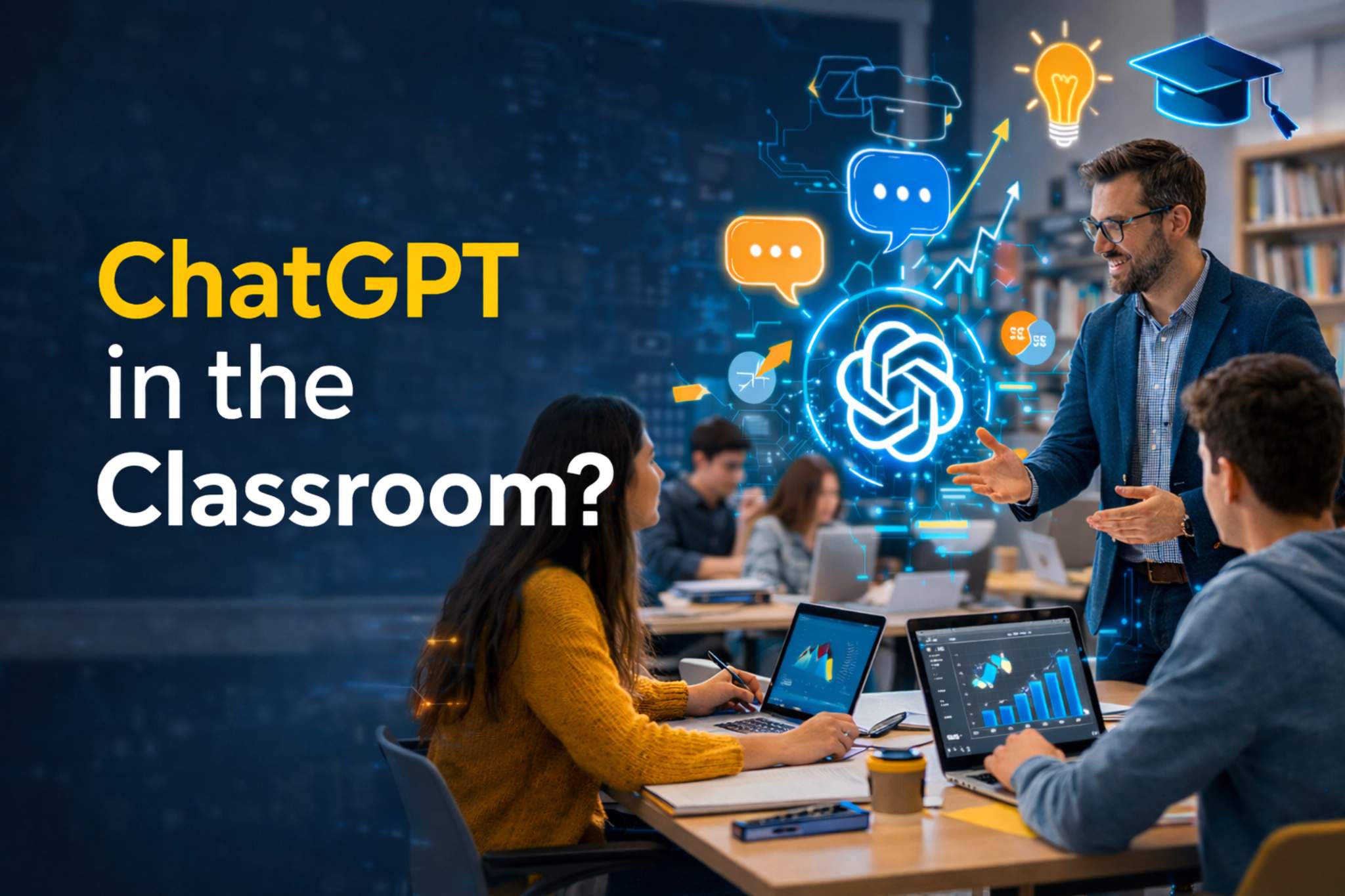
In early 2023, many universities rushed to ban ChatGPT.
By 2026, the conversation has changed.
Faculty meetings, curriculum committees, and academic conferences now revolve around a different question:
Should ChatGPT be allowed in the classroom at all?
Some educators see it as a powerful teaching assistant.
Others see it as the ultimate cheating tool.
And many professors feel stuck somewhere in the middle.
Students can now generate essays, marketing strategies, financial projections, or startup ideas in seconds. That reality has forced educators to rethink how learning should work in an AI-powered world.
But here’s the key insight most institutions are beginning to realize:
**The problem isn’t ChatGPT.**The problem is that many classroom assignments were designed for a pre-AI world.
The rise of generative AI is exposing a deeper issue in higher education, passive learning models that no longer match how knowledge works today.
So the real question isn’t just whether ChatGPT should be allowed.
It’s how educators can design learning experiences that still matter in an AI era.
Let’s break it down.
Why Universities Are Struggling With ChatGPT
When ChatGPT first appeared, the reaction across universities was almost immediate.
Some institutions:
- blocked AI tools on school networks
- banned ChatGPT in syllabi
- introduced strict academic integrity rules
Others took the opposite approach and began experimenting with AI in teaching.
Why such different reactions?
Because generative AI touches the core assumptions of traditional education.
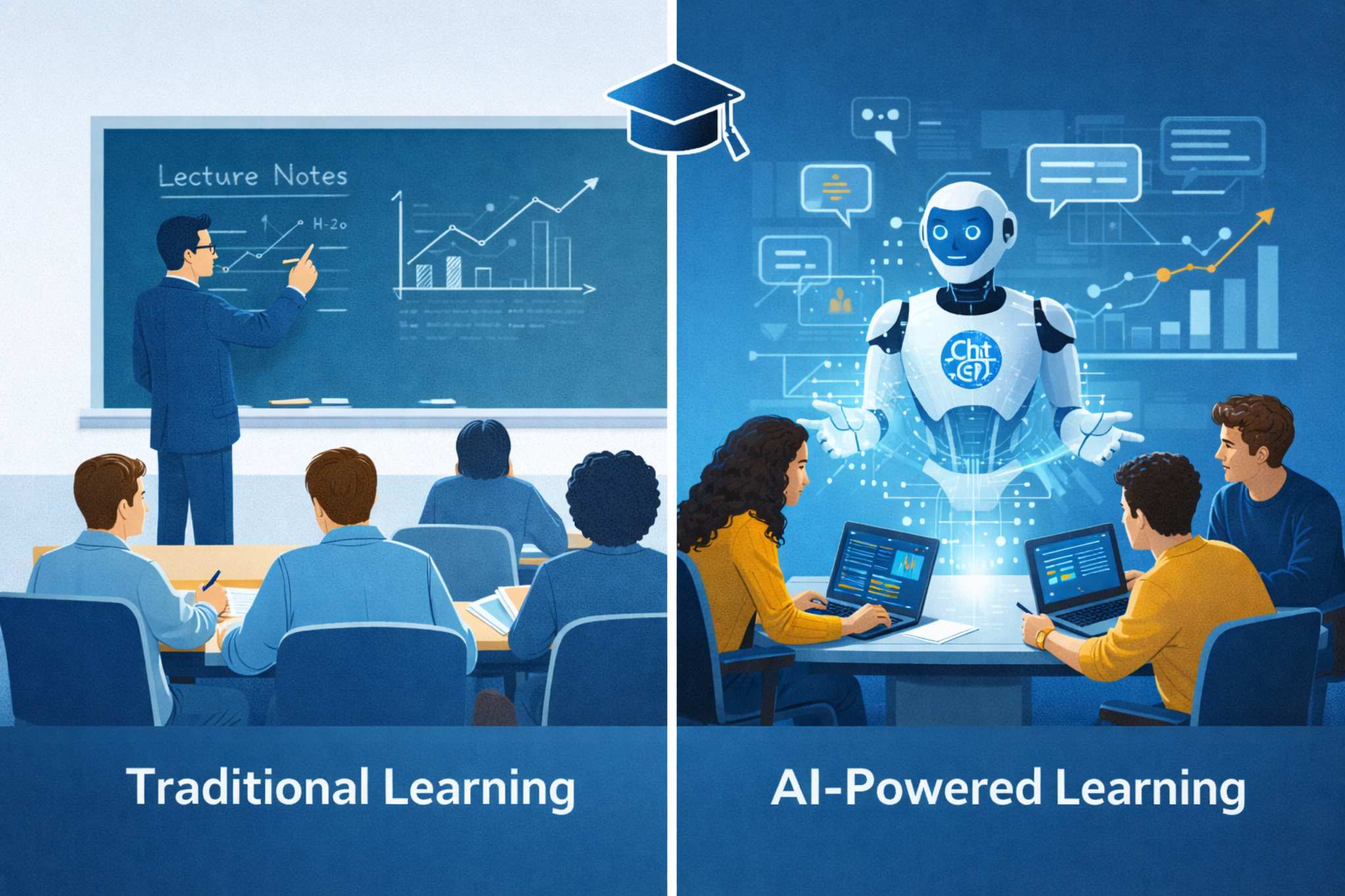
The Traditional Classroom Model Was Built Around Information
For decades, the typical academic workflow looked like this:
- Professor teaches concepts
- Students research information
- Students produce written assignments
But AI can now perform step two and step three almost instantly.
ChatGPT can:
- summarize research
- generate essays
- explain complex topics
- draft marketing plans
- simulate business strategies
That creates a serious challenge.
If AI can generate answers instantly, what exactly are students supposed to learn?
The Hidden Fear Behind AI in Education
Many educators worry that AI tools will:
- reduce critical thinking
- increase cheating
- weaken writing skills
- remove the need for real learning
And these concerns are valid.
According to surveys from education technology researchers and outlets like EdSurge, many students already rely on AI for academic tasks.
But banning AI entirely creates a new problem.
Students will simply use it privately.
And that makes AI use invisible instead of teachable.
Why Banning ChatGPT Rarely Works
In practice, strict bans often create three unintended outcomes.
1. Hidden AI Use
Students continue using AI tools but avoid mentioning them.
2. Policing Instead of Teaching
Faculty spend more time detecting AI-generated work than improving learning outcomes.
3. Assignment Obsolescence
Assignments designed for the pre-AI world become easier for machines than for students.
This is why many educators are starting to ask a better question:
How do we redesign learning for an AI-powered world?
That’s where mindset shifts begin.
One approach gaining traction in business schools is shifting away from passive assignments toward interactive entrepreneurship simulations, where students must make real decisions instead of simply generating written answers. Tools like Startup Wars allow instructors to place students in realistic startup scenarios where they allocate budgets, compete with other teams, and analyze performance data, activities that AI alone cannot complete for them.
The Pros and Cons of ChatGPT in the Classroom
Instead of framing AI as purely good or bad, most experts recommend evaluating both sides.
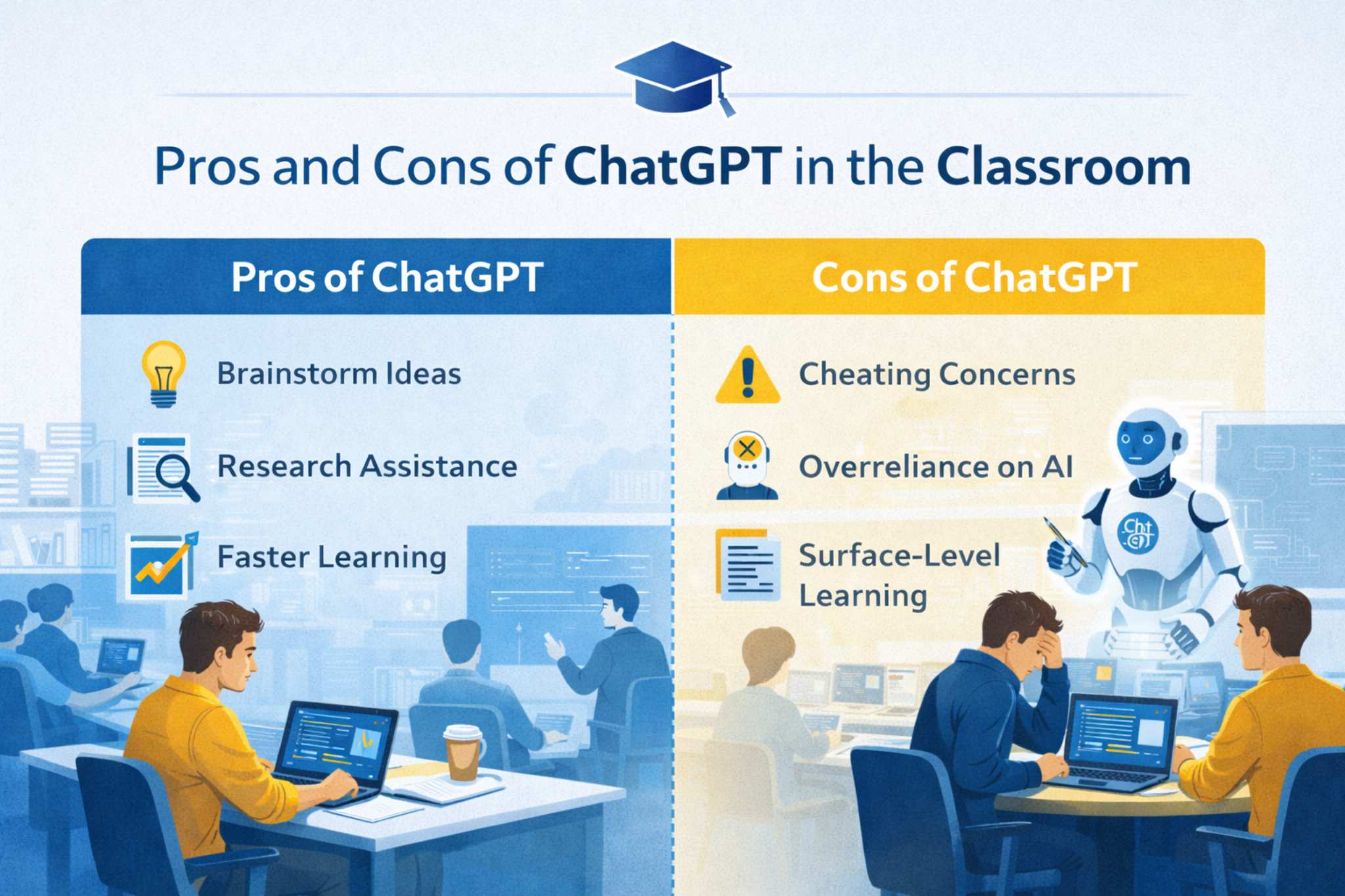
Pros of Allowing ChatGPT in the Classroom
1. Faster Idea Generation
Students can quickly brainstorm:
- startup concepts
- marketing campaigns
- research topics
- business models
This can accelerate creative thinking.
2. Personalized Learning Support
AI tools can help students:
- clarify complex ideas
- explore examples
- review concepts before exams
For many learners, ChatGPT acts like a 24/7 tutor.
3. Exposure to Real-World Tools
AI literacy is becoming a professional skill.
Business students entering the workforce will likely use AI tools in:
- marketing
- product design
- data analysis
- strategy development
Teaching students how to use AI responsibly prepares them for modern workplaces.
Many instructors are also experimenting with AI tools for teachers that help design assignments, generate case studies, and provide faster feedback for students.
Cons of Allowing ChatGPT in the Classroom
1. Overreliance on AI
Students may outsource thinking instead of developing their own ideas.
2. Academic Integrity Concerns
AI-generated assignments make plagiarism detection more complicated.
3. Surface-Level Understanding
Students may copy AI explanations without fully understanding the underlying concepts.
The Key Insight
The pros and cons reveal something important:
ChatGPT doesn’t replace learning, it changes what learning must look like.
Instead of focusing purely on information recall, education must shift toward:
- decision-making
- problem-solving
- strategic thinking
These skills are much harder for AI to replicate.
Many educators are turning to active learning strategies that prioritize participation, experimentation, and real-time problem solving instead of passive lectures.
This is why many educators are complementing AI tools with engagement learning platforms that require students to apply their ideas in dynamic environments. In simulations like Startup Wars, students must test strategies, react to competitors, and manage limited resources, transforming AI-generated ideas into real strategic decisions,
The Real Opportunity - Teaching Students How to Think With AI
Here’s the uncomfortable truth many educators are discovering:
Students will use AI whether we allow it or not.
Blocking ChatGPT entirely often creates a cat-and-mouse game between faculty and students.
Instead of eliminating AI use, it simply pushes it underground.
Forward-thinking institutions are shifting their mindset.
**The question is no longer “Should students use AI?”**The real question is “How should students use AI responsibly?”
When implemented properly, AI can actually improve higher-order learning.
Example: AI as a Thinking Partner
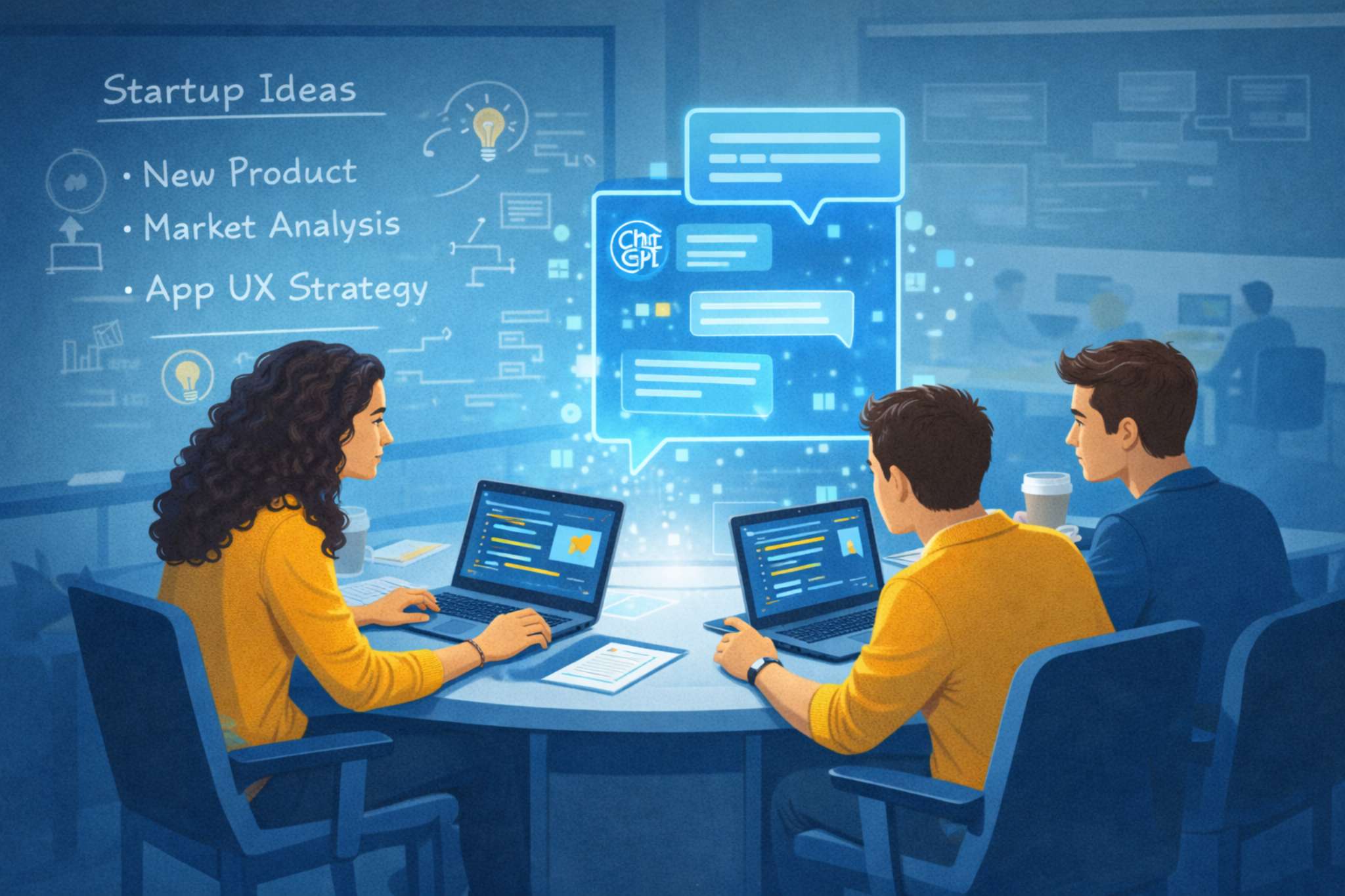
In entrepreneurship or business courses, ChatGPT can help students:
- brainstorm startup ideas
- analyze markets
- generate messaging strategies
- explore customer personas
But AI alone cannot test ideas in realistic scenarios.
Students still need experiential learning environments where decisions have consequences.
This is why many instructors are adopting experiential learning in business courses where students apply ideas through simulations, decision games, and real-world scenarios.
Where AI Still Falls Short
AI can generate ideas, but it struggles with:
- judgment
- real-world constraints
- strategic tradeoffs
- competitive dynamics
AI might suggest ten marketing strategies.
But it cannot simulate how competitors respond, how budgets limit choices, or how markets evolve.
Those skills require decision-based learning.
Why Experiential Learning Matters More Than Ever
This is why many business schools are shifting toward:
- entrepreneurship simulations
- strategy games
- real-time decision environments
Platforms like Startup Wars entrepreneurship simulations allow students to run a virtual startup, make real business decisions, and see the consequences of those decisions in real time, something generative AI tools cannot simulate on their own.
Students must:
- allocate budgets
- launch marketing campaigns
- compete with other teams
- analyze real performance data
AI might help students brainstorm ideas.
But students must execute the strategy themselves.
These approaches are part of a broader shift toward student engagement strategies that keep learners actively involved in solving real problems instead of simply memorizing information.
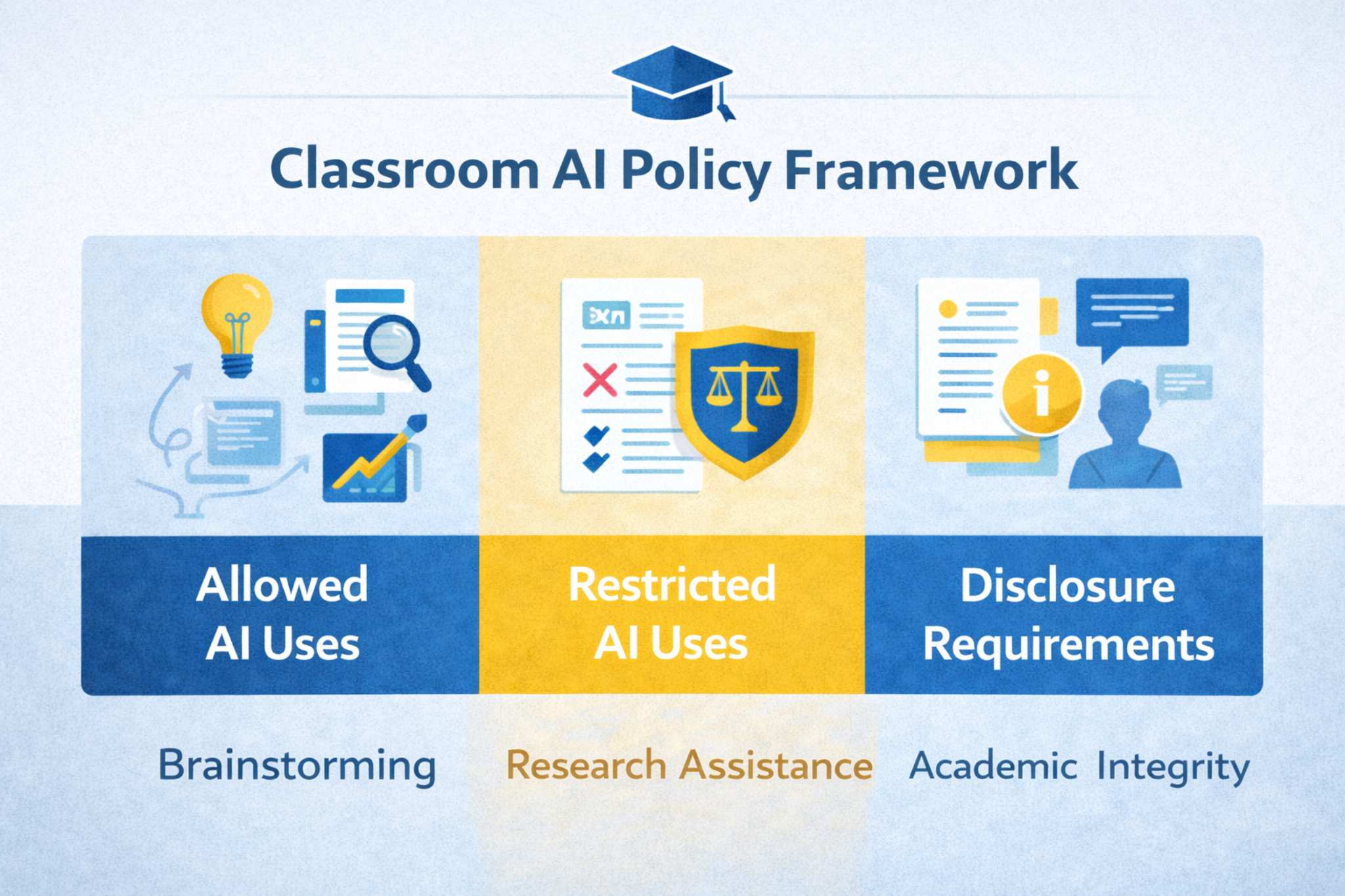
A Simple ChatGPT Policy Template for Educators
Many universities now adopt structured AI policies instead of bans.
Example Classroom AI Policy
Students may use AI tools for:
- brainstorming ideas
- research assistance
- clarifying concepts
- editing drafts
Students may NOT use AI for:
- submitting AI-generated assignments without disclosure
- completing exams or quizzes
Students must disclose:
- what prompts were used
- how AI influenced their work
This encourages responsible AI use instead of hidden dependence.
AI Won’t Replace Educators - But It Will Change Teaching
ChatGPT is not the end of education.
But it does force educators to rethink traditional assignments.
The institutions adapting fastest are shifting toward:
- experiential learning
- simulations
- collaborative strategy exercises
- real-world decision environments
AI can generate knowledge.
But it cannot replace experience.
And that’s exactly where modern teaching tools come in.
Ready to See Experiential Learning in Action?
Many professors are transforming their courses using interactive entrepreneurship simulations.
Instead of passive lectures, students learn by running a startup, making decisions, and analyzing outcomes.
📅 Schedule a Free Demo of Startup Wars
Frequently Asked Questions
1. Should ChatGPT be allowed in classrooms?
Yes, but with clear policies. Many universities allow AI tools for brainstorming, research, and editing while restricting their use for final submissions or exams.
2. Is using ChatGPT considered cheating?
It depends on course policy. Submitting AI-generated work without disclosure is generally considered academic misconduct.
3. How can professors prevent AI cheating?
Educators can design assignments that emphasize: decision making simulations collaborative projects real-world problem solving These tasks are harder for AI to complete independently.
4. What are the benefits of ChatGPT in education?
ChatGPT can help students: brainstorm ideas clarify complex concepts accelerate research explore multiple perspectives When used responsibly, it can enhance learning.
5. What are the risks of AI in classrooms?
The main risks include: overreliance on AI reduced critical thinking inaccurate information academic integrity challenges Clear AI policies and experiential learning activities help reduce these risks.
Let's Empower The Next Generation Of Founders
Schedule a call with our team to explore how Startup Wars can fit into your classroom.
About the author
Andrea Martinez
Startup Wars marketing and content contributor
Andrea writes about entrepreneurship education, experiential learning, and the programs and product ideas shaping Startup Wars.