Changing careers can feel terrifying.
One moment you’re established in a field you understand, and the next you’re wondering if starting over will erase years of experience.
But here’s the truth most people misunderstand:
A successful career change is rarely about starting from zero. It’s about repositioning what you already know.
The most effective career change advice today focuses on leveraging transferable skills, testing new opportunities, and building proof of value before making the leap.
In a world where industries evolve faster than ever, career pivots are not failures—they’re strategic upgrades.
Let’s explore how to approach a career transition with clarity, confidence, and a practical plan.
Table of Contents
Why More Professionals Are Changing Careers Than Ever
Career changes are no longer unusual.
In fact, they’re becoming the norm.
Technology, automation, and global competition are transforming industries faster than traditional career paths can keep up. Roles that existed ten years ago may look completely different today.
At the same time, many professionals are reassessing what they want from their work:
- greater flexibility
- meaningful impact
- higher income potential
- better work-life balance
The result?
More people are exploring career transitions in their 30s, 40s, and even 50s.
But the challenge is not motivation.
The challenge is uncertainty.
Many professionals hesitate because they believe changing careers means abandoning their previous experience.
That assumption is the first myth to break.

Many professionals exploring career changes are discovering that entrepreneurship and startup skills are increasingly valuable across industries. Programs like Startup Wars’ Startup Fundamentals Program help learners understand how businesses actually operate by placing them inside interactive startup simulations.
The Mindset Shift: You’re Not Starting Over
The biggest mistake people make during a career transition is assuming their past experience becomes irrelevant.
It doesn’t.
Every professional builds transferable skills throughout their career, including:
- communication
- leadership
- strategic thinking
- project management
- problem solving
- analytical decision-making
These skills apply across industries.
For example:
A teacher transitioning into corporate training.
A marketer moving into product management.
A finance professional pivoting into entrepreneurship.
The key is not changing who you are professionally.
The key is reframing your expertise for a new context.
Once you understand this principle, career transitions become far less intimidating.

For many professionals, a career pivot eventually leads toward entrepreneurship. If you’re exploring that path, this guide on transitioning into entrepreneurship explains how professionals move from traditional careers into building their own ventures.
One of the best ways to reframe your existing experience is by applying it in new scenarios. In the Startup Fundamentals Program, participants manage simulated startups, from mobile apps to food truck businesses, allowing them to apply problem-solving and strategic thinking in a completely new context.
A Practical 4-Step Career Change Strategy
Many articles offer vague motivation about “following your passion.”
That advice sounds inspiring, but it rarely helps professionals make real decisions.
A more practical approach involves four steps.
Step 1: Define Your Direction
Before changing careers, clarify where you actually want to go.
Ask yourself three questions:
- What type of problems do I enjoy solving?
- What work environment motivates me?
- Which industries align with my interests and values?
Your goal is to define a target role, not just a vague idea of change.
For example:
Instead of saying:
“I want something more creative.”
Define something concrete:
“I want to move from financial analysis to product strategy within a technology company.”
Clarity dramatically increases the chances of a successful transition.
Some professionals ultimately decide that the best career change is creating their own opportunity. This guide on starting a small business in 2026 outlines the steps to turn an idea into a sustainable career path.
Step 2: Identify Transferable Skills
Next, evaluate what skills you already possess that apply to your new direction.
Most professionals underestimate how much of their experience carries over.
Examples of transferable skills include:
- leadership and team management
- stakeholder communication
- data analysis
- strategic planning
- customer understanding
The goal is to build a bridge between your past experience and future role.
Instead of saying:
“I have no experience in this field.”
You should be able to say:
“My background in X allows me to bring a unique perspective to Y.”
That framing changes everything.
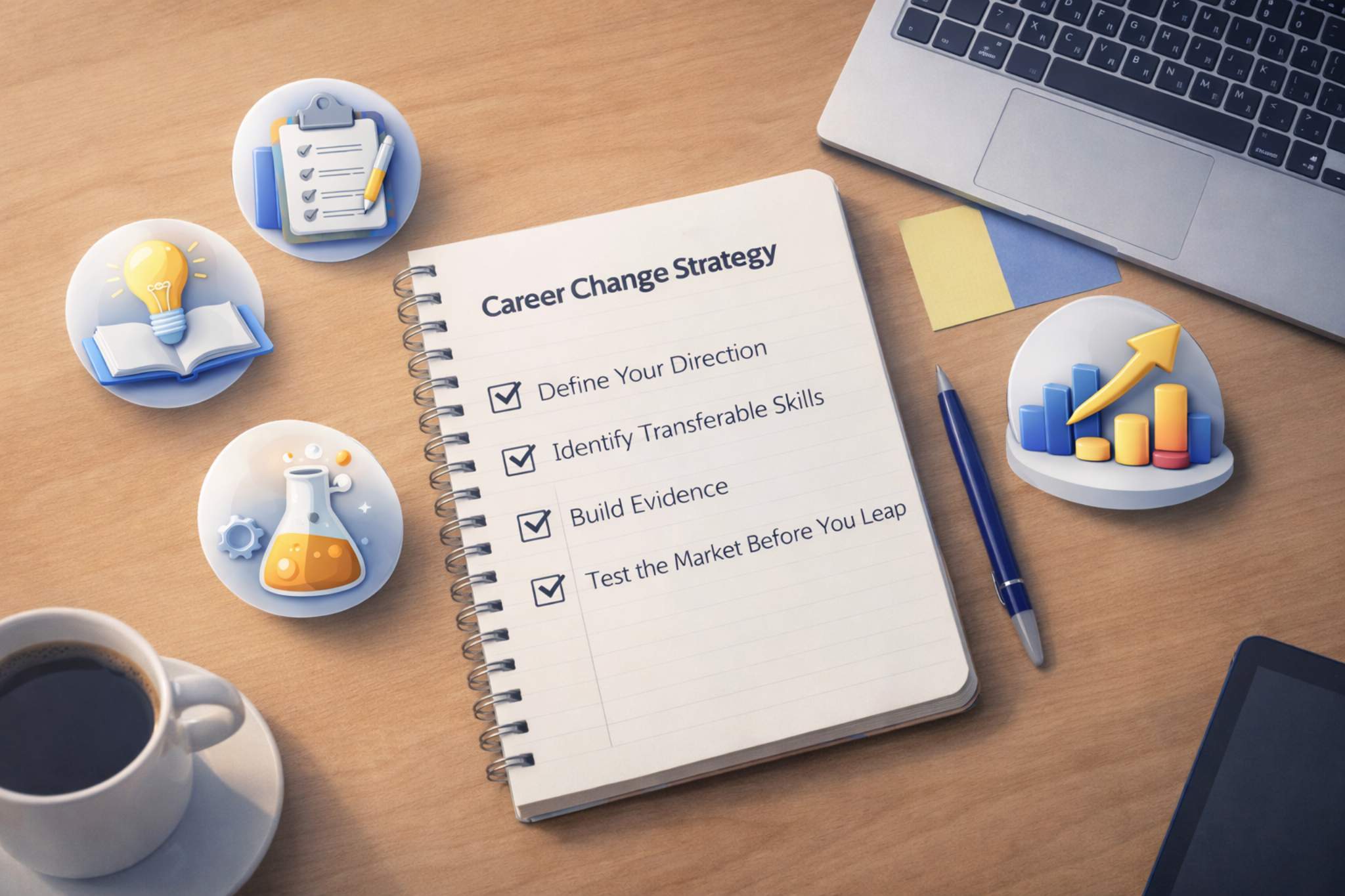
Step 3: Build Evidence, Not Just a Resume
One of the most powerful pieces of career change advice is this:
Employers trust proof more than claims.
If you want to transition into a new field, create evidence of your ability.
Examples include:
- building a small portfolio project
- freelancing or consulting on a side project
- completing practical coursework
- publishing insights or research
- contributing to open-source or community initiatives
Even a small project can demonstrate initiative and skill.
In many cases, this evidence matters more than formal credentials.
Step 4: Test the Market Before You Leap
A career change should be tested, not guessed.
Before committing to a major transition:
- conduct informational interviews
- speak with professionals in your target industry
- analyze job descriptions and requirements
- explore freelance or project opportunities
These conversations provide insights that no online research can replace.
They help answer key questions like:
- What skills matter most in this role?
- What do employers actually look for?
- What mistakes do career changers commonly make?
Testing your assumptions reduces risk dramatically.
Understanding the challenges of building a business is equally important. Research on why most startups fail highlights common mistakes founders make when entering new markets or launching new ideas.
One powerful way to demonstrate initiative is by completing hands-on projects. For example, the Startup Fundamentals Program allows participants to run a simulated startup, from strategy to growth decisions, creating practical experience that can strengthen a portfolio or entrepreneurial journey.
A 30-Day Career Change Action Plan
If you’re considering a career pivot, start with a focused action plan.
Week 1 – Career Clarity
- Define your target role
- Research required skills
- Identify transferable strengths
Week 2 – Industry Exploration
- Conduct informational interviews
- Study real job descriptions
- Join professional communities
Week 3 – Skill Development
- Begin targeted learning
- Complete a practical project
- Build a portfolio piece
Week 4 – Market Entry
- Update resume and LinkedIn
- Apply strategically (not broadly)
- Continue networking conversations
Within a month, you’ll have far more clarity than most professionals who spend years “thinking about change.”

Common Mistakes When Changing Careers
Career transitions fail most often because of a few predictable mistakes.
1. Waiting for perfect certainty
No career change comes with 100% clarity.
Progress creates confidence.
2. Trying to change everything at once
Many professionals attempt a complete reinvention overnight.
A better strategy is gradual transition.
3. Ignoring transferable experience
Your previous career is not wasted time.
It is the foundation for your next one.
4. Applying blindly to hundreds of jobs
Mass applications rarely work for career changers.
Strategic networking is far more effective.
5. Underestimating the learning curve
Every new field requires time to understand its language, tools, and culture.
Expect the process to take patience.
The Future of Work: Why Career Changes Will Become Normal
The traditional model of a single lifelong career is disappearing.
Instead, modern professionals will experience multiple career phases throughout their lives.
Emerging technologies, evolving industries, and shifting economic conditions ensure that adaptability becomes one of the most valuable skills a person can develop.
In other words:
The most successful professionals of the future won’t be those who stay in one role forever.
They’ll be the ones who learn how to pivot effectively.
In fact, many career pivots lead professionals toward launching their own ventures. If you’re considering that direction, this article on how to start a business after losing your job explains how to turn uncertainty into opportunity.
As career paths become less predictable, practical entrepreneurial skills are becoming essential. Programs like the Startup Fundamentals Program from Startup Wars help learners develop strategic thinking, experimentation, and problem-solving skills through immersive startup simulations.
Reinvention Is the New Career Strategy
If you’re considering a career change, remember this:
You are not abandoning your past.
You are reapplying it in a new direction.
The best career change advice isn’t about chasing a perfect opportunity.
It’s about building momentum through exploration, skill development, and strategic experimentation.
When approached thoughtfully, a career pivot can unlock opportunities you never imagined possible.
And sometimes, the career you’re meant to pursue isn’t the one you started with.
It’s the one you choose next.
Frequently Asked Questions
1. What are common mistakes when starting over in your career?
2. How do I change careers without experience?
3. Is it too late to change careers at 40?
4. What skills help with career transitions?
5. How long does a career change take?
Let's Empower The Next Generation Of Founders
Schedule a call with our team to explore how Startup Wars can fit into your classroom.