
A successful career shift into entrepreneurship is not about quitting your job, it’s about designing a structured transition that reduces uncertainty and increases probability of success.
Most professionals don’t fail because they lack ambition.
They fail because they treat a career shift like a dramatic leap instead of a strategic sequence.
Brace yourself: resigning is not the entrepreneurial move.
Designing your career shift is.
And here’s the uncomfortable truth, most universities teach business creation, not how to execute a real-world career shift into entrepreneurship.
That distinction changes everything.
Table of Contents
The Real Shift Isn’t Your Job, It’s Your Mindset
Before making a career shift, you must upgrade your thinking.
A career shift into entrepreneurship requires moving from employment logic to ownership logic.
Employee Thinking vs Entrepreneurial Thinking
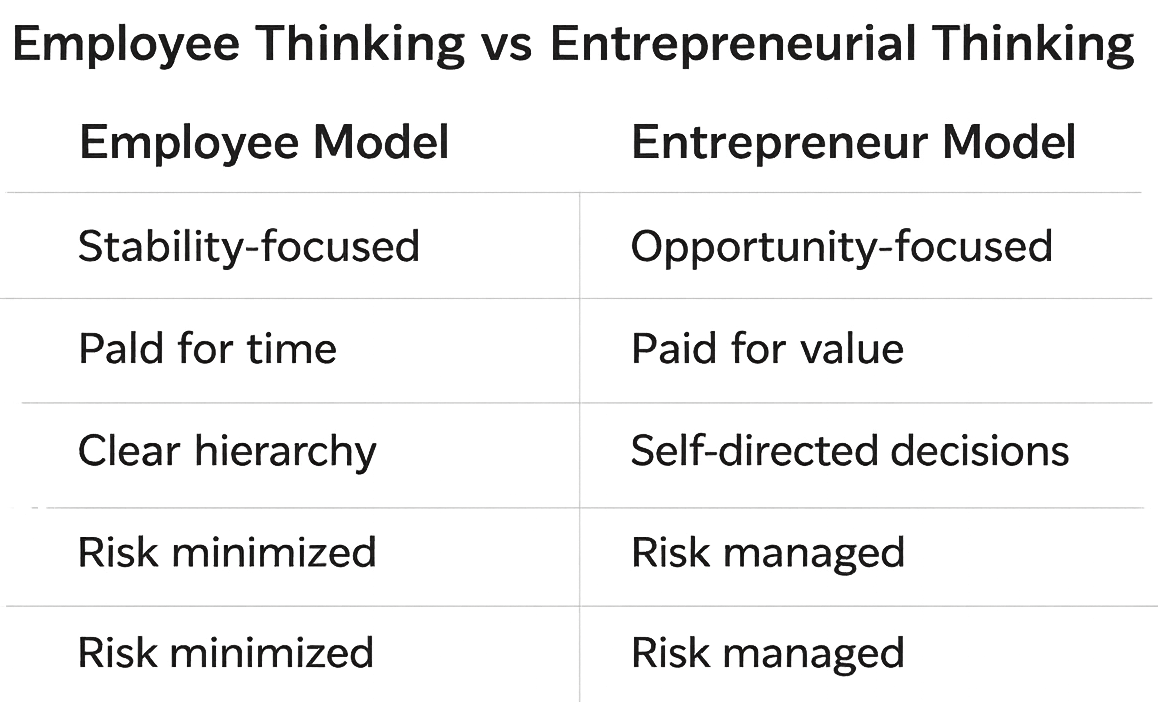
Entrepreneurship isn’t reckless.
A successful career shift is built on structured uncertainty.
Risk Isn’t the Enemy, Uncertainty Is
Most professionals delay a career shift because they fear risk.
But risk becomes manageable when broken into:
Financial exposure
Market uncertainty
Skill gaps
Emotional resilience
When you deconstruct risk, your career shift becomes measurable and controllable.
Entrepreneurs who transition strategically reduce uncertainty before committing fully.
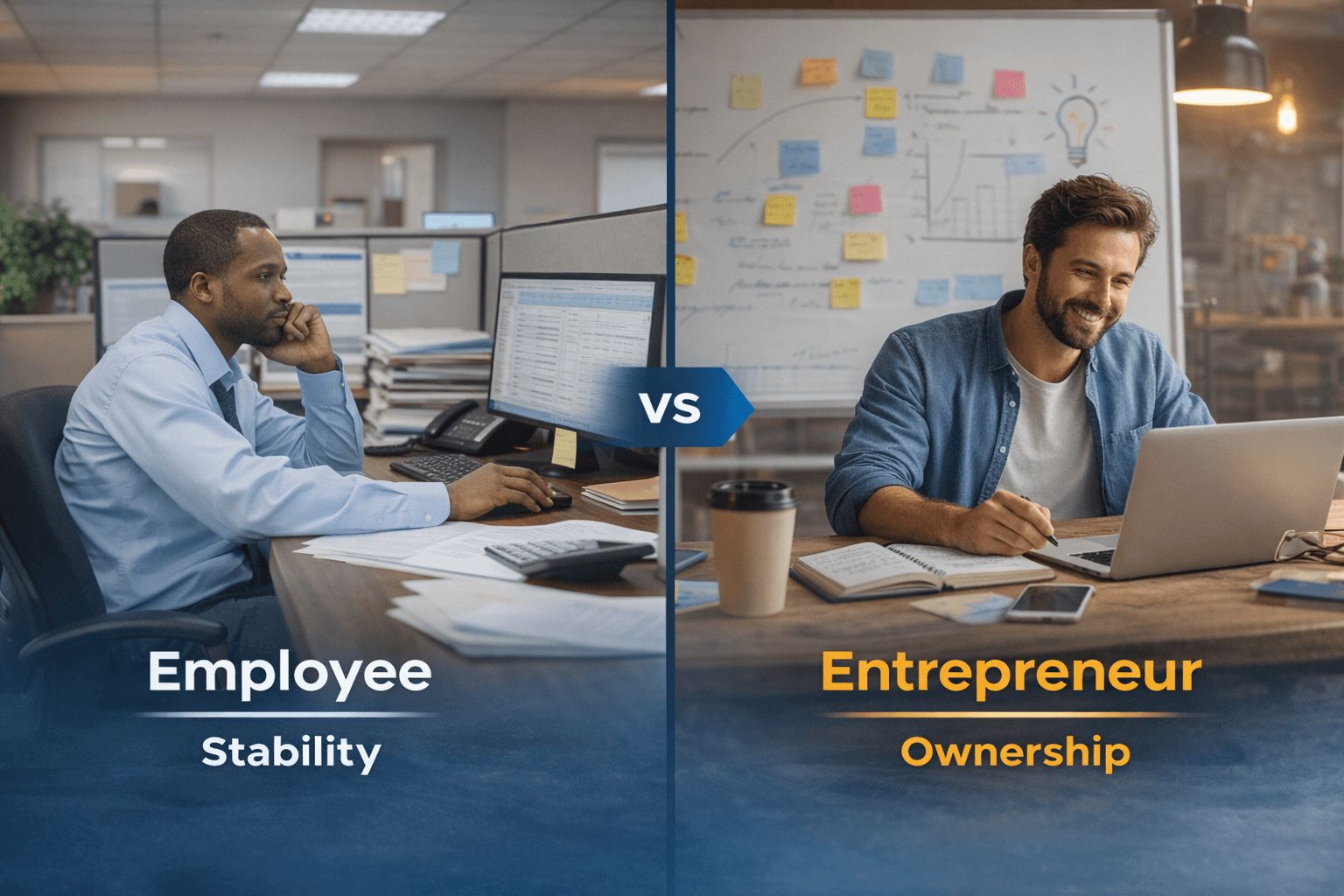
Step-by-Step Framework for a Career Shift into Entrepreneurship
A smart career shift follows a sequence, not a mood.
Step 1: Validate Before You Quit
The biggest mistake in a career shift is assuming your idea will work.
Before resigning:
Conduct 20–30 customer interviews
Pre-sell a beta version
Secure letters of intent
Test demand with a landing page
If customers don’t commit with money or time, your career shift is premature.
Validation turns a risky career shift into a calculated one.
Step 2: Financial Runway Planning

Every serious career shift requires financial clarity.
Your career shift runway calculator should include:
Monthly living expenses
Business fixed costs
Emergency buffer
Existing debt
If your runway is under 6 months, your career shift becomes a gamble.
Planning runway turns your career shift into a strategy.
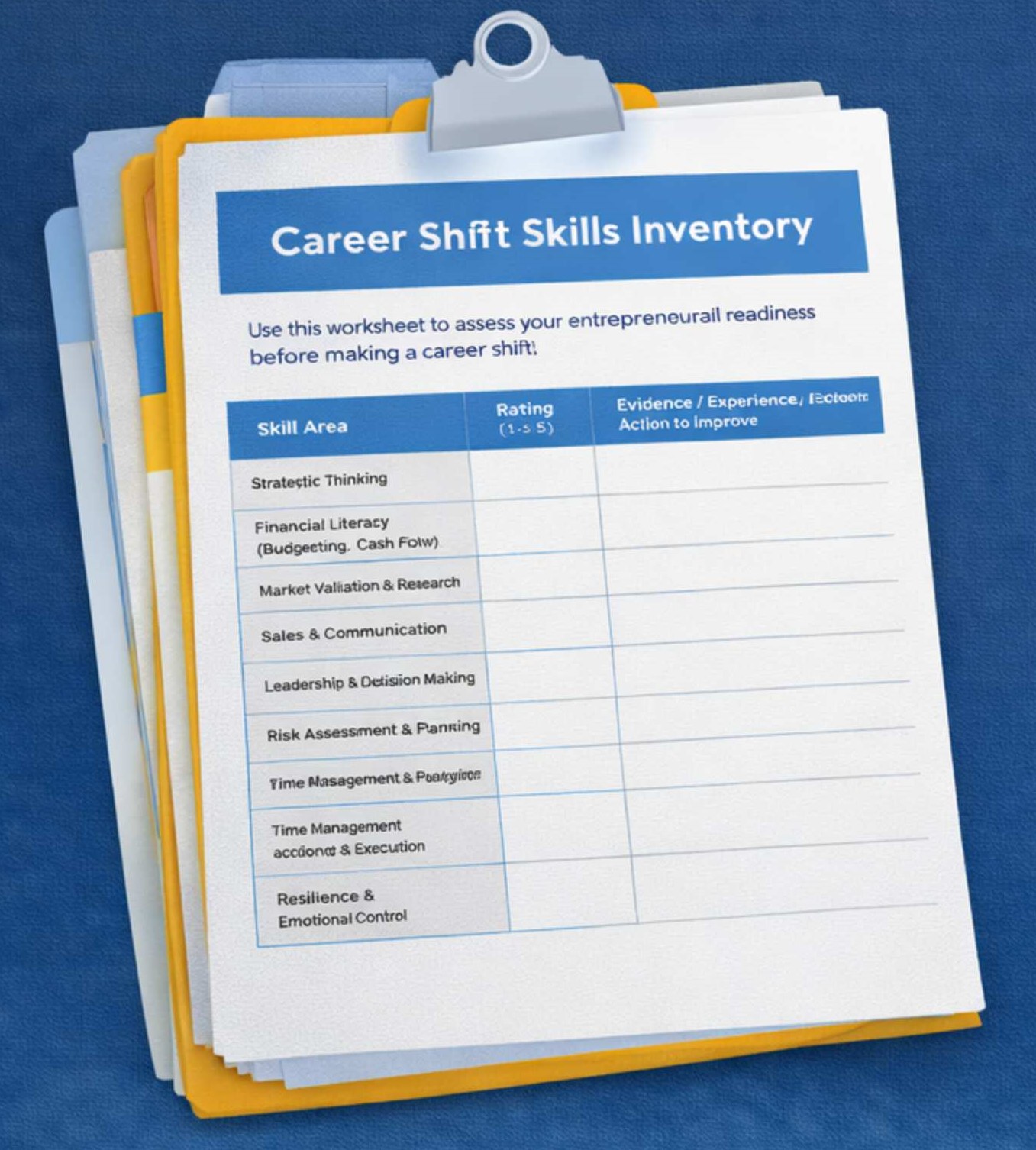
🧠 Not Sure If You’re Ready?
Plan your career shift strategically.
Assess your strengths, identify risk gaps, and map your improvement plan.
Step 3: Build a Micro-Version (MVP)
Don’t launch a company.
Launch proof.
A well-executed career shift tests small before committing big.
Examples:
Consultant? Offer one paid workshop.
SaaS founder? Launch a no-code prototype.
Product business? Run a preorder campaign.
Lean Canvas helps structure your career shift business model:
Problem
Customer segment
Value proposition
Revenue streams
Cost structure
Templates reduce friction during a career shift.
Step 4: Test Under Pressure
A real career shift feels different when:
You allocate limited capital
You make decisions with incomplete data
Time constraints create trade-offs
This is where experiential simulations outperform theory.
If you want students to understand a career shift, they must feel the pressure of one.
Which raises the question:
Why are we still teaching entrepreneurship through passive lectures when we could be using active learning strategies?
Tools & Templates to Execute a Career Shift Safely
Professionals planning a career shift, and educators teaching one, should use structured tools.
1️⃣ Lean Canvas Template
Clarifies business viability during your career shift.
2️⃣ Financial Runway Calculator
Determines when your career shift becomes financially viable.
3️⃣ Market Validation Checklist
Ensures your career shift is based on demand, not enthusiasm.
Interviews completed
Competitors mapped
Pricing tested
Early traction confirmed
4️⃣ Risk Assessment Grid
Ranks risks during your career shift by:
Probability
Impact
Mitigation
Tools convert a career shift from emotional decision to strategic transition.
Why Most Career Shifts Fail (And How Education Gets It Wrong)
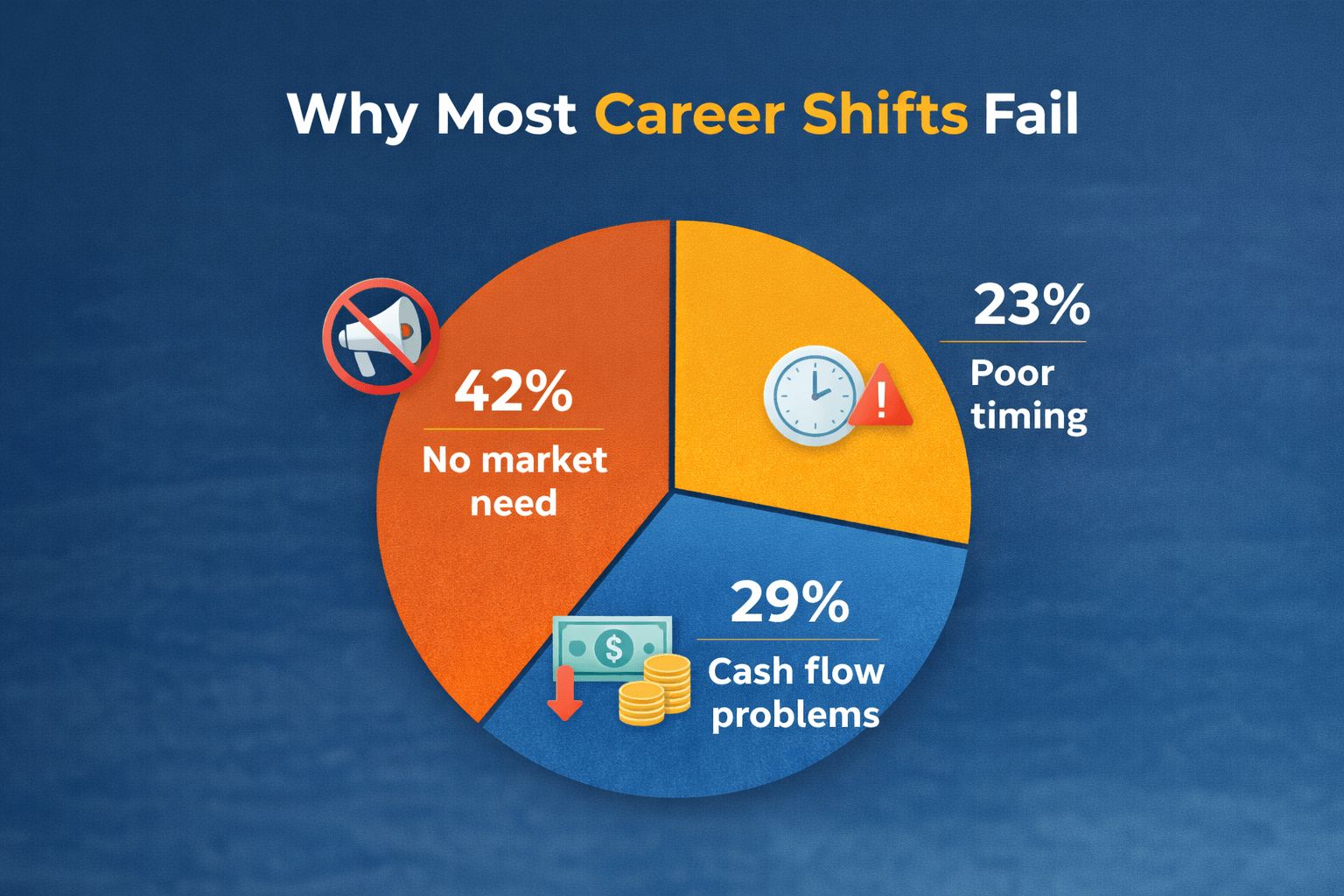
Here’s the uncomfortable truth:
Many career shifts fail because professionals confuse inspiration with preparation.
Some startup failure commonly results from:
No market need
Poor cash flow management
Mistimed scaling
None of these are solved by business plans alone.
They are solved by decision-making under constraint, something rarely taught in traditional programs preparing students for a career shift.
A PowerPoint does not simulate pressure.
A real-time simulation does.
That’s the missing link in modern entrepreneurship education.
How Universities Can Teach the Career Shift Process Better
If you’re a professor, dean, or curriculum director, the modern student doesn’t just want theory about entrepreneurship.
They want preparation for a real career shift.
That means teaching:
Budget allocation under pressure
Department trade-offs
Time-sensitive pivots
Investor scenario responses
Entrepreneurship simulations replicate the emotional and financial realities of a career shift.
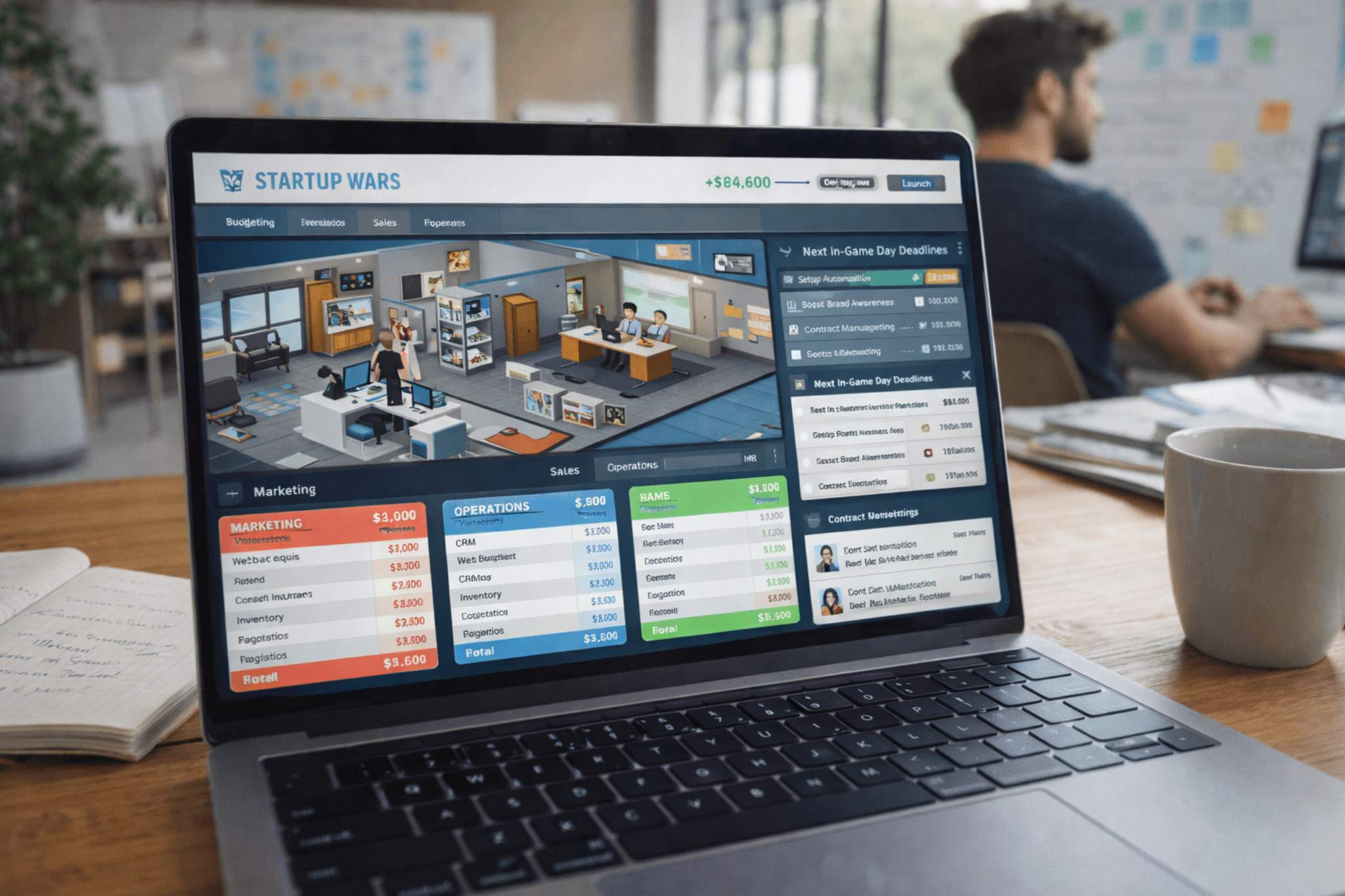
Startup Wars, for example, places students in a dynamic environment where they must allocate capital, manage limited time, and make strategic trade-offs.
That mirrors the real experience of a career shift into entrepreneurship.
Whiteboards alone won’t prepare them.
Experience will.
Strategy The Bigger Shift: From Knowledge to Competence
The future workforce demands:
Adaptability
Complex problem-solving
Entrepreneurial thinking
A modern career shift requires competence under pressure, not theoretical understanding.
Universities that fail to modernize risk graduating students who understand business, but cannot execute a career shift successfully.
And higher-ed decision makers are starting to recognize this gap.
Design Your Career Shift
A successful career shift into entrepreneurship is not a moment of courage.
It’s a controlled sequence:
Validate
Build runway
Prototype
Test under pressure
For professionals, this reduces risk.
For universities, teaching the structured career shift process increases:
Student engagement
Practical readiness
Program differentiation
Enrollment competitiveness
If your entrepreneurship curriculum still centers on passive lectures…
📅 Schedule a Free Demo and explore how experiential simulation transforms how students prepare for a real-world career shift.
Because preparing entrepreneurs requires more than knowledge.
It requires consequence.
Frequently Asked Questions
1. What is a career shift into entrepreneurship?
2. How do I plan a safe career shift?
3. How much money should I save before a career shift?
4. Why do most career shifts fail?
5. How can universities better prepare students for a career shift?
Let's Empower The Next Generation Of Founders
Schedule a call with our team to explore how Startup Wars can fit into your classroom.