Table of Contents
Picture a business professor standing in front of a classroom teaching fundamentals. Students dutifully take notes on business plans and case studies. But there’s something in their eyes – doubt.
These students know the economy is changing fast. They scroll through news about market volatility and uncertainty. They’re wondering if these lessons will actually help them when they graduate.
Traditional methods aren’t cutting it anymore. A perfect business plan means little when markets shift without warning. Case studies from stable economies don’t prepare students for the challenges waiting in 2026.
There’s a better approach to teaching. Business simulations create genuine learning through experience. Students practice making decisions in volatile conditions. They can fail safely and learn to adapt without real-world consequences.
This guide explores how educators are preparing students for the 2026 economy. It reveals practical ways to bring real-world volatility into classrooms and shows methods that work alongside existing curricula.
Teaching Entrepreneurship in an Uncertain Economy
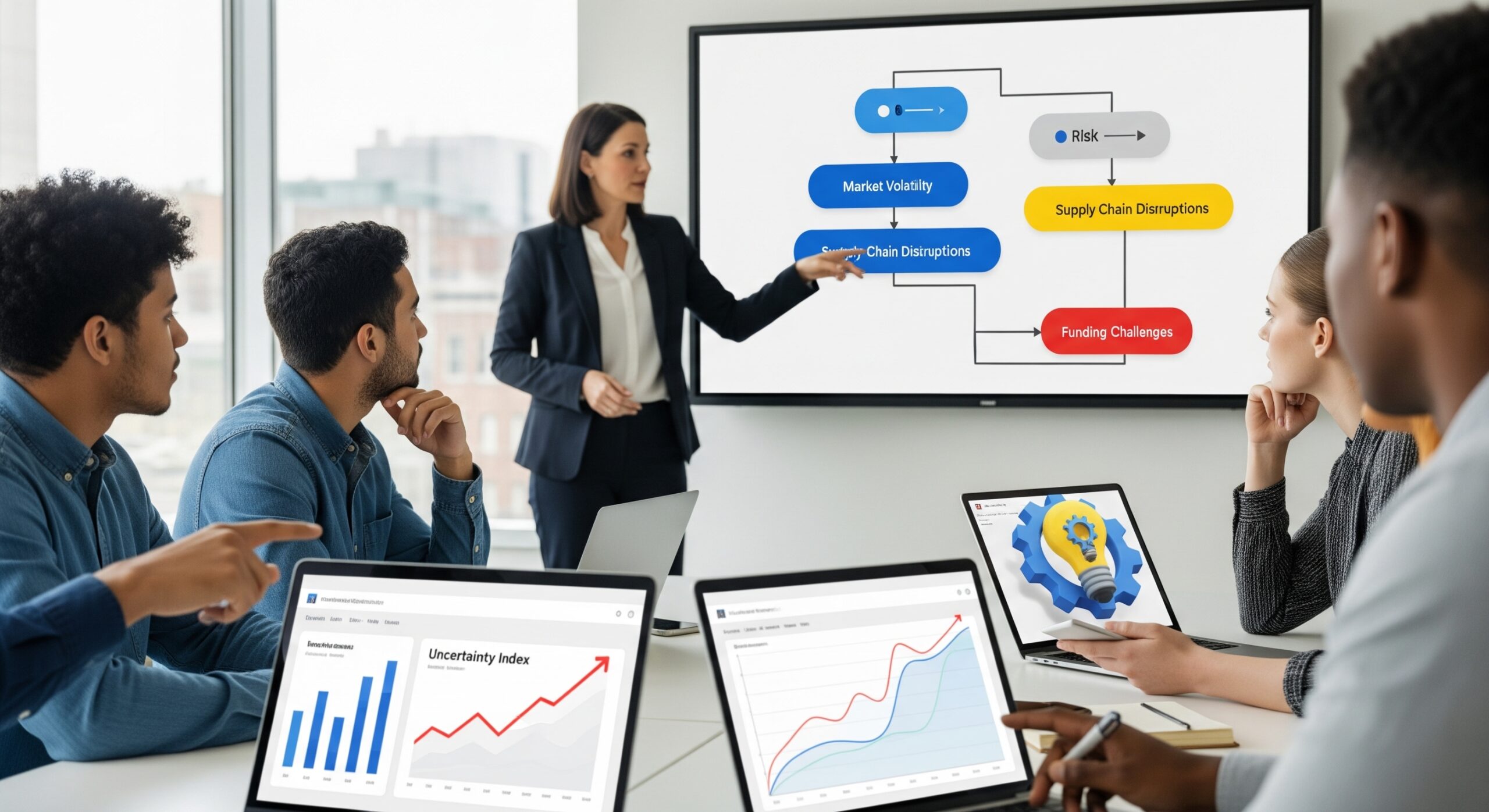
Teaching methods that worked for decades are showing their age. The business world has transformed. What prepared students for stable markets falls short in volatile ones.
Economic Volatility Business Strategies Missing from Textbooks
Business plans assume stable conditions. They use fixed numbers for costs and customers. But markets aren’t fixed anymore. This traditional approach to entrepreneurship education is missing the mark.
Case studies present a different problem. They analyze past decisions in different economic contexts. The business environment of 2026 won’t resemble 2019 or even 2023. For fresh perspectives, educators are exploring How Startup Simulations Are Transforming Business Education
Students learn prediction, not adaptation. They practice finding the right answer. But in volatile economies, there often is no single right answer. There are only decisions and adjustments.
2026 Business Trends Education Requirements
The data reveals what’s coming. The Conference Board projects continued uncertainty through 2026, noting persistent inflation pressure and supply chain fragility. Educators can learn more about preparing for these changes in How Economic Outlook Will Change What Students Need to Learn.
Business failure rates tell a sobering story. During economic uncertainty, startup failure rates increase by approximately 25%. The main cause remains consistent: inability to adapt to changing conditions.
The gap between your classroom and the real world is widening. You teach stability. Your students face volatility. This is why we created our framework for Gamifying Your Entrepreneurship Curriculum with Simulations to address this exact challenge.
Teaching Business During Economic Uncertainty Challenges
Educators notice these patterns repeatedly in their classrooms. Students struggle with decisions when information is incomplete. They want more data before acting. But real business doesn’t work that way.
When their first plan fails, many students don’t know how to recover. They lack resilience. They see failure as final rather than feedback. Strategies to address this are explored in Combatting Student Fatigue with Simulation-Based Learning.
The hardest skill is pivoting under pressure. Students learn linear thinking. But successful entrepreneurs in volatile markets think in cycles: plan, test, adapt, repeat. We’re not teaching that cycle effectively.”
These gaps leave students unprepared. They know business theory. But they can’t apply it when conditions change rapidly.
Recession Proof Business Education Through Simulation
Traditional methods aren’t delivering results. But there’s a solution that is. Business simulation creates the experience students need without the real-world risks.
Business Simulation for Economic Volatility
Experiential learning addresses three fundamental problems in business education.
First, it creates a safe environment for failure. Students can make terrible decisions and see the consequences. No real money gets lost. No actual business fails. They learn from mistakes without permanent damage.
Second, it provides real-time feedback on decision quality. Students see immediate results from their choices. They learn what works and what doesn’t. The connection between action and outcome becomes crystal clear.
Third, it develops pattern recognition for market changes. Students experience multiple business cycles in a compressed time frame. They learn to spot trends and adjust before it’s too late.

Starting a Business in a Volatile Economy with Simulations
The mechanics are straightforward. Students run a virtual company using simulation software. They make decisions about pricing, production, and hiring. The simulation engine calculates results based on market conditions.
This connects directly to your learning objectives. If you teach finance, students manage virtual cash flow. If you teach marketing, they adjust business strategies based on customer response. For more technical insights, see our article on How AI Tools Will Change Learning .
Think of it as flight simulator training. Pilots practice emergencies before flying real planes. Your students practice business crises before starting real companies. The principle is the same: learn through simulated experience.
Experiential Learning for Recession Planning
Startup Wars is built for today’s economic challenges. Specific features model real volatility through business simulation games.
The system introduces unexpected market shifts. Supply costs might suddenly spike. Customer demand could drop without warning. New competitors can enter the market overnight.
Students face scenarios like these:
- Inflation cutting into profit margins
- Supply chain disruptions affecting production
- Rapid changes in consumer spending patterns
Instructors get data to track learning. The simulator shows how students respond to each challenge. Educators see decision patterns and adaptation speed. This helps assess developing business instincts. More about implementation is available in Virtual Reality Simulations for Business Training.
Implementing Business Simulation in Curriculum
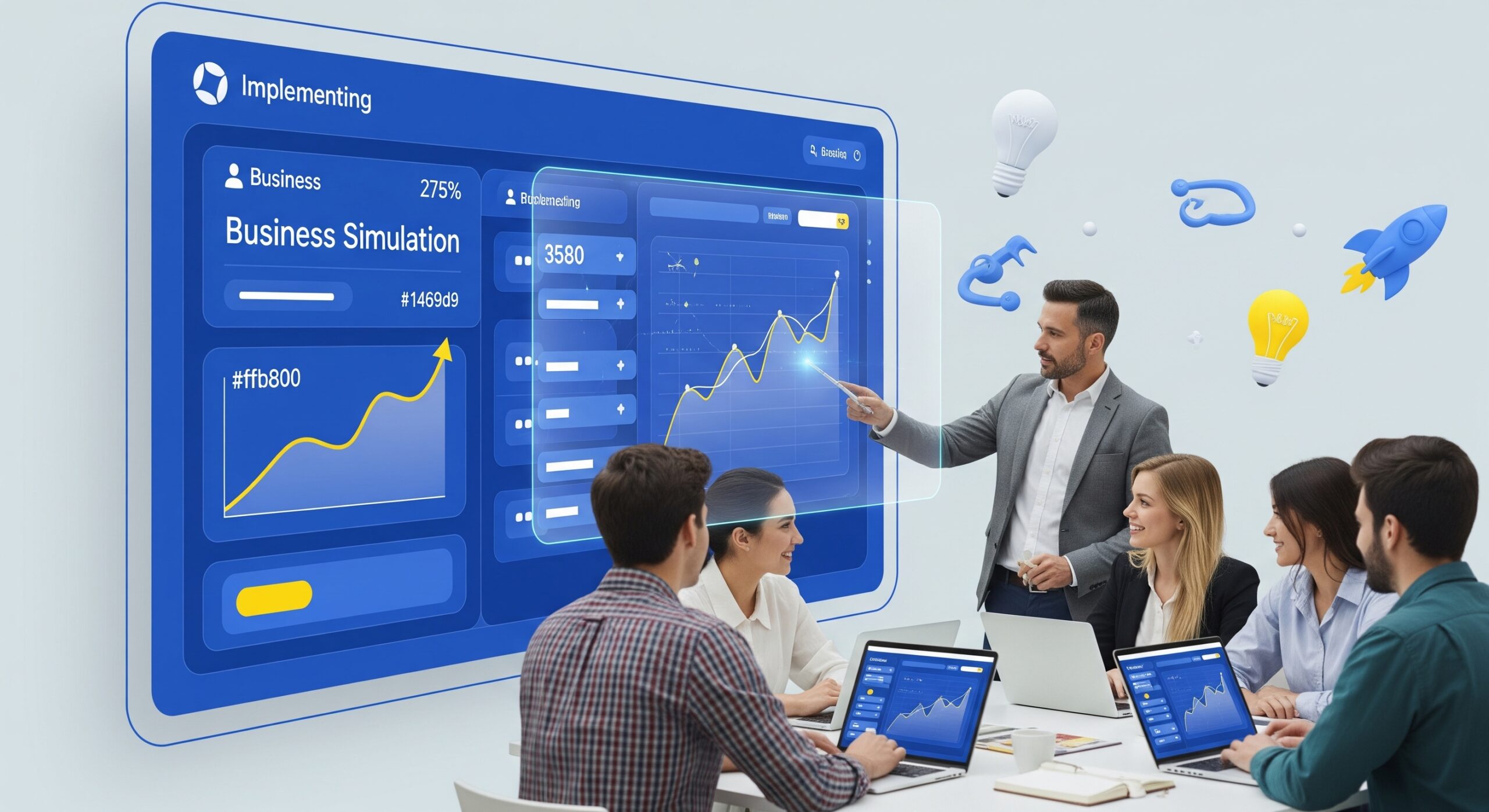
Educators recognize the value in business simulation. The question becomes how to make it work in their classrooms. The process is simpler than most expect.
Hands-On Learning for Economic Resilience
Complete course redesigns aren’t necessary. Many instructors start with one change.
Replace one traditional assignment with a business simulation. Instead of a written business plan, use a four-week simulation module. The time commitment is similar. The learning runs deeper.
The minimum time investment is about two hours for setup. Instructors learn the simulation software basics. Then they spend thirty minutes explaining it to students. After that, the simulation runs during regular class time.
Support resources are available. Startup Wars provides lesson plans and setup guides. Educators can also join weekly support sessions. No special training is required.
Entrepreneurship Education Through Simulation Assessment
Assessment approaches shift with simulation-based learning. Educators measure different skills through hands-on evaluation.
Instead of testing memorization, instructors assess adaptation skills. They observe how students adjust business strategies when market conditions change. They note who pivots effectively and who struggles.
Tracking decision-making under pressure becomes possible. The simulation software data shows which students make thoughtful choices when problems arise. Educators see who panics and who analyzes.
Evaluating strategic pivoting ability is straightforward. The platform records all student decisions. Instructors can review how they responded to specific challenges. This provides better insight than any written exam.
Startup Simulator Best Practices
Time concerns come up frequently. The business simulation actually saves time once running. Instructors spend less time lecturing and more time coaching.
Grading is different but not harder. Educators grade based on decision quality and learning progress. Rubrics are provided. Many find it more meaningful than traditional grading.
Student onboarding takes about twenty minutes. Most students understand the platform quickly. They find it more engaging than traditional assignments. The initial learning curve pays off long-term. For additional support, educators visit the Class Resources page for implementation tools and explore masterclasses for deeper training.
A first-time simulation user shared his perspective: “I was worried students would resist the technology. Instead, they dove right in. Within one class period, they were more engaged than they’d been all semester. The platform was intuitive enough that I didn’t field a single technical question.”
Building Business Resilience Through Education
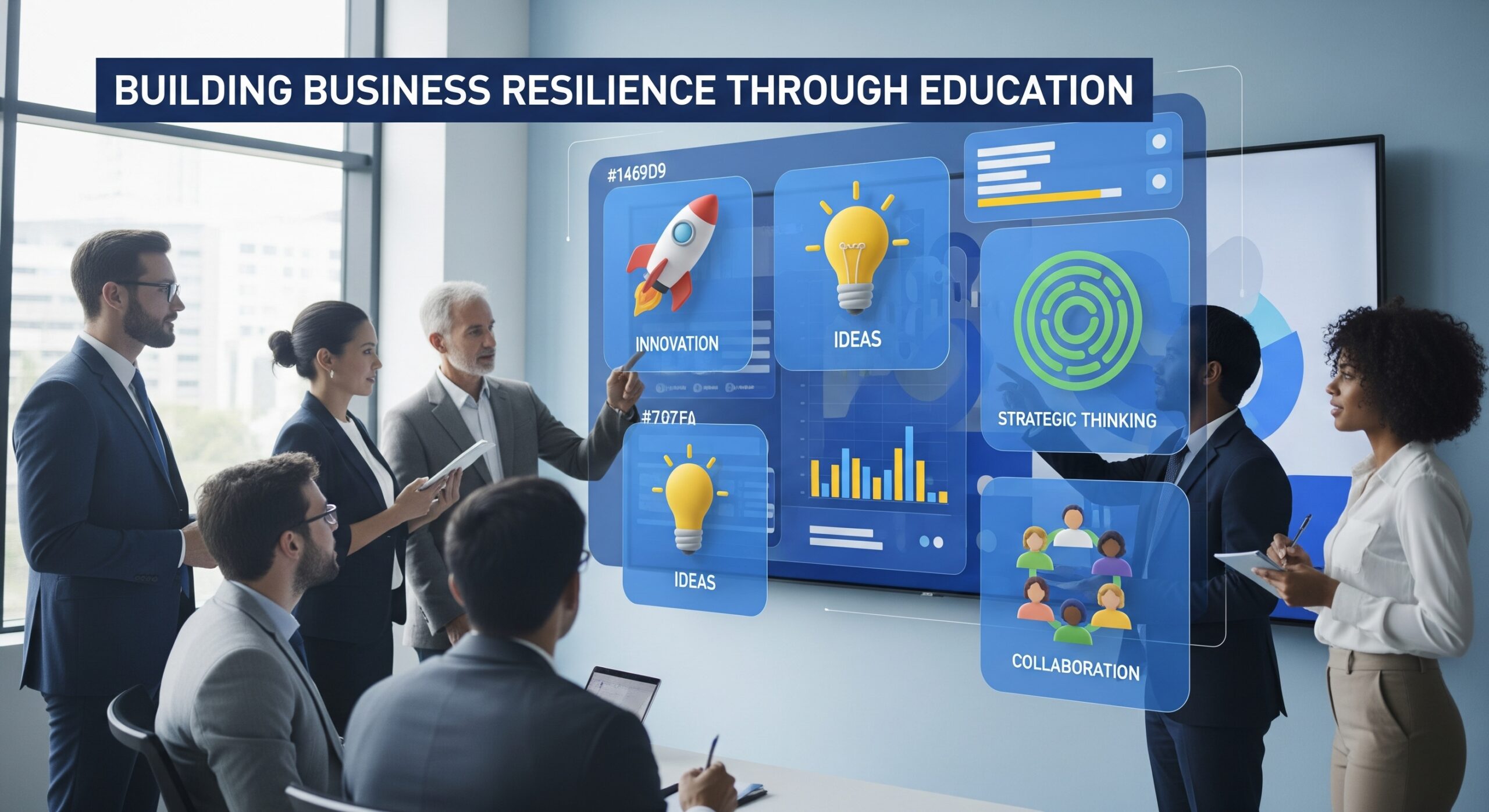
When educators use business simulation, they observe clear changes in their students. The benefits extend beyond test scores.
Adaptive Strategies for Volatile Markets
Students develop practical business instincts. Their decision-making improves in both speed and quality. They learn to analyze situations faster and act with more confidence.
Risk assessment becomes a natural skill. Students learn to evaluate opportunities and threats instinctively. They consider multiple scenarios before committing to a strategy.
Strategic thinking strengthens under pressure. Students practice maintaining clarity when situations change rapidly. This builds mental resilience that serves them in all business situations.
Graduates from simulation-enhanced courses interview differently. When asked about handling unexpected challenges, they reference actual experiences from the simulator. Employers notice the difference. These students aren’t theorizing – they’re drawing on lived experiences.
Measuring Learning Outcomes in Economic Uncertainty
Student engagement increases noticeably. Participation becomes more active and consistent. Students come to class prepared because they care about their virtual companies.
Retention of core concepts improves. Students remember what they experience more than what they’re told. The lessons stay with them long after the course ends.
Class discussions become more meaningful. Students have real experiences to reference. They debate business strategies based on actual results rather than theoretical concepts.
Conclusion and Next Steps
Traditional teaching methods aren’t preparing students for today’s economy. Business simulation addresses this problem. It bridges the gap between theory and practice.
Educators can give students real experience without real risk. Students learn to adapt to changing markets. They develop the resilience needed for business success.
The next step is straightforward. See how it works in the classroom.
The platform demonstration takes 30 minutes. Educators can ask questions and see actual student results. No pressure. Just a practical look at how simulation can work. Before the demo, reviewing 10 Smart Questions to Ask Before Choosing Business Simulation might be helpful.
Common Questions About Business Simulation
How do business simulations build economic resilience?
Business simulations create realistic economic scenarios where students must make decisions with incomplete information. This experiential learning approach builds their ability to adapt quickly to unexpected changes and volatile market conditions.
What are the benefits of using simulation games for entrepreneurship education?
Business simulation games provide safe environments for students to practice strategic pivoting, risk assessment, and decision-making under pressure. These hands-on learning experiences create deeper understanding than traditional lecture-based approaches.
How do educators measure learning outcomes in business simulations?
Educators track student adaptation to changing market conditions, quality of strategic decisions under pressure, and ability to pivot business strategies. The simulation software provides detailed analytics on these competency areas.
What makes simulation software effective for teaching business strategies?
Simulation software allows students to test different business strategies in realistic market conditions. They receive immediate feedback on their decisions and can see the direct impact of their strategic choices.
How can educators implement business simulations in existing courses?
Most educators start by replacing one traditional assignment with a business simulation module. The Class Resources page provides step-by-step implementation guides, and setup support for first-time users is available through the for educators portal.
People Also Searched For:
-
How to Deal With Difficult Clients Without Losing Your Founder Values
-
From Fired to TechCrunch in 12 Months: Product Launch Plan Lessons with Logan Jones
-
Building Something From Nothing: The True Meaning of Entrepreneurship by Vivian Faustino-Pulliam
-
The Real Reasons Startups Fail - What 2 Startups & 70+ Startup Investments Teach You About Success
-
Most Founders Build Too Fast and That’s Why Startups Fail