Let’s be honest.
Grading is not why most of us went into teaching.
You didn’t pursue a doctorate to spend weekends inside a learning management system clicking “7.5/10” 130 times.
And yet here we are.
According to McKinsey research on AI in knowledge work, generative AI could automate up to 30% of tasks in education workflows — with grading at the top of that list. Meanwhile, EdSurge reports that faculty burnout continues to rise, particularly tied to administrative overload.
Brace yourself: whiteboards alone won’t cut it anymore.
AI grading tools are no longer experimental. They’re becoming infrastructure.
But here’s the real question:
Can AI grade fairly, and can it improve learning outcomes?
Let’s break it down.
Table of Contents
Why AI Grading Tools Are Becoming Essential in Higher Education
AI grading tools are software platforms that use machine learning or rule-based algorithms to automatically assess assignments, provide feedback, and score student work using structured rubrics.
They are most commonly used for:
- Essay grading
- Short-answer responses
- Quizzes and exams
- Rubric-based assessments
Participation tracking
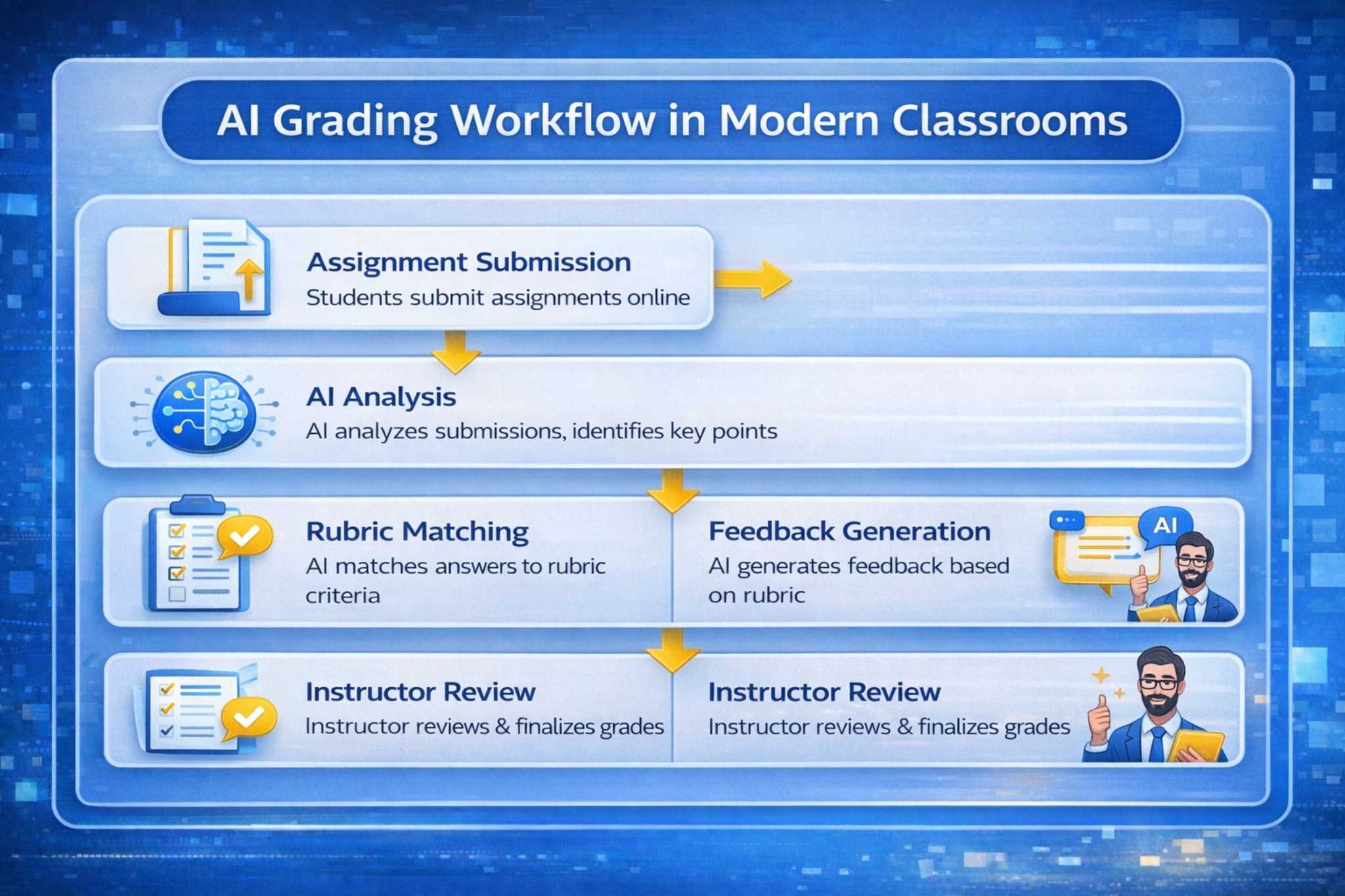
- Scalability – Larger cohorts, online programs, executive MBAs.
- Consistency – Reduced grading bias.
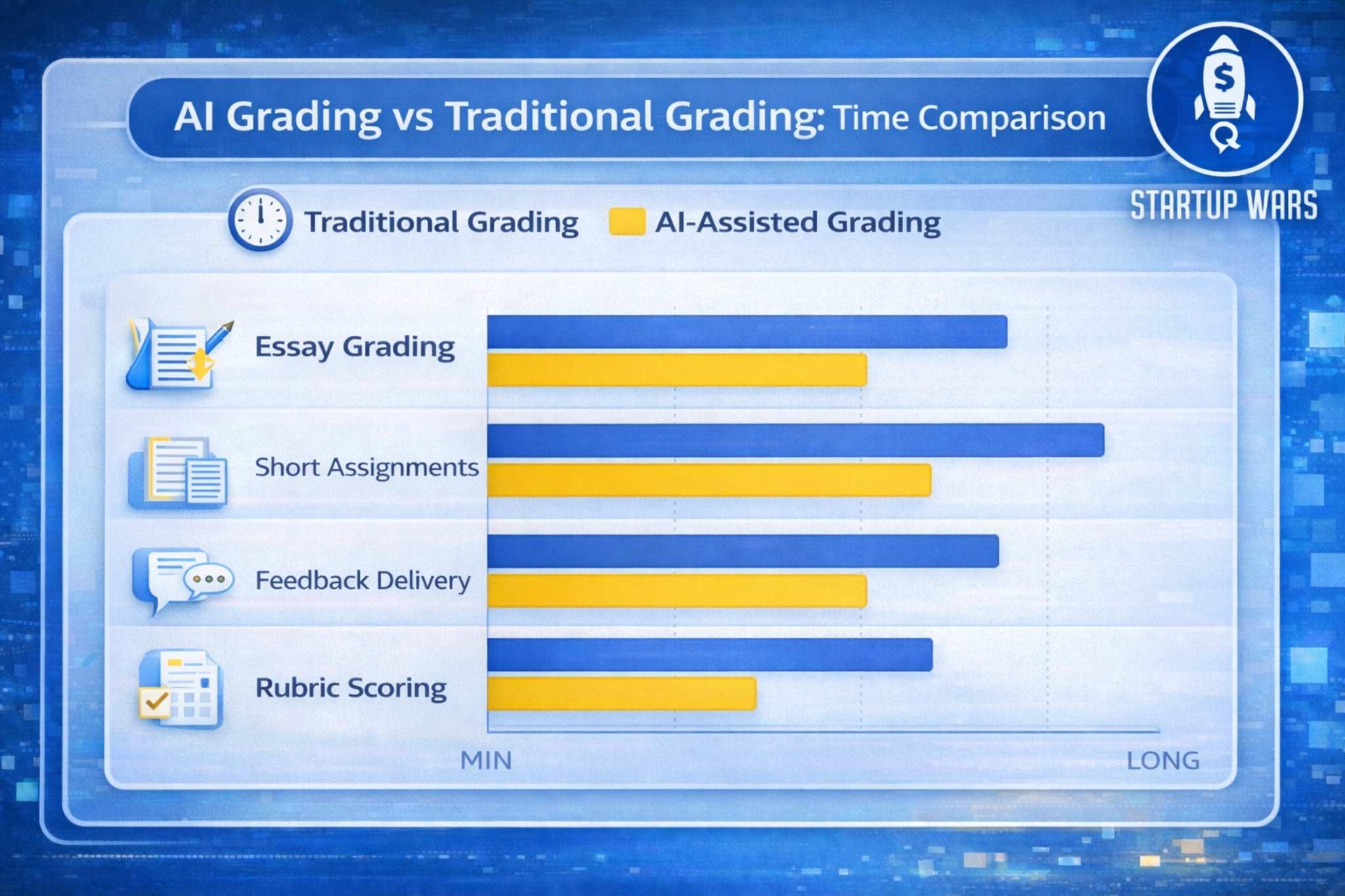
- Speed – Immediate student feedback.
- Data Insights – Performance analytics beyond final grades.
Statista projects continued growth in AI adoption in education globally through 2030, particularly in assessment and analytics tools.
The shift is not about replacing professors.
It’s about reducing cognitive overload so professors can focus on mentorship, curriculum innovation, and research.
Lear more about How AI Tools will change Learning in 2026.
The Best AI Grading Tools in 2026 (Product Roundup)
Below is a practical comparison of widely used AI grading tools in higher education.
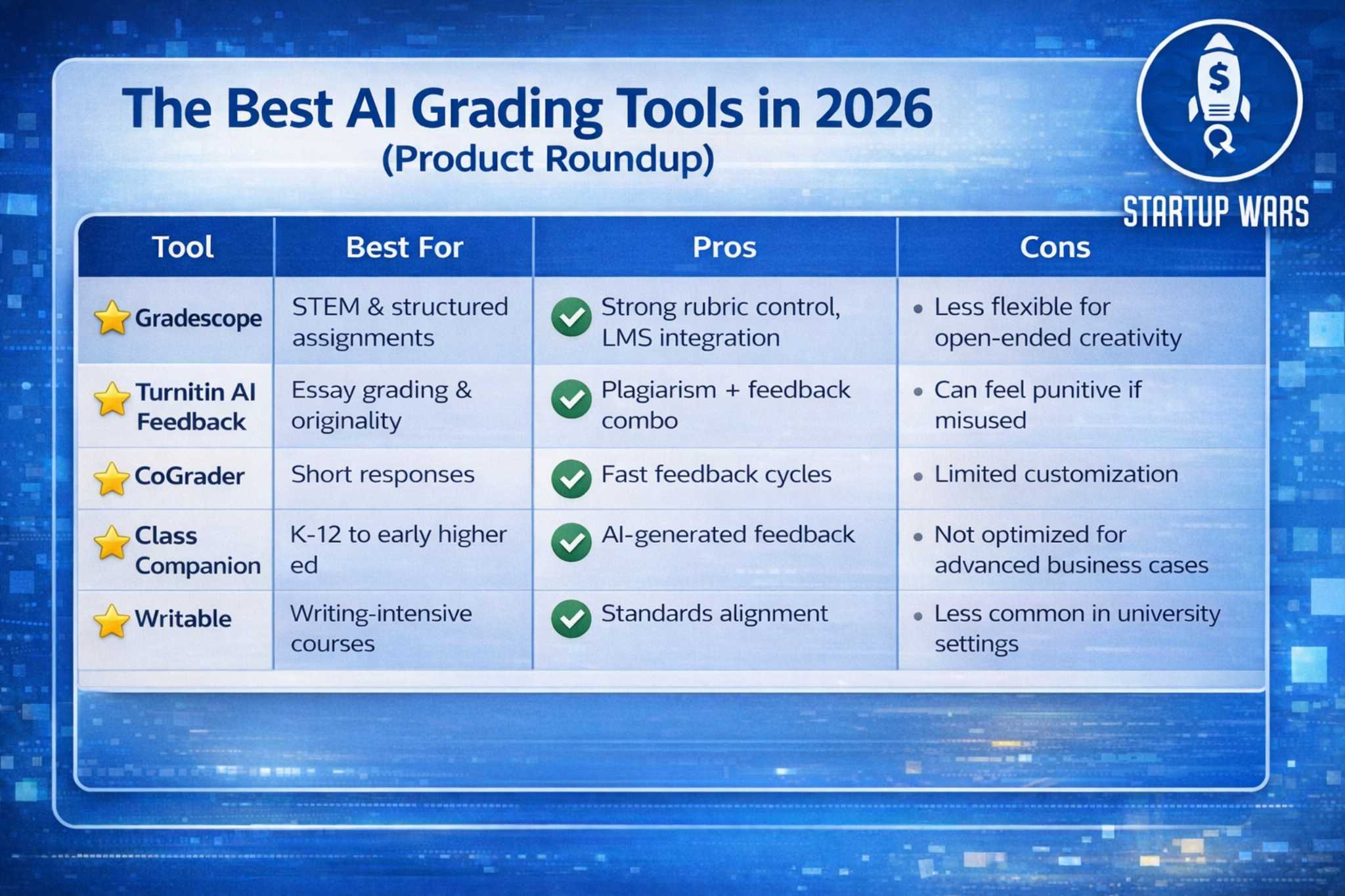
Across reviews and faculty forums, common feedback includes:
- “It saved me 10+ hours per week.”
- “Students appreciate faster feedback.”
- “I still review final grades manually.”
That last sentence matters.
AI grading is rarely fully autonomous in higher education. It’s augmentation, not automation.
Learn more about Top 10 AI Tools every College Student Should Use
The Hard Question — Does Faster Grading Mean Better Learning?
Here’s where we need to be slightly controversial.
AI grading tools solve a professor’s problem.
They do not automatically solve a student engagement problem.
If the assignment is passive, AI will simply grade passivity faster.
If the rubric is static, AI will replicate static evaluation.
The deeper challenge in business education is not just grading speed.
It’s:
- Are students making decisions?
- Are they receiving performance analytics?
- Are they experiencing consequences?
- Are they iterating under pressure?
Because real-world entrepreneurship is not graded by rubrics.
It’s graded by outcomes.
And this is where AI grading tools reach their limit.
The Next Evolution — AI-Powered Experiential Assessment
AI grading tools evaluate outputs.
But what if AI evaluated decisions?
This is where simulation-based platforms like Startup Wars shift the paradigm.
Instead of grading a 20-page business plan written once per semester, educators can:
- Track iterative decision cycles
- Measure financial outcomes
- Analyze strategic pivots
- Compare team performance in real time
- Provide performance analytics, not just grades
In experiential entrepreneurship simulations, grading becomes embedded inside the learning process.
Students don’t just submit answers.
They:
- Allocate resources.
- Respond to market shifts.
- Experience cash flow constraints.
- Adapt strategy under time pressure.
That is not grading automation.
That is learning transformation.
And yes, it’s still AI-powered, but in a way that connects assessment directly to business reality.
If you’re exploring how AI can improve fairness and efficiency, the next step is asking:
What if grading wasn’t a separate task at all?
Lear nmore about How to save grading time with digital assessment tools
What Forward-Thinking Business Schools Are Doing in 2026
Leading programs are combining:
- AI grading tools for structured assessments
- Entrepreneurship simulations for applied evaluation
- Performance dashboards for analytics-based grading
- Iterative coursework instead of static final submissions
They are moving from:
“Did the student write the right answer?”
To:
“Did the student make effective decisions in dynamic conditions?”
That shift aligns far more closely with employer expectations.
How to Choose the Right AI Grading Tool
If you’re evaluating options, ask:
- Does it integrate with your LMS?
- Can you control rubric weight?
- Is feedback customizable?
- Does it reduce bias or just speed up scoring?
- Does it support experiential learning models?
AI grading software should save time.
But the best educational technology should also increase engagement.
If it only addresses efficiency, you’re solving half the equation.
Save Time — But Don’t Stop There
AI grading tools are powerful.
They can:
- Save hours per week.
- Improve consistency.
- Provide faster feedback.
- Reduce administrative strain.
But if your goal is to prepare students for real-world business leadership, grading efficiency is just the beginning.
The future of business education isn’t about grading faster.
It’s about assessing smarter.
If you’re ready to explore how AI-powered simulations can transform not just grading, but student engagement and learning outcomes.
📅 Schedule a Free Demo of Startup Wars
Because in 2026, fair grading matters.
But experiential learning wins.
Frequently Asked Questions
1. How can AI be used to grade fairly?
2. Are AI grading tools reliable in higher education?
3. What are the best AI grading tools in 2026?
4. Can AI grading replace professors?
5. What is the difference between AI grading and AI simulation assessment?
Let's Empower The Next Generation Of Founders
Schedule a call with our team to explore how Startup Wars can fit into your classroom.