gamiification in education

Let’s be honest for a moment.

Many university classrooms still rely on a model that hasn’t changed much in decades: lectures, slides, exams, repeat.

But today’s students grew up with interactive technology, games, and real-time feedback. Sitting through passive lectures often feels disconnected from the way they naturally learn.

That’s why gamification in education is rapidly becoming one of the most powerful strategies for increasing student engagement and improving learning outcomes.

When done correctly, gamification doesn’t mean turning your class into a video game. Instead, it means applying game design principles to learning environments so students actively participate, experiment, and solve problems.

And the results can be remarkable.

Students learn better when they do, not when they simply listen.

Let’s explore the seven most effective gamification strategies that educators are using today to transform the classroom.

Table of Contents

Why Gamification in Education Works

Before diving into the strategies, it’s important to understand why gamification works so well.

Game mechanics tap into core psychological motivators:

  • Progress


  • Achievement


  • Curiosity


  • Competition


  • Collaboration


When students feel like they are progressing toward a goal, they naturally become more invested in the learning process.

Gamification also shifts the classroom dynamic from:

Passive learning → Active participation

Instead of memorizing concepts, students start applying them in real time.

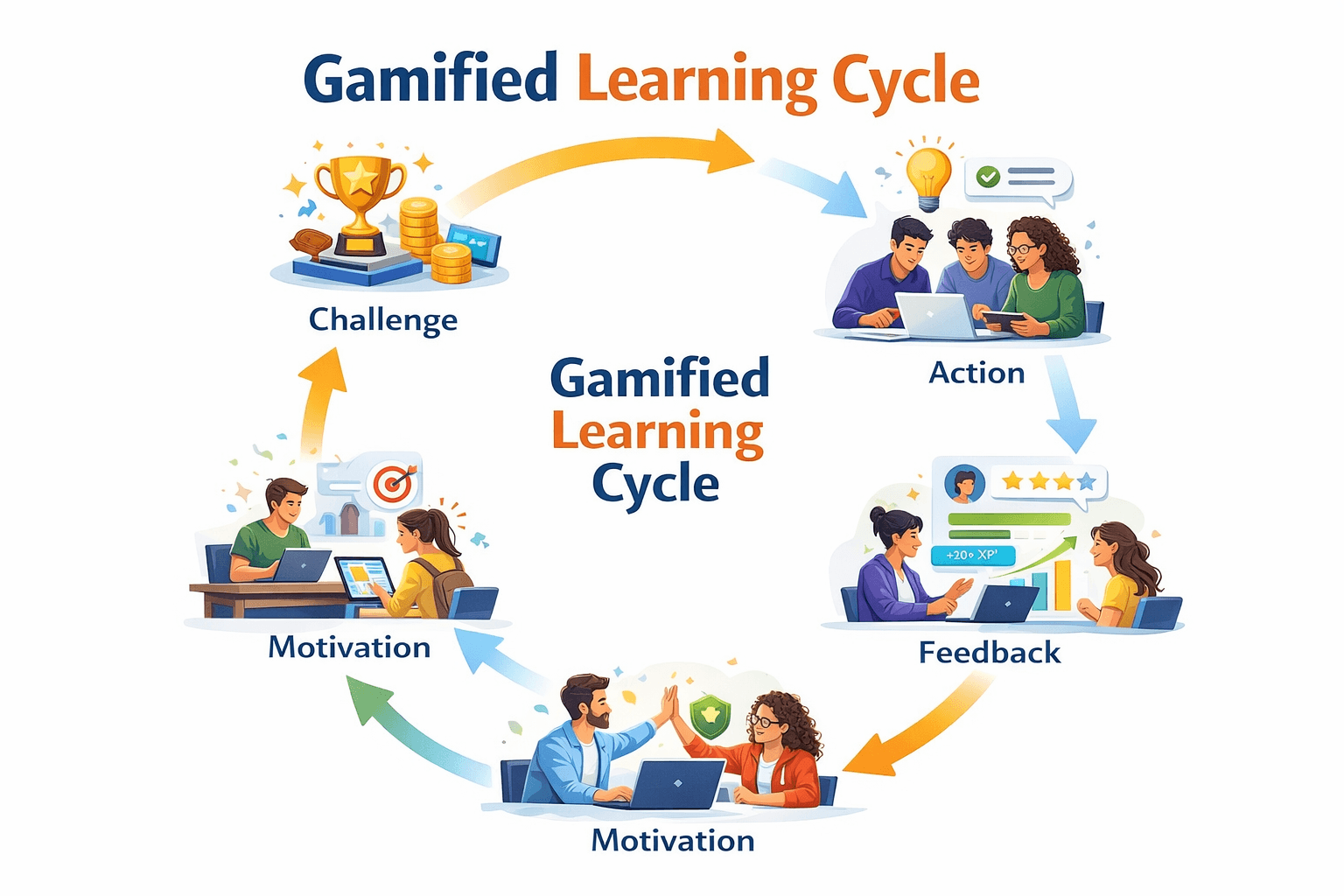
Gamified learning cycle

Proven Strategies to Boost Student Engagement

Strategy #1: Turn Learning Into a Challenge

One of the simplest ways to introduce gamification is by reframing coursework as missions or challenges.

Instead of saying:

“Complete this assignment.”

You might say:

“Your challenge is to design a product and launch it into a competitive market.”

This subtle shift changes how students perceive the task.

Challenges feel interactive and purposeful, while assignments often feel routine.

Small changes like this can dramatically increase participation.

Strategy #2: Use Real-World Simulations

Real-world simulations are one of the most powerful forms of gamification in higher education.

Instead of learning about entrepreneurship from a textbook, students run simulated companies, make decisions, and compete in real markets.

This approach transforms abstract concepts into real experiences.

Students learn:

  • strategy
  • decision-making
  • financial planning
  • market competition

And they learn it by doing, not memorizing.

Entrepreneurship simulations are becoming increasingly popular because they replicate the real challenges founders face.

entrepreneurship-simulation-classroom

Strategy #3: Create Progress and Achievement Systems

Games keep players engaged through visible progress systems.

Education can do the same.

Some examples include:

  • Achievement badges
  • Progress dashboards
  • Level-based learning modules
  • Skill mastery checkpoints

These systems provide constant signals that students are moving forward.

Progress visibility creates motivation loops, encouraging students to continue improving.

Strategy #4: Introduce Competition (Carefully)

Competition can be a powerful motivator when used thoughtfully.

Friendly competitions between teams or groups can drive participation and creativity.

Examples include:

  • Startup pitch competitions
  • market share simulations
  • innovation challenges

However, competition should remain constructive and collaborative, not discouraging.

The goal is to inspire effort, not create unnecessary pressure.

Strategy #5: Encourage Team-Based Learning

Most games are social experiences.

Learning can be too.

Team-based gamification encourages students to collaborate, debate ideas, and solve problems together.

For business education especially, teamwork mirrors real-world professional environments.

Students learn how to:

  • divide responsibilities
  • communicate effectively
  • make group decisions

These skills are difficult to teach through lectures alone.

Strategy #6: Provide Immediate Feedback

One reason games are so engaging is the instant feedback loop.

Players know immediately whether their strategy worked.

Traditional classrooms often delay feedback until exams or graded assignments.

Gamified systems shorten that loop.

Students receive:

  • performance analytics
  • decision outcomes
  • strategy feedback

This allows them to quickly learn from mistakes and improve.

Strategy #7: Connect Gamification to Real Business Skills

Gamification works best when it aligns with real-world skills.

Students should feel that the challenges they are solving resemble problems they will face after graduation.

For example:

Entrepreneurship simulations allow students to practice:

  • product development
  • market positioning
  • financial management
  • competitive strategy

Instead of memorizing frameworks, they experience how those frameworks actually work.

How Entrepreneurship Simulations Bring Gamification to Life

One of the most effective ways universities are implementing gamification today is through entrepreneurship simulations.
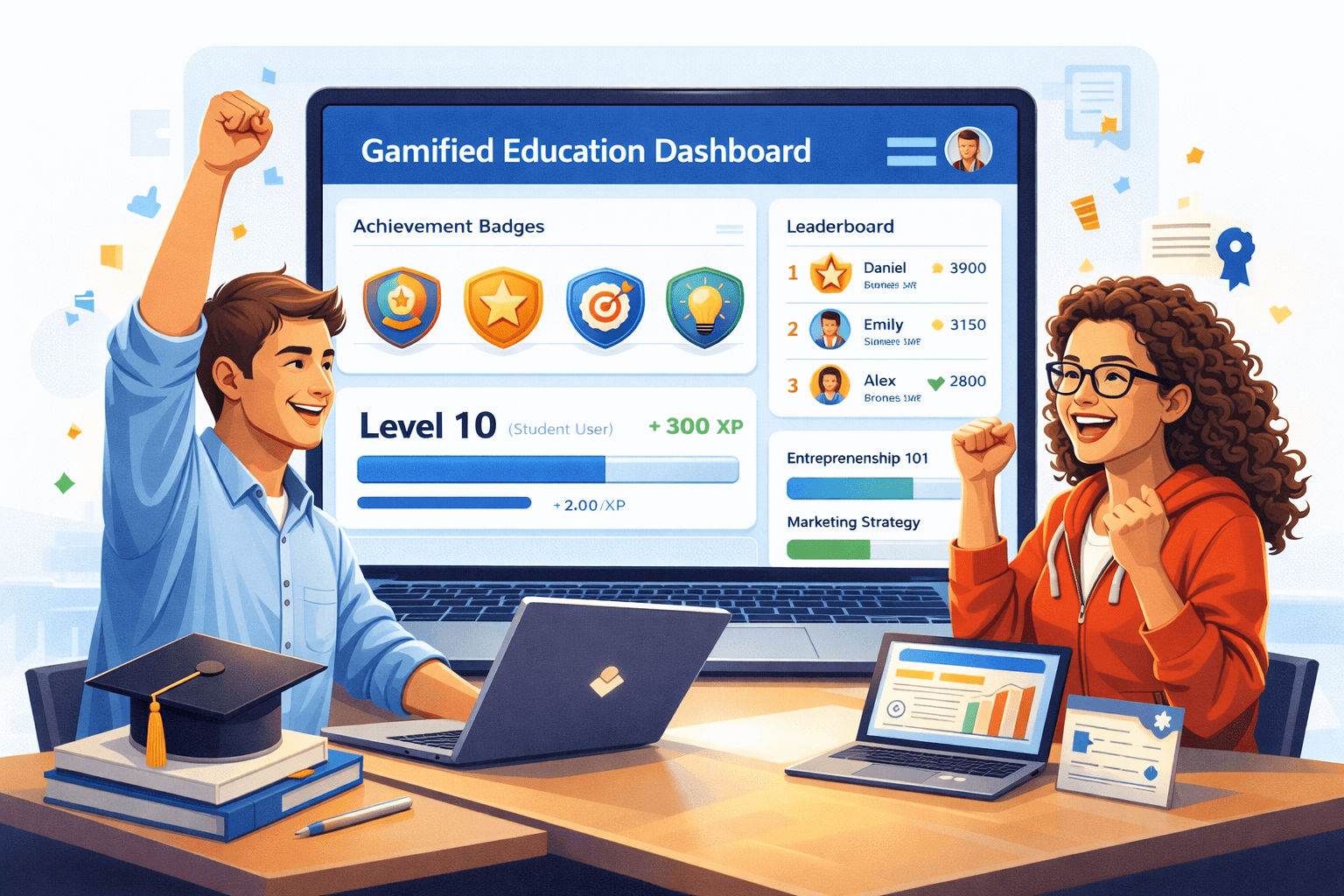
gamified-education-progress-dashboard

Platforms like Startup Wars allow students to build and run startups inside a simulated market environment.

Students make real strategic decisions such as:

  • pricing products
  • allocating marketing budgets
  • managing teams
  • responding to competitors

Each decision influences their company’s performance in the simulated market.

Suddenly, classroom theory becomes real strategy.

Professors also gain valuable teaching benefits:

  • Higher participation rates
  • Deeper concept understanding
  • Real-world skill development
  • More dynamic classroom discussions

Instead of asking, “Did students read the chapter?”

Educators begin asking:

“What strategies did your company use to win market share?”

And that’s a far more interesting conversation.

The Future of Higher Education Is Experiential

Higher education is undergoing a major shift.

Students increasingly expect learning environments that are:

  • interactive


  • practical


  • collaborative


  • immersive


Gamification is not a gimmick.

It’s part of a broader movement toward experiential learning.

Educators who adopt these strategies often report:

  • higher engagement


  • better retention of concepts


  • stronger critical thinking skills


And most importantly, students begin to see the relevance of what they are learning.

Conclusion: Engagement Is the New Competitive Advantage

The challenge for modern educators isn’t simply delivering information.

It’s creating learning environments where students actively apply knowledge.

Gamification in education offers a powerful path forward.

By combining challenge, feedback, collaboration, and real-world simulation, educators can transform passive classrooms into dynamic learning experiences.

And the results speak for themselves.

Students become more curious.
More engaged.
And far more prepared for the real world.

If you’re interested in bringing gamified entrepreneurship simulations into your classroom, Startup Wars offers a hands-on platform designed specifically for university educators.

📅 Schedule a Free Demo and see how Startup Wars can transform student engagement in your course.

Frequently Asked Questions

1. Does gamification improve learning outcomes in higher education?

Yes. Studies show that gamification improves engagement, knowledge retention, and participation by incorporating interactive elements such as challenges, feedback loops, and collaborative learning environments.

2. What is gamification in education?

Gamification in education refers to the use of game design elements—such as points, challenges, and competition—to make learning more interactive and engaging for students.

3. What are examples of gamification in higher education?

Examples include entrepreneurship simulations, classroom competitions, digital badges, progress dashboards, and interactive team challenges.

4. Why is gamification effective for student engagement?

Gamification activates psychological motivators such as progress, achievement, and competition, which naturally increase student participation and focus.

5. How can professors implement gamification in the classroom?

Educators can introduce gamification through simulations, collaborative projects, progress systems, and real-world problem-solving activities that encourage active learning.

Let's Empower The Next Generation Of Founders

Schedule a call with our team to explore how Startup Wars can fit into your classroom.

Gamification in Education: 7 Proven Strategies to Boost Student Engagement

Subscribe to the Startup Wars newsletter to receive free resources for starting your company, delivered right to your inbox.

Charlotte Kane
Charlotte Kane Undergraduate Student, The Ohio State University

Startup Wars allowed me to understand everything that goes into starting a business in 90 days.

Darshita Bajoria
Darshita Bajoria Undergraduate Student, The Ohio State University

Startup Wars is an interactive way to learn and hone entrepreneurial skills while being a no-risk outlet. Great tool for those pursuing entrepreneurship.