





Skip to content
Startup Wars

Five simulation series. 15 scenarios. Real business decisions.

Entrepreneurship Simulations for Students and Educators

Explore five Startup Wars simulation series with 15 scenarios where learners practice connected business and entrepreneurship decisions.

Student presenting a Startup Wars simulation
Students · company-reported
10K+
Institutions · company-reported
100+

Author: Startup Wars. We develop the five entrepreneurship simulation series described here. This catalog draws on that product knowledge to help educators compare scenarios and plan a lesson. See our published educational use and sources.

Trusted by educators and institutions

University of Alabama
Florida State University
Drexel University
East Carolina University
Hofstra University

Explore documented educational use and the context behind our adoption totals. View our evidence and sources

Five series. 15 scenarios. Real decisions.

Explore the Startup Wars simulation series

Each browser-based series offers distinct venture scenarios that turn business theory into practical decision-making without real-world risk.

Choose a simulation for your learning objective

Teaching objectives and preparation below are suggested starting points, not formal prerequisites. Follow a series link for its product overview.

See a sample teaching activity ↓
  • Decisions to explore Inventory, orders, staffing

    Suggested teaching objective Connect operating decisions to business performance

    Useful preparation Revenue, costs, and profit

  • Decisions to explore Perishable stock, pricing, events

    Suggested teaching objective Explain tradeoffs between demand, waste, and cash

    Useful preparation Unit costs and simple budgets

  • Decisions to explore Crop choices, resources, market strategy

    Suggested teaching objective Evaluate a venture with resource constraints

    Useful preparation Costs, demand, and resource tradeoffs

  • Decisions to explore Product plans, user growth, team resources

    Suggested teaching objective Connect startup strategy to a growth plan

    Useful preparation Customer needs and business models

  • Decisions to explore Products, customers, available time

    Suggested teaching objective Justify a product and its route to market

    Useful preparation Pricing and customer needs

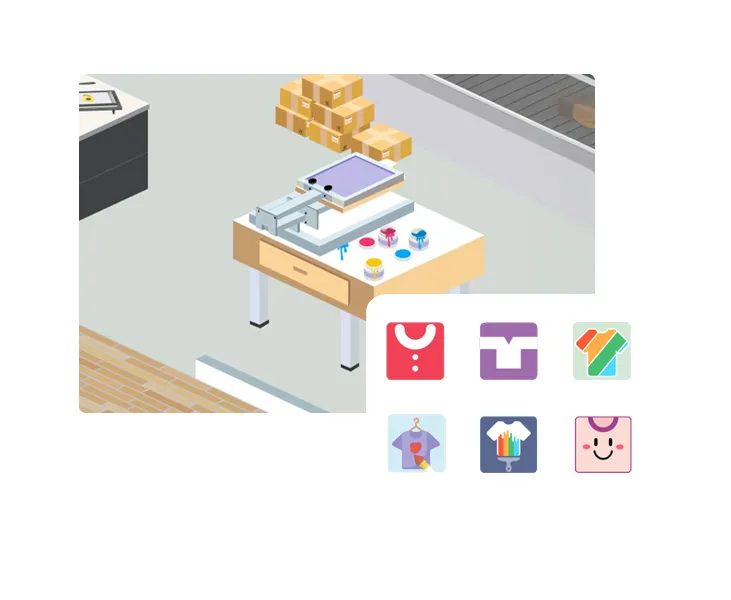
T-shirt printing business simulation workspace

E-commerce

orders and inventory

Apparel e-commerce

T-Shirt Business Simulation Series

Learn how to start a small printing business

This series places students in T-shirt ventures where they manage orders, inventory, staffing, and the tradeoffs that shape a growing business.

  • Inventory management
  • Financial reports
  • Human resources
  • Workload management
Explore T-Shirt
Food truck business simulation workspace

Hospitality

sales and operations

Hospitality business

Food Truck Business Simulation Series

Master food entrepreneurship through real-world scenarios

This series lets students run food ventures and make practical decisions about inventory, perishable products, sales, event targeting, and daily operations.

  • Inventory and materials
  • Marketing and branding
  • Business planning
  • Financial reporting
Explore Food Truck
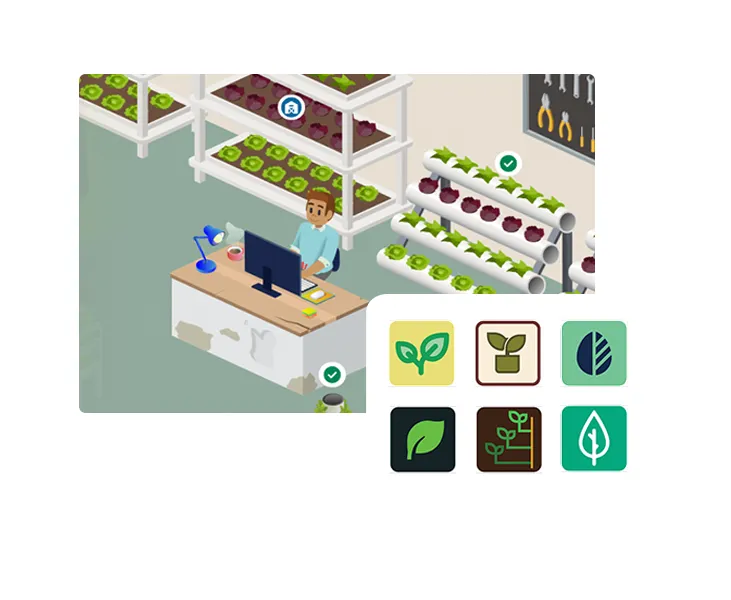
Vertical farming business simulation workspace

Agriculture

crops and resources

Agriculture

Vertical Farming Business Simulation Series

Prepare for the future of farming with hands-on learning

This series explores sustainable-agriculture ventures where students balance crop choices, limited resources, data, and go-to-market decisions.

  • Agricultural innovation
  • Resource management
  • Data analysis
  • Marketing strategy
Explore Vertical Farming
Mobile app business simulation workspace

Technology

product and users

Tech and engineering

Mobile App Business Simulation Series

Build, launch, and scale a mobile app startup

This series puts students in the founder role across software ventures, building experience in product planning and user growth.

  • Tech business planning
  • User acquisition
  • Financial reporting
  • Workload management
Explore Mobile App
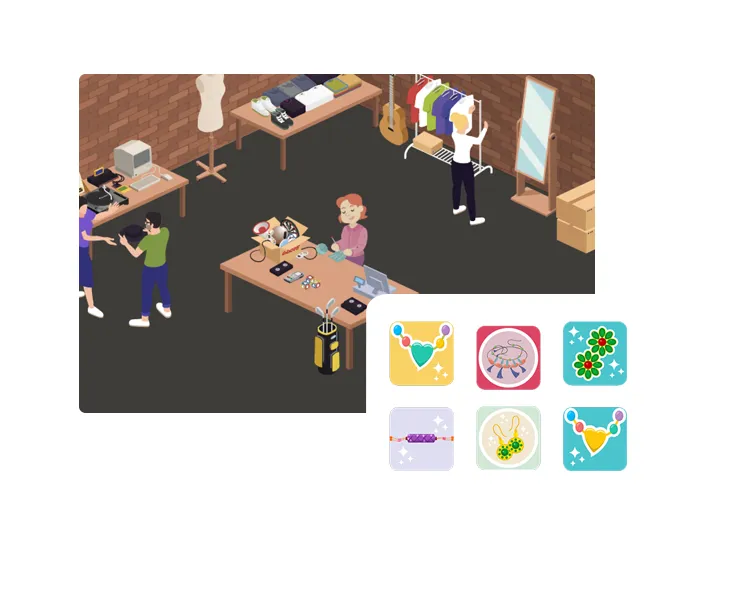
Makers market business simulation workspace

Creative

products and markets

Side-hustle business

Makers Market Business Simulation Series

Create, sell, and succeed with a handmade business

This series has students develop handmade ventures for local markets and learn how product choices, customer engagement, and time management affect results.

  • Market strategy
  • Customer engagement
  • Product development
  • Time management
Explore Makers Market

From a decision to a discussion

Would you stock 40 meals or 60?

Teaching guide by Startup Wars, the team that develops the entrepreneurship simulations in this catalog. This vendor-authored example helps instructors plan a decision and debrief.

A food truck has a busy event ahead. More stock could mean more sales—or more waste. Ask students to commit to a choice before revealing demand.

This original classroom exercise uses illustrative numbers. It introduces a tradeoff covered by the Food Truck series; it is not a screen, score, or output from the software.

Open printable activity

Student worksheet + instructor answer key. No signup.

Your decision brief

One event. A limited budget. Uncertain demand.

Meal price
$10
Cost per meal
$4
Event fee
$100

Pay for every meal prepared. Unsold meals have no resale value. Compare profit after the event fee:

Illustrative event profit under two demand outcomes
DemandStock 40Stock 60
30 meals$40−$40
60 meals$140$260

The debrief matters

Which demand assumption drove your choice? What evidence would justify ordering more? A strong explanation connects the numbers to the risk taken.

An instructor’s starting point

Build a lesson around the decisions

Use this suggested teaching sequence with an entrepreneurship simulation game. Adapt the assignment to your learners and confirm the selected scenario’s setup in your demo.

  1. 01

    Choose one learning objective

    Start with the decision you want students to explain. Use the comparison above to shortlist a series, then review its detail page.

  2. 02

    Preview and prepare

    Request a demo to confirm the scenario, access, device requirements, and time needed for your course. Prepare a short decision brief.

  3. 03

    Ask students to make a case

    Have learners record a choice, the evidence behind it, and an expected result. Decide in advance what work they will submit.

  4. 04

    Debrief the result

    Compare the outcome with the prediction. Ask students to explain a tradeoff and propose what they would change next.

One catalog. Your teaching context.

Find the fit for your students

High schools & CTE

Make the first business decision tangible

For an introductory lesson, use Food Truck to discuss costs, demand, and the reasoning behind an inventory choice. Add vocabulary support and a short written reflection.

Explore high-school & CTE classroom fit →

Colleges & universities

Turn a decision into a defensible argument

Use the same Food Truck context to ask for a demand assumption, a financial comparison, and a decision memo. Assess how well students explain the tradeoff and revise their reasoning.

Explore college course integration →

Before you choose

Evaluate the fit before you commit

A useful startup business simulation needs to fit your teaching plan as well as your topic. Bring these questions to your educator demo.

Frequently asked questions about choosing a simulation

What should I look for in a business simulation for students?

Choose a venture with decisions that match your learning objective. Preview what students will do, the results they can observe, and the explanation you want them to produce. Use the comparison above to narrow your options, then confirm classroom access and lesson scope in an educator demo.

Who provides the simulations and teaching example?

Content by Startup Wars, the developer of the simulations in this catalog. The decision worksheet is an illustrative classroom exercise for educators to adapt. It is separate from live simulation results and does not guarantee student outcomes. Review our evidence and sources for published program use and recognition.

How long should I plan for a simulation?

Confirm the time required for your selected scenario and students during a demo. Budget for setup, decisions, and debriefing; the printable activity above is a separate classroom exercise, not an estimate of software seat time.

What can I use to assess learning?

Use a decision brief and reflection to assess evidence, calculations, tradeoffs, and revision. The activity includes an instructor answer key. Ask to see the current instructor reporting and assessment workflow in your demo before planning around a particular feature.

How do we arrange access and purchasing?

Review pricing and access options, then discuss class size, purchasing requirements, and your start date with our team. Review product accessibility and VPAT information for your procurement review. Our website accessibility statement describes the public website.

Learning that sticks

Give students a safe place to think like founders

Learners build strategy, financial judgment, marketing instincts, and confidence by making decisions and seeing the consequences.

“Startup Wars allowed me to understand everything that goes into starting a business.”

Charlotte KaneStudent, The Ohio State University

Bring it to life

See Startup Wars in action

Explore how the right simulation can fit your class, program, or organization. Bring your course goals, class size, and teaching schedule so we can help you evaluate a series and discuss access.